By Mikala Waldrup, SPP Environmental Programs Coordinator and Michael Zirpoli, SPP Ecological Programs and Workshop Manager
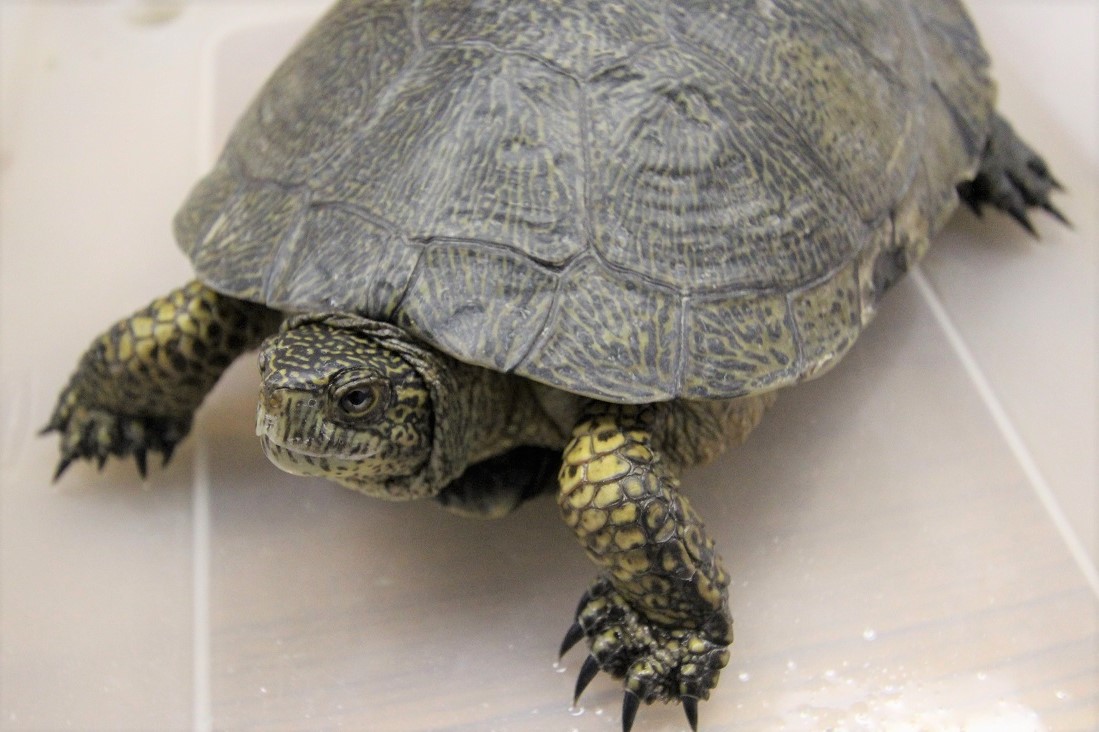
This season, the northwestern pond turtles (NWPT) in post treatment care at Cedar Creek Correction Center (CCCC) have a new routine: bath time. Turtles housed at CCCC are trapped by biologists from The Washington Department of Fish and Wildlife (WDFW) as part of a monitoring and rehabilitation effort focused on combatting a fungal-associated shell disease. This shell disease is thought to be caused by a keratin eating fungus known as Emydomyces testavorans that infect the NWPTs and create lesions and pitting on their shells. These lesions make parts of their normally hard shells soft and, if left untreated, can pose serious health risks.
SPP is partnering with WDFW to pilot a less invasive treatment option for these turtles. Based on research from the University of IllinoisWildlife Epidemiology Lab, SPP is administering an anti-fungal treatment bath for the turtles. Three times a week turtles soak for 30 minutes in a terbinafine and water solution to coat them in the medicine, in hopes of clearing them of the fungal pathogen.
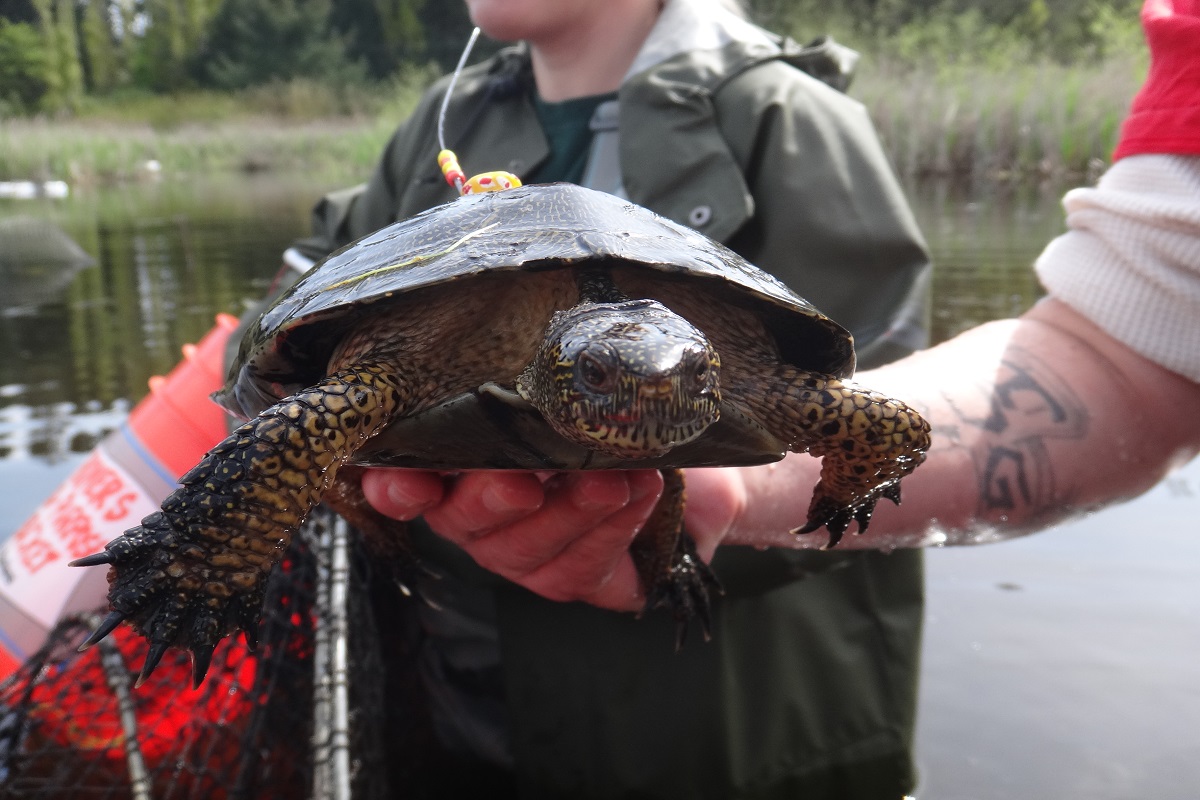
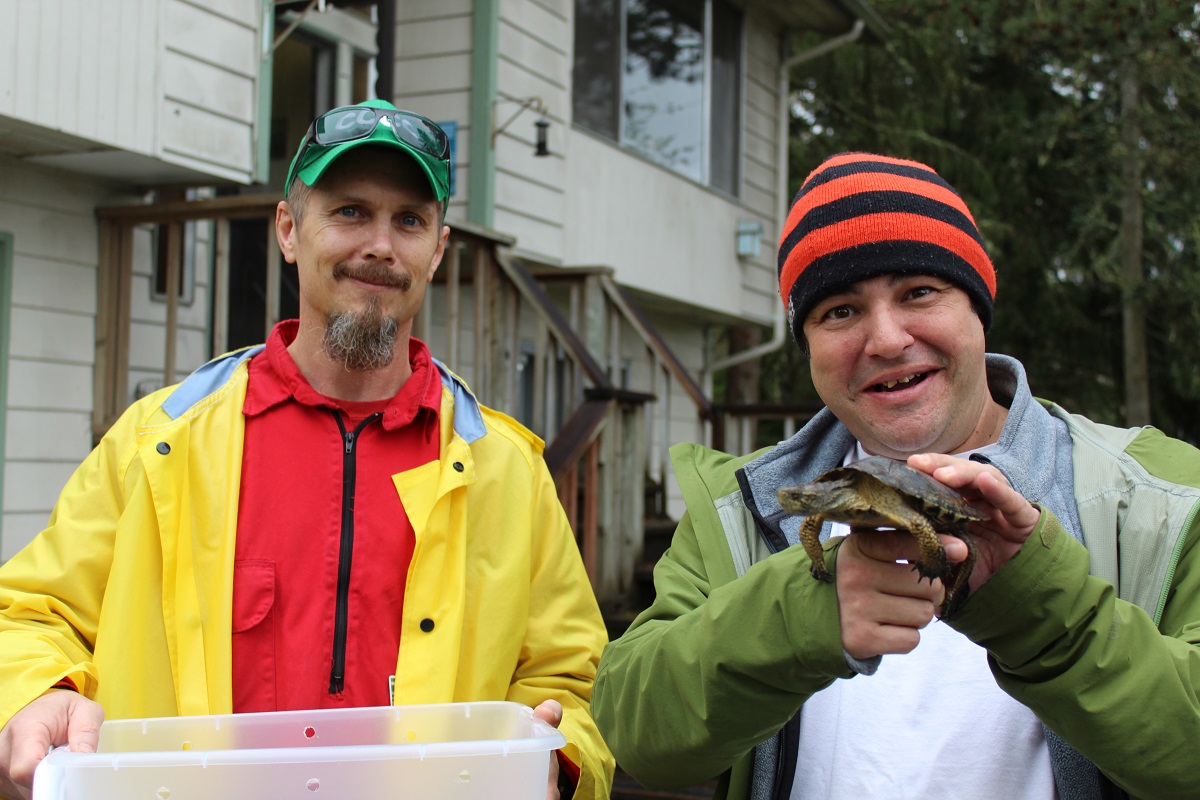
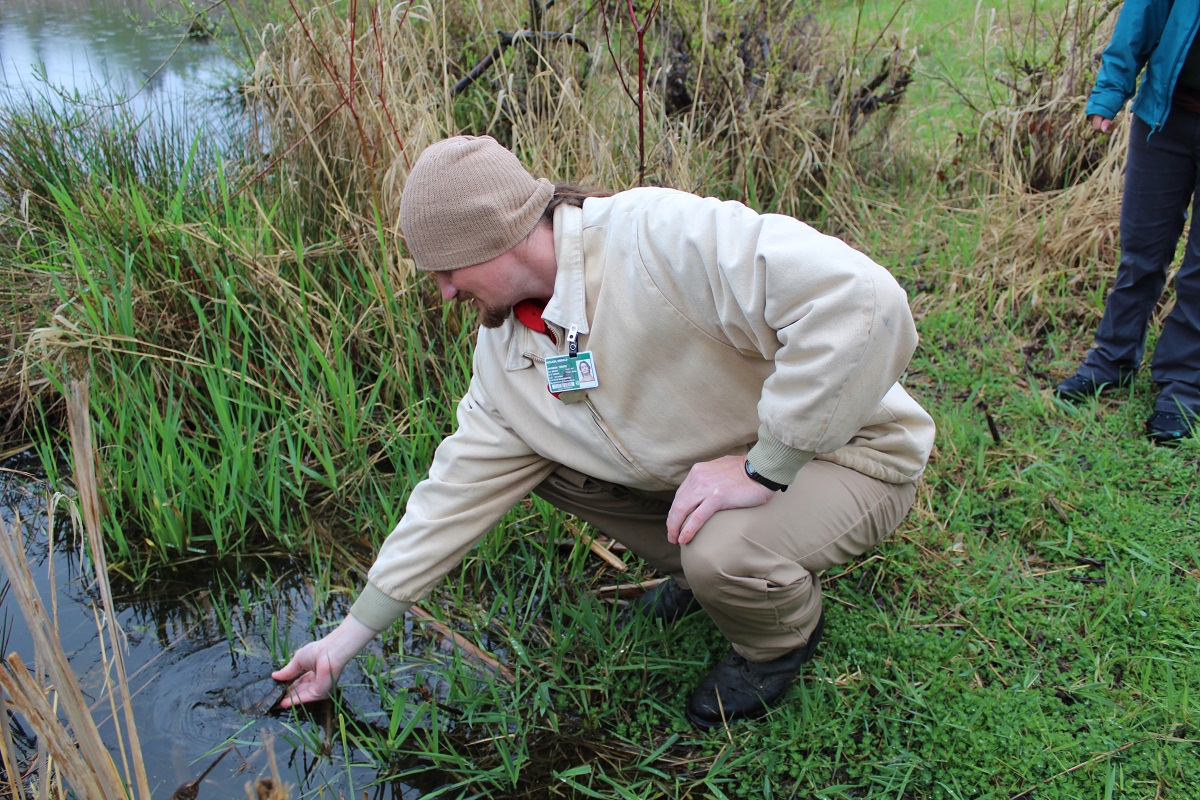
Left: A northwestern pond turtle. Right: Northwestern pond turtles enjoy a turbinafine bath.
This season there are 10 sub-adult turtles and 12 adult turtles in care at Cedar Creek, all of which have tested positive for E. testavorens. The 10 sub-adult turtles came to CCCC in August of 2025 and have been taking baths 3 times a week since. These sub-adults are also being periodically tested for E. testavorens, to assess the effectiveness of the terbinafine bath treatment. In addition to taking terbinafine baths 3 times a week, the 12 adult turtles also received treatments similar to past years with surgical removal of portions of the shell most severely impacted by the shell disease. This treatment took place at the Progressive Animal Welfare Society (PAWS) in the fall and winter. In February, the first round of adult turtles were transferred to Cedar Creek Correction Center for long term care prior to their release back to their native ponds in the spring.
As in past seasons, the technicians caring for the turtles work diligently to ensure environmental conditions are stable in the program area along with ensuring daily feeding and tank cleanings are performed by protocol standards. With the addition of the terbinafine treatment, the technicians are now also administering the baths to the turtles, which gave the technicians the opportunity to learn and implement new care protocols. In addition to the hands-on turtle care, northwestern pond turtle rehabilitation technicians receive education on wetland ecology, turtle biology, and animal husbandry. A total of 10 credits are offered by The Evergreen State College for technicians who complete the educational portfolio.
Thank you to all the partners and technicians for making this work possible!
Are octopuses smarter than a 5th grader? Are you? How do we measure intelligence? In a June workshop at the Washington Corrections Center for Women (WCCW), Rus Higley and Aeriel Wauhob from MaST Center Aquarium posed these questions to a group of incarcerated students who are part of the Freedom Education Project Puget Sound (FEPPS). FEPPS is a non-profit organization that offers Associates of Arts and Bachelor of Arts degree to incarcerated people at WCCW.
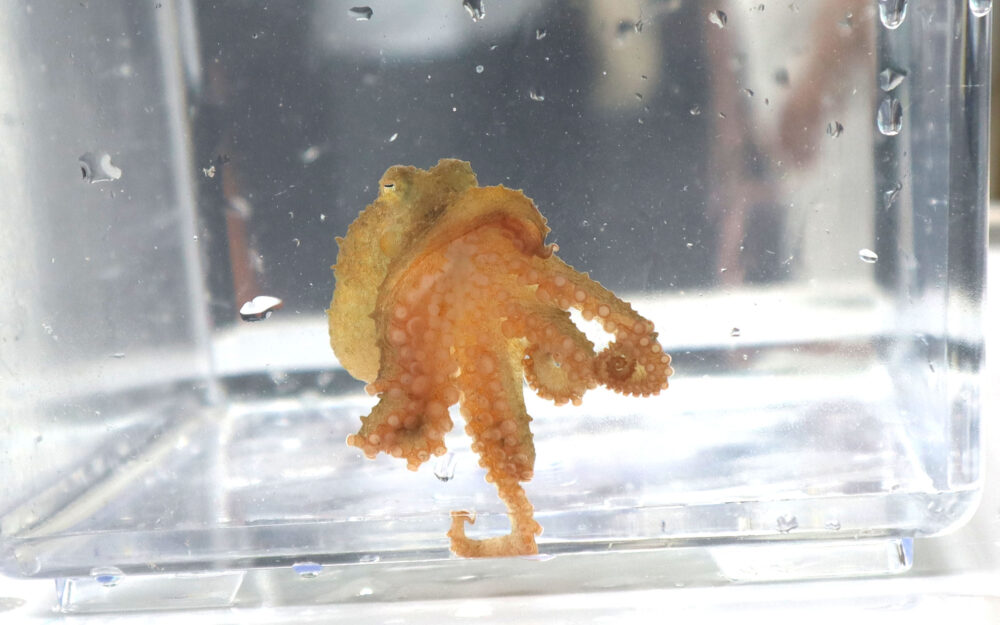
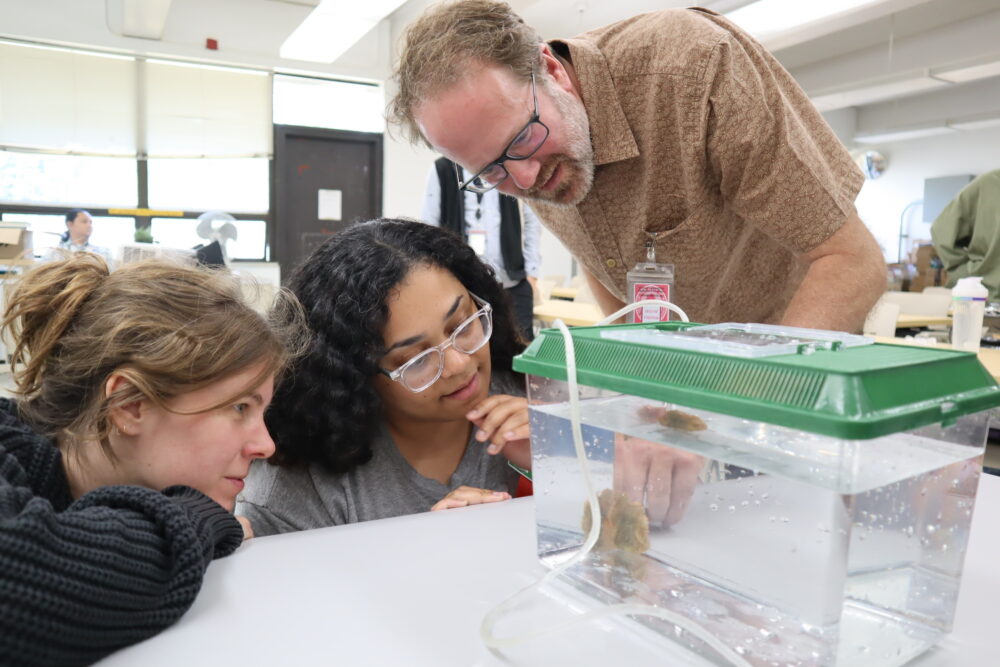
In a fantastic presentation given by Higley, students watched amazing videos of camouflaged octopuses, learned about species native to the PNW, and even got to meet a live juvenile Pacific red octopus!
Russ Higley from the MaST Center Aquarium in Tacoma explains octopus anatomy. Photo by Emily Passarelli.Red pacific octopus (Octopus rubescens). Photo by Emily Passarelli.
Octopuses use tools, have spatial memories and personalities, and engage in play, all attributes that humans consider signs of intelligence. So, ARE octopuses smarter than 5th graders? It’s complicated. While an octopus may not pass a 5th grade multiple choice test, the workshop hosts and participants all agreed that knowing facts on a test was not the best way to measure intelligence, especially for a creature who has nerve cells (like the ones found in our brains) in all eight of its arms!
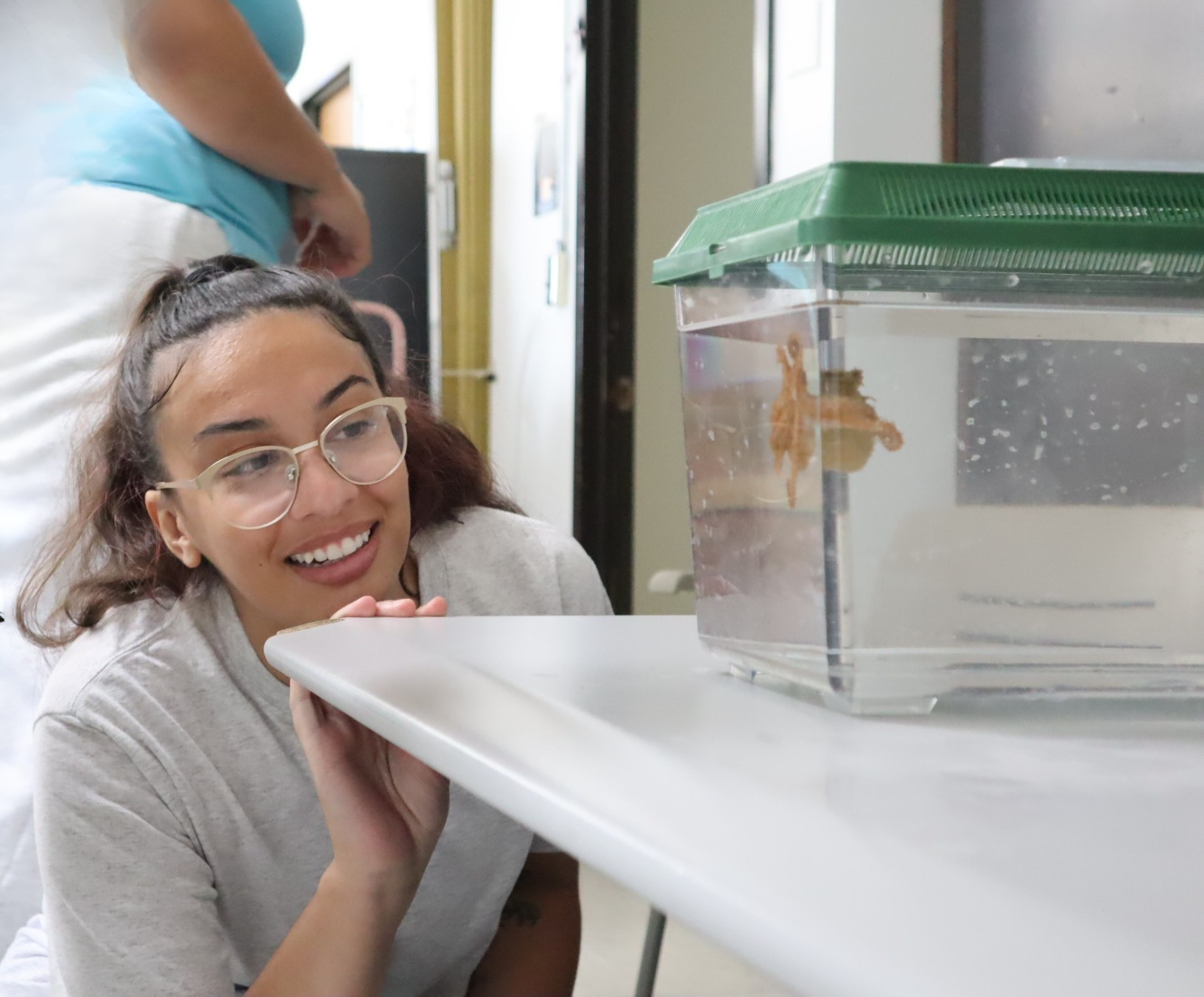
Andrew Campbell from the Freedom Education Project Puget Sound (FEPPS) looks at the Pacific red octopus.Russ Higley (right) points out octopus anatomy to SPP coordinator Anneke Wilder (left) and student Tatiana Baker (middle).Olivia Bebic gets an up-close look at the Pacific red octopus.
As SPP continues to ramp up our workshop offerings, now is a great time to get in touch if you or someone you know may be interested in offering a workshop in a prison facility. Contact Michael Zirpoli at michael.zirpoli@evergreen.edu for more information! Workshops provide fantastic opportunities for community learning exchanges, and they are an integral part of our educational offerings at SPP.
Text by Erica Benoit, SPP Special Projects Manager
In my final weeks working with the Sustainability in Prisons Project, I was lucky enough to interview Susan Christopher, another amazing former SPP Butterfly Technician who actually worked alongside Nichole Alexander during her time at the Mission Creek Corrections Center for Women (MCCCW). Susan and I spoke about her experience in the SPP program, the impact she has had on other women struggling with incarceration and/or addiction, and her considerable community involvement.
Susan Christopher (right) assists another crew member in the Taylor’s checkerspot butterfly program. Photo by Keegan Curry.
Susan’s time in the Taylor’s checkerspot butterfly program represents an exceptional case in which an incarcerated person remained employed in a program for more than 3 years. This opportunity to work with the species for four total breeding seasons meant she gained extensive experience and skills that have contributed to the program’s long-term success. In particular, she and other technicians at the time developed tracking mechanisms that impressed program partners like the Washington Department of Fish and Wildlife. Some of her other accomplishments in the program include giving a presentation to 40 biologists, taking a field trip to see the butterflies in the wild at the Glacial Heritage Preserve, and being interviewed by PBS News Hour about the program.
Susan explains the data tracking systems used in the butterfly program in front of the camera for the PBS News Hour Special. Photo by Kelli Bush.
Susan emphasized the positive impact that being in the SPP butterfly program had on her. She said, “It’s such an amazing program…what it does for our self-esteem, giving us a chance to prove ourselves again, to be trusted and appreciated. To me, it was the most important job in the institution.”
Susan Christopher shows off a Taylor’s checkerspot butterfly to SPP Staff, Emily Passarelli. Photo by SPP Staff.
It was clear from our interview that Susan also tends to have a big impact on the communities around her, whether that is in prison or her outside community. For instance, she served as a peer mentor in prison for women while they were experiencing crisis. She also volunteered in MCCCW’s clothing closet program, which provides professional clothes to women preparing to take their next steps into society. While incarcerated, she taught yoga to other incarcerated women as a therapeutic outlet. Since her release from prison, she has continued this practice with individuals who are in treatment for issues related to addiction. She also shares her story of overcoming her own addiction problems to women’s groups and church groups as a way to own her truth and give people hope.
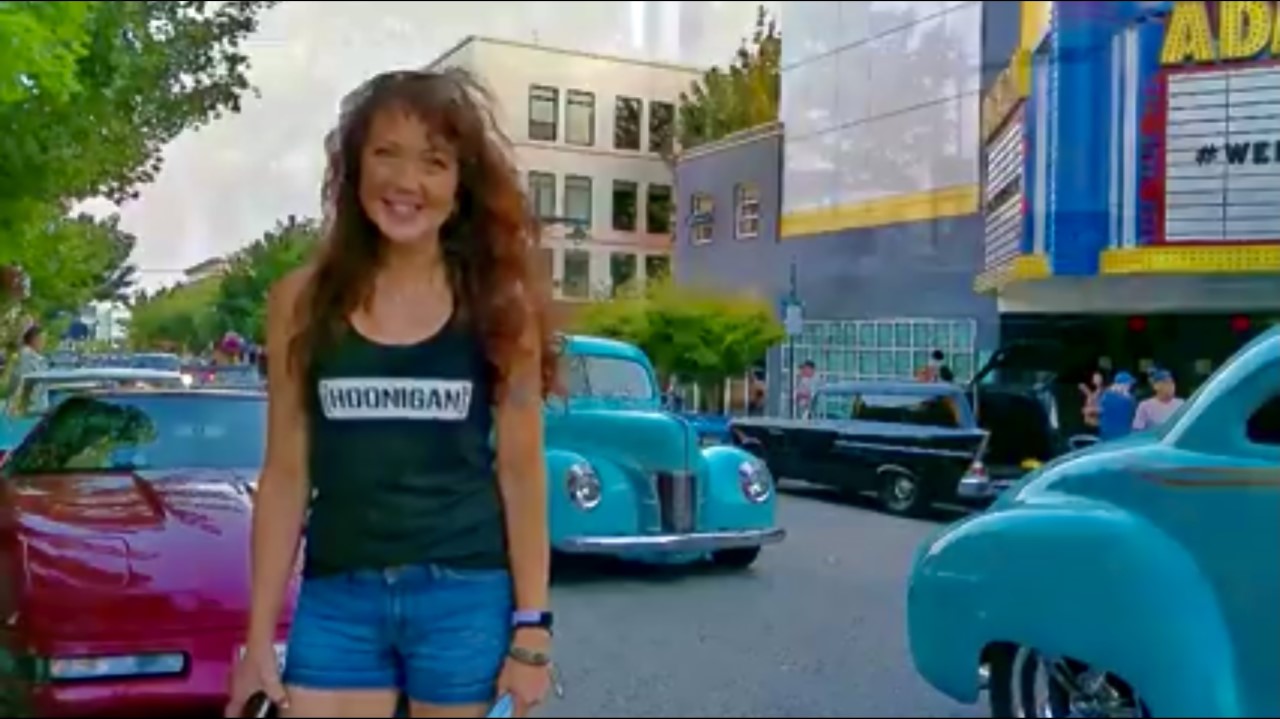
In addition to these meaningful contributions, Susan has also dedicated her time to providing fun outlets for her community of Bremerton, Washington. While the pandemic has put a damper on many social activities, Susan wanted to find safe ways to connect with her community. With the support of city officials, she has organized numerous family friendly cruise nights and car shows around the area. You can learn more about those events by visiting the Cruisin Bremerton Facebook group.
A still of Susan Christopher welcoming visitors to a car show on September 4, 2020. Video by Canalside Photography and Stan Young.
All in all, Susan told me that over time, she realized her purpose and reason for being in prison was to make a difference in others’ lives. In total, Susan had 57 different roommates while incarcerated. For these women and hundreds of others, she has served as part of their support network both during and after incarceration. Many of them still reach out to her today to tell her how her journey has been an inspiration to them.
Susan Christopher behind the camera photographing cars at a car show. Photography has always been a passion of hers and with some encouragement from others, she has started to sell some of her work. Photo by Everett Allison.
Speaking of her journey since incarceration, Susan feels her successes are on the quiet side, but that is how she likes it. She appreciates getting messages and hugs from those who she has impacted. She said she now feels like, “I am worthy, and I do have a place in this world…It may not be standing up and winning awards, but I have a certain satisfaction now that I’ve never had before. People are watching me, looking up to me, and they appreciate me.” We at SPP see you and so appreciate you, Susan.
Text by Bethany Shepler, SPP Green Track Program Coordinator
Note: please be aware that individuals featured in this story and in these images have victims who are concerned about re-victimization; any sharing or promoting should keep that risk in mind.
I presented this copy of my thesis to the advisor team at Stafford Creek Corrections Center, represented here by Kelly Peterson and David Duhaime. Photo by Erica Benoit.
This past June Dr. Tyrus Smith signed my thesis. He was my thesis advisor and his signature validated all of my hard work over the last year-and-a-half. Suffice it to say, I was ecstatic! My thesis process was more difficult than I imagined it would be, took longer than I expected, and I am truly proud of the end product.
Following completion of my thesis, I returned to SCCC to present on the process and findings. Photo by Erica Benoit.
Before we move on, I could not have gotten to that moment of completion without the support of Evergreen Master of Environmental Studies faculty (Dr. Tyrus Smith, Dr. Kevin Francis, and Dr. Shawn Hazboun), my friends and family, my classmates, the people who participated in my study, the loggers that answered all of my questions, and the constant support from incarcerated and staff advisors at Stafford Creek Corrections Center (SCCC). Thank you all!!
Thank you to everyone who supported me and made this research possible! That’s me presenting my thesis to the community at The Evergreen State College. Photo credit: Joslyn Rose Trivett.
Thesis advisors in prison
From the very beginning of my thesis process, I knew I wanted to work with incarcerated individuals and SPP supported me in making this possible. So, I invited environmental studies experts housed at SCCC to work with me as advisors. I worked with the Roots of Success instructors and the Roots liaison at the facility, Kelly Peterson. A photo of me and the advisors is shown below.
These advisors helped me formulate the roots from which my thesis grew and greatly contributed to the process, too. From left to right: Cyril Walrond, Steven Allgoewer, David Duhaime (top), Anthony Powers, Kelly Peterson, and myself. Photo credit: SPP Staff.
Over the past two years, we met on multiple occasions. To develop a deeper understanding of the subject matter, the incarcerated advisors studied the articles and references I provided; they read peer-reviewed academic articles, research planning guides, newspaper articles, and other publications. They offered feedback and ideas on several aspects of the research including topic selection, philosophical framework, research design, study population, survey design, and presentation of the topic.
Seminar
This past February, Kelly Peterson helped me set up a seminar with a larger group, and included Dr. Smith. We asked all participants to read four pieces beforehand, to prepare for the discussion. Two were data-heavy, very dense, dry academic articles describing the theoretical framework I used for my thesis. Another was a piece President Roosevelt wrote after visiting the Pacific Northwest, in which he proposed a forest plan. And the last was an academic article about common predictors of environmental attitudes.
Here’s a group photo of the people who participated in the thesis seminar. Photo by Bethany Shepler.
I remember being nervous that no one would want to talk and I could not have been more wrong! They had all clearly done deep dives into the reading and made interesting connections I had missed in my own review of the literature. Everyone had thoughtful input and suggestions for things to explore and add to my thesis. The seminar was lively and thoughtful and there was never a quiet moment.
What is my thesis about?
My completed thesis is titled: A critique of the New Ecological Paradigm: Stewardship and a case study of the Pacific Northwest logging industry. It explores the concept of stewardship and how it fits into the New Ecological Paradigm. The study population was people actively working in the logging industry in the Pacific Northwest.
This research project was an exploratory study designed to document the ecological attitudes of loggers in the Pacific Northwest. As an exploratory study, I sought to contribute to a gap in the empirical literature: how loggers view the environment. I gathered their responses to the New Ecological Paradigm questionnaire, a measure of their ecological attitudes. Also, I collected information about each participant’s experiences in nature and their socioeconomic and demographic backgrounds.
Hanging out with loggers
Over the summer Pulley Corporation, an FSC®-Certified logging company agreed to let me shadow them for a day. This was an incredible opportunity for me and I am so grateful to everyone for answering all of my questions. Being able to speak with loggers who work in the field expanded my background knowledge on logging in the Pacific Northwest, and helped inform the survey I used to gather data. From these interactions, and many others, I noticed two attributes shared by all: a stewardship mindset and pro-ecological attitudes.
Regardless of their obvious pro-ecological attitudes, the sample population scored lower on the New Environmental Paradigm than most Washington State residents. This suggested to me that the New Environmental Paradigm measures attitudes using a socially-exclusionary lens.
When I shadowed the crew for the day, Pulley Corporation was working at Mt. St. Helens repairing and restoring an elk migration path for the Washington Department of Fish and Wildlife. Photo by Bethany Shepler.
So, what’s in a thesis? Well, in my case, a thesis is a collaboration of very diverse groups of people, all environmentally inspired and dedicated, and all willing to support me as a graduate student. I am lucky to have all their brilliance and input in those pages.
By Marisa Pushee, SPP Ecological Conservation Program Coordinator
Note: please be aware that individuals featured in this story and in these images have victims who are concerned about re-victimization; any sharing or promoting should keep that risk in mind.
This week, students and Ecological Conservationists gathered in the greenhouse at Cedar Creek where Anna Duron led a workshop for the aquaponics program. Anna serves as the SPP Coordinator for the Emergent Vegetated Mat (EVM) program at Stafford Creek and drew from her background in utilizing aquaponics for Ecological Conservation initiatives. The workshop focused on best practices when working with aquaponics and the chemistry behind maintaining a stable system.
SPP Coordinator Anna Duron and SPP Biological Science Technician Will Rathgeber show workshop participants how to test pH, nitrite, nitrate, and ammonia for the water in the Cedar Creek aquaponics system. Anna describes her work with the EVM aquaponics system at Stafford Creek, detailing the differences between varying approaches to aquaponics.
SPP Biological Science Technicians as well as students and TAs from Centralia College‘s horticulture program joined for the hands-on learning opportunity. They tested the pH, nitrite, nitrate, and ammonia levels of the water in the aquaponics system, discussing why certain results were more desirable and how the plants respond if any of the readings are too high or too low.
Many of the workshop participants were current TAs or students in the Centralia College horticulture program at Cedar Creek. Workshop participant watches the fish enjoy their breakfast.
Since many of the workshop participants were horticulture enthusiasts, they compared successes and challenges, finding commonality in obstacles like plant nutrition and integrated pest management. We look forward to continued collaboration with such an engaged group of students!
Workshop participants discuss plant health.
by Ashley McElhenie, SPP Prairie Ecological Conservation Nursery Technician. Ms. McElhenie created this in response to a call for writing on “science in prison.”
Ashley McElhenie, front left, re-seeds containers of prairie plants during a work session in 2018. Photo by Joslyn Rose Trivett.
I first heard about the prairie Ecological Conservation crew from my roommate’s friend. She and the other women on the crew were going to be released in a couple of months and they wanted to find hard-working, nice individuals to take their places. I guess I just so happened to meet the criteria, and did not like my job at the time so I gladly jumped at the opportunity. Not only was it not in the kitchen, but it was summertime and I’d be working outside all day. I could work on my tan and probably lose some weight — there was no downside to this new job.
Violets
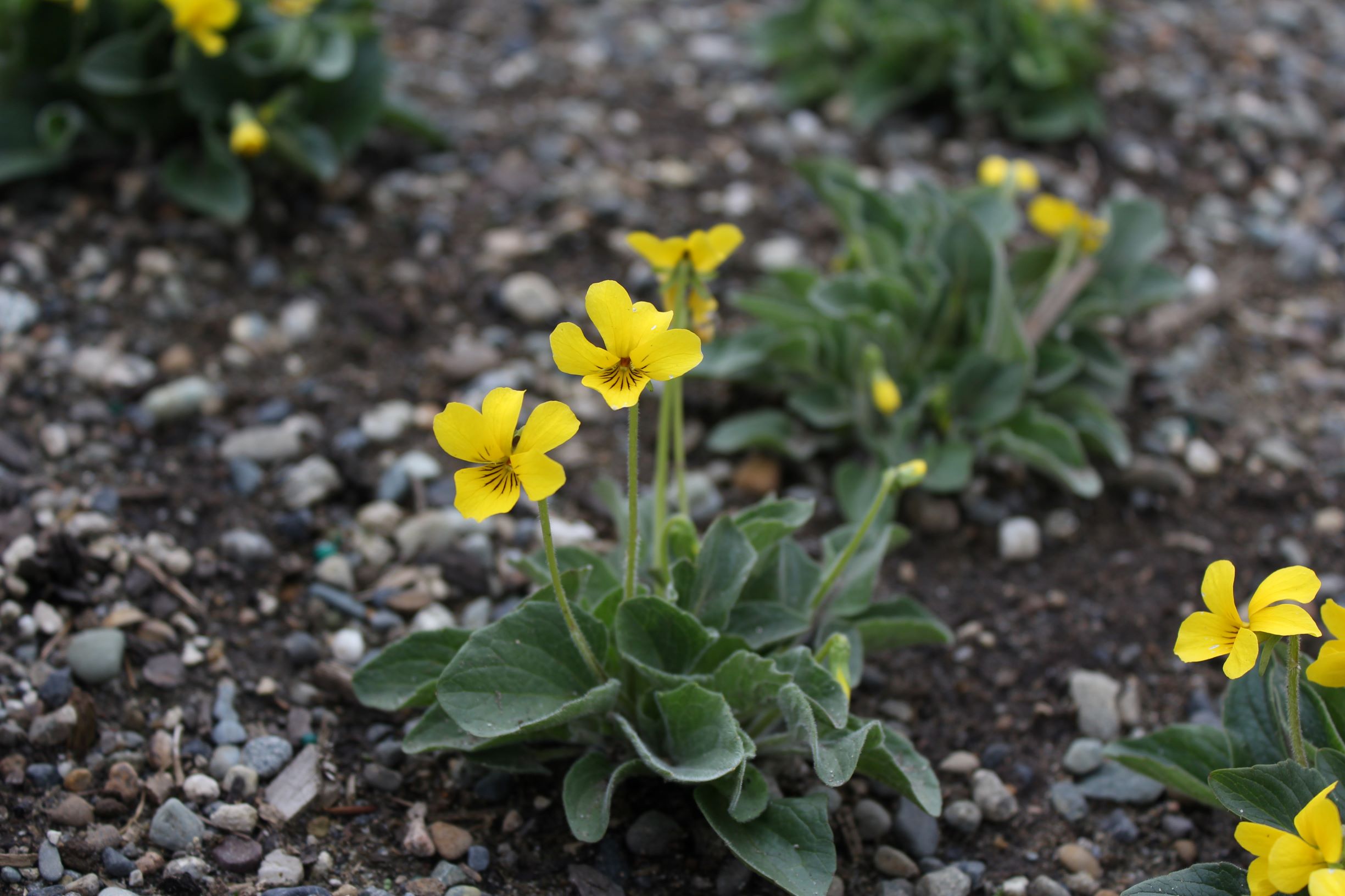
Viola praemorsa is one of two violets grown for seed production at the Washington Corrections Center for Women (WCCW). Due to its bright yellow flowers it is also known as the canary violet. Photo by Jacob Meyers.
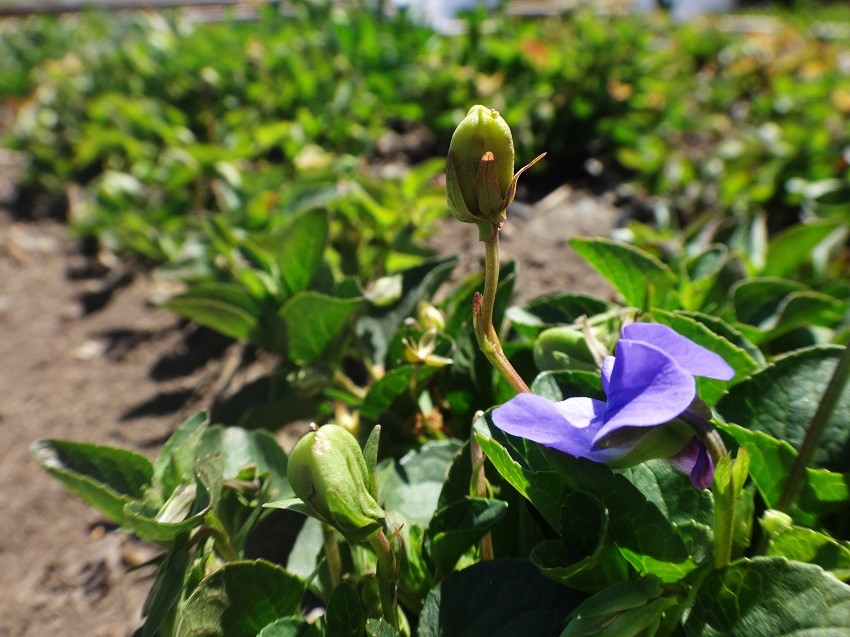
Viola adunca seed pods are green and curled up like an umbrella when they first emerge. As the pods mature, they become white and the stems stand up straight in preparation for explosion. Viola praemorsa (pictured above) does not have the same telltale signs making the scavenger hunt a bit more challenging. Photo by Jacob Meyers.
My first day I remember transplanting numerous Viola adunca into rows of beds. They were a pretty purple flower that did something for a butterfly species but that’s all I knew. As time went on, we began learning a little more about the violets and what our purpose was for growing these endangered native plants. It was kind of cool thinking I’m restoring areas of these native plants, being a Washington native myself, but that was about the extent of my interest.
It wasn’t long before I started going out to the Viola praemorsa beds on weekend mornings. I took a particular interest in these violas because they had a large seed pod with seeds that varied from a golden color to a deep brownish purple color. With a cup of coffee in hand and music player in my pocket, I’d spend hours tending to the beds and harvesting seed pods. The only problem with these seed pods is if you wait too long, they open up and shoot seed everywhere.
Viola praemorsa is less common than its bluish-purple cousin. This violet is only found in western North American oak savannahs and oak woodlands. Photo by Jacob Meyers.
It became a ritual to me. Each day was like a scavenger hunt looking for these seeds before they exploded and we lost our product. Because of the exploding seed pods, the Viola praemorsa would often end up in the Viola adunca beds and vice versa. I began to notice the differences between the two plants and after a while could easily identify which plant was a “weed” in the other’s bed. I was surprised to find out how different two plants from the same family could be; the Viola praemorsa with its single, fuzzy lead sprout or the Viola adunca with its clustered, small leaf bunch. Being in the violet beds became a refuge from the crazy living units.
Oaks
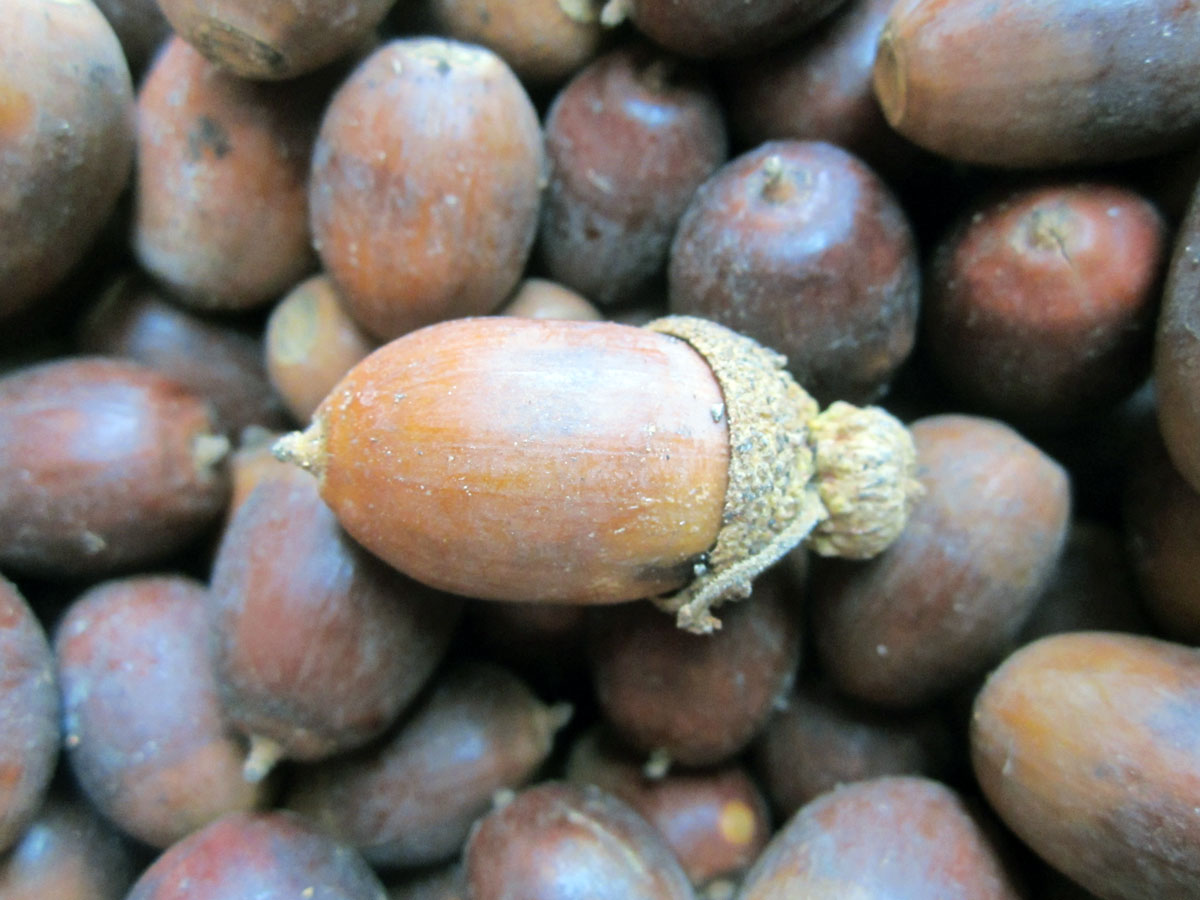
Garry oak acorns ready for planting. Photo by Jacob Meyers.
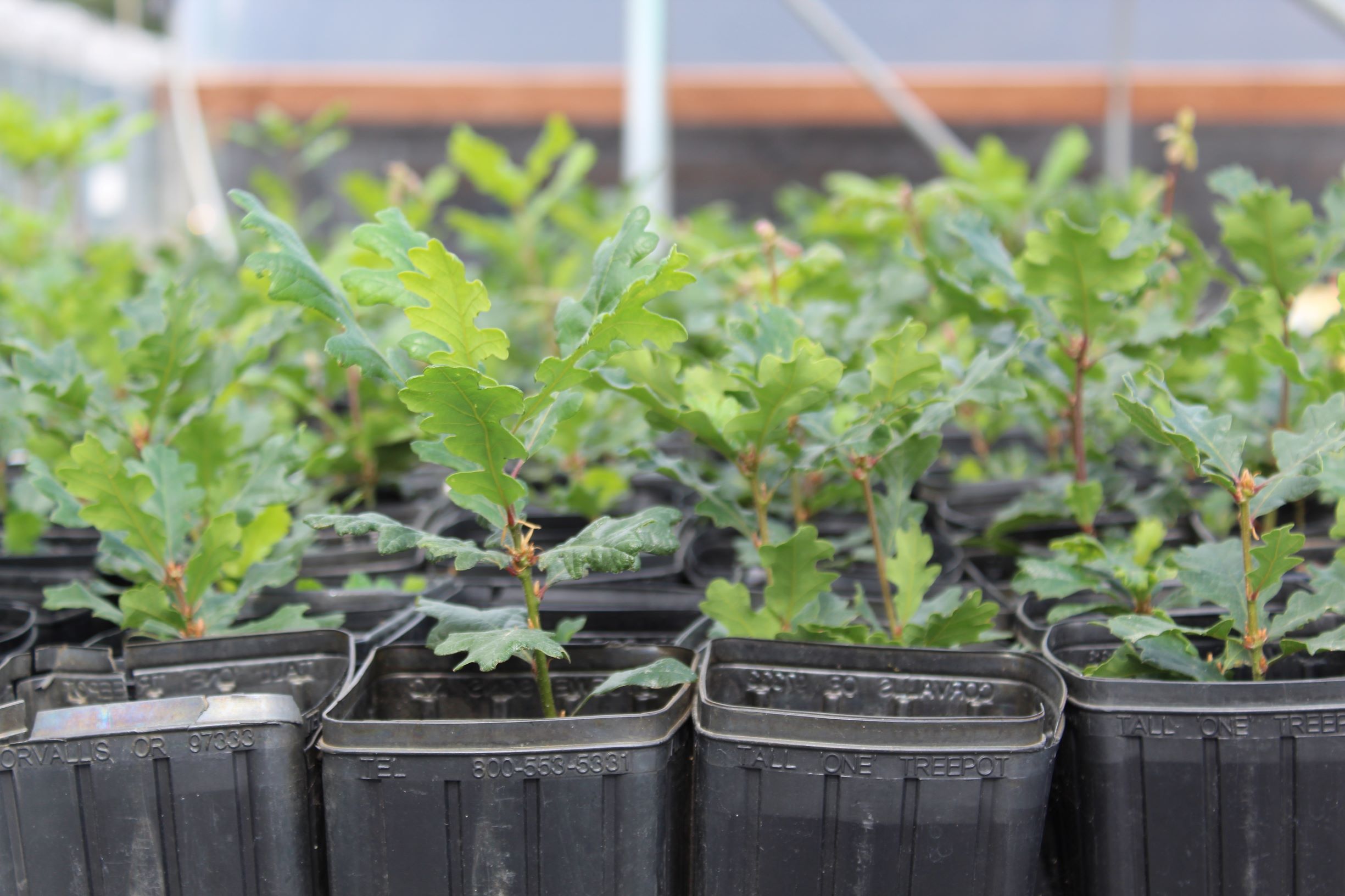
Quercus garryana, or Garry oak, growing in the nursery at WCCW. It’s the only oak native to Washington. Photo by Jacob Meyers.
When I learned we were going to plant Garry oak trees (Quercus garryana) working on the Ecological Conservation nursery crew became even more personal for me. The island on which I was raised has a lot of oak trees. Prior to my incarceration, there was a bit of backlash when the city wanted to remove the oldest and probably most notable oak tree in town. The tree’s roots had long been affecting a nearby road, but I didn’t want the oak to be cut down. It was a beautiful old tree that was a block away from the heart of downtown. It was a tree memorable from my childhood, the old oak by the post office. Despite the locals protesting, the tree was eventually cut down. A giant stump was left behind. Not only was it an eyesore, but a constant reminder of what is now gone. To my knowledge, the road has yet to be fixed and my town lost some of its history.
In the nursery, I felt that I could honor that oak’s memory, in a way, by planting 50 or more oaks that would live throughout the South Sound area. Being a part of that was small personal victory for me. I wanted to learn all I could about them.
Learning more
In the wintertime there is less manual labor to do so we focus on learning about the native plants with which we work. We learn how to identify these plants, the type of soil composition specific to our area and plants, the species that these plants affect, and how those species benefit from the plants. It was all so fascinating. I had never thought about plants as something more than food or landscape. It was rather humbling to be aware of this entire other system in which I was completely oblivious to.
Ashley (orange hat) and her colleagues study remnant prairie at Wolf Haven International. Photo by Ricky Osborne.
The following spring, I was fortunate enough to be given the opportunity to visit a prairie in where my work had been transplanted while still incarcerated. It was absolutely beautiful. The way all these native plants cohabited with one another in an seemingly untouched landscape of green, speckled with colors of blue, orange, yellow, and white as far as I could see. I don’t think I had ever appreciated nature more than I had that day. And it was an especially proud moment knowing that the plants I had grown were contributing to the landscape. During that day I remember drawing a weird parallel, that the restoration work I had been doing in the South Sound prairies was restoring me.I had been replanted, sprouted, grown, and was soon to be released into society.
At Violet Prairie Seed Farm, SPP Nursery Manager Carl Elliott (black vest) and Ecological Conservation Nursery Technicians Ashley McElhenie and Samantha Morgan discuss growing Lomatium triternatum. Photo by Ricky Osborne.
I can’t take full credit, though. The people who I’ve worked alongside have been some of the best people I’ve met in years. The people I worked most closely with on the prairie Ecological Conservation crew treated me as an equal, despite being incarcerated. They had faith and believed in me. Over time, I started to have faith and believe in myself. This program has taught me more than I could have ever imagined, and which goes way beyond knowledge of prairie plants. It’s taught me more about myself and things I am capable of. While learning about prairies, I was able to rediscover the values and principles I had prior to my incarceration.
For so many years I was so focused on destructive behaviors, whether it was my own or others’. Working with endangered plants gave me a different way to channel that energy. I was able to do productive activities that benefited people, animals, and plants. It gave me a sense of worth knowing that what I was doing made an impact on so many levels. No matter how small that impact may be, I knew it was a positive one.
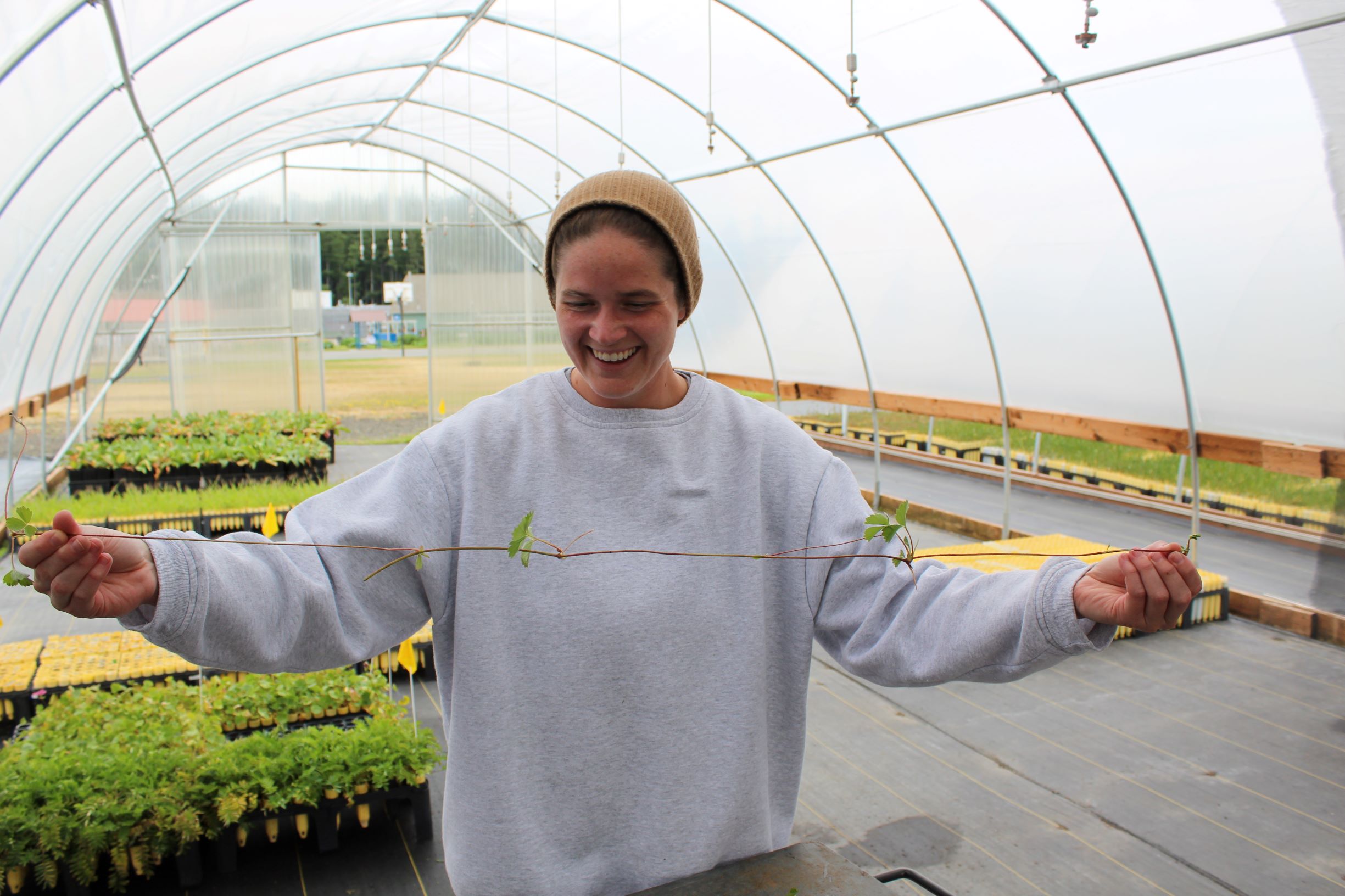
Pictured here, Ashley is showing off the impressive runners of another important prairie plant — wild strawberry (Frageria virginiana). As Ashley moves closer to her December release date, she is all smiles. Photo by Jacob Meyers.
By William Angelmyer, former SPP Turtle Technician and current student at The Evergreen State College. Photos by SPP staff unless otherwise noted.
Bill worked as a Turtle Technician for SPP from 2015-2018 and is now completing his undergraduate degree at The Evergreen State College. Note that some of the turtle care protocols referenced in this blog have changed since Bill left the program.
Bill Anglemyer holds at western pond turtle.
“Any job that offers an opportunity to change perceptions is more than
just a job; it’s a learning experience.”
Summer is coming to an end. This is an exciting time for the SPP Turtle Technicians at Cedar Creek. The end of summer means that soon the technicians will be receiving new turtles. Speaking from personal experience, I know that summer is a good time to do a lot of reading and research—basically, doing book work. Without turtles to manage, we technicians spend the summer studying and catching up on other projects.
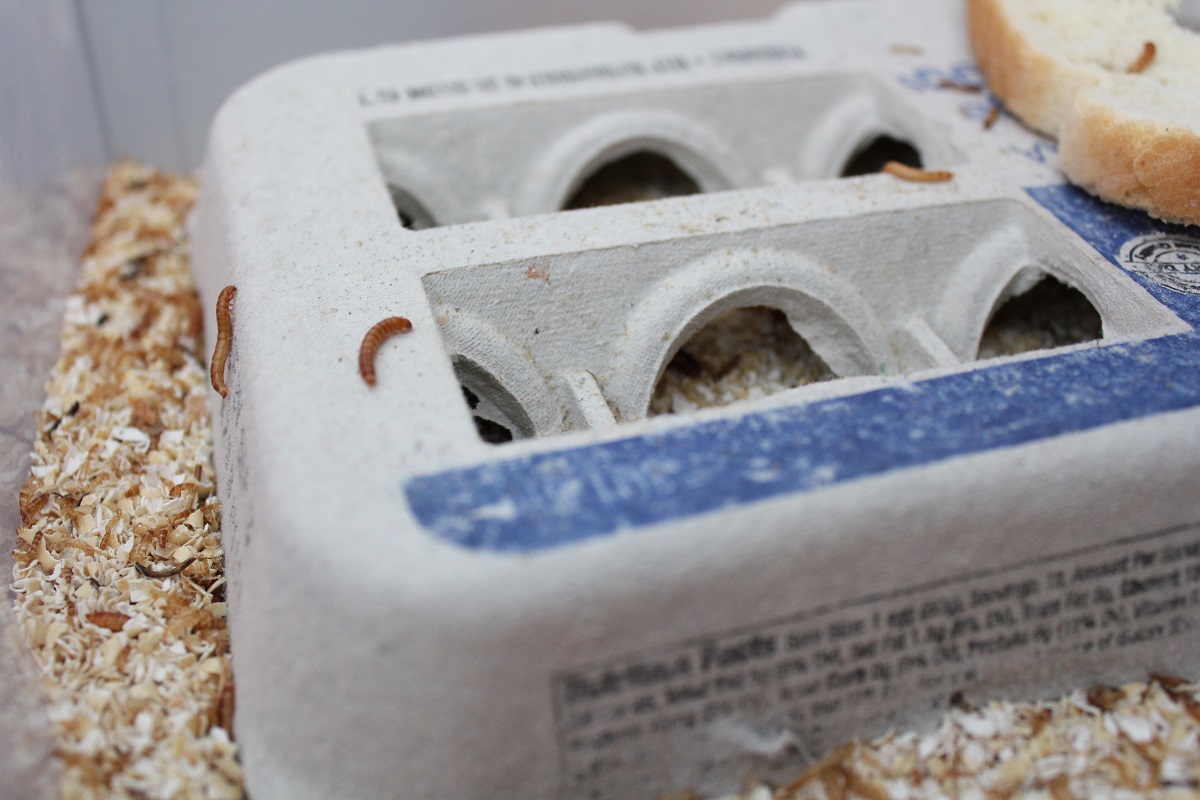
Raising mealworms for the next round of turtles and entering data for a woodpecker monitoring project keep us busy every day, but the real valuable time is the time spent learning about biology and animal behavior. Of course this takes some self-motivation to launch because you are responsible for your own choice of study. No one makes you read text books. For those of us that use education as a coping mechanism to deal with incarceration, we can’t be stopped from studying. After an entire summer of reading, though, it is a refreshing change to receive new western pond turtles and start practicing animal care and shell disease management. Although this hands-on work carries with it a new level of stress and anxiety, it also provides valuable moments fraught with emotional ups and downs. Caring for the turtles brings home some of the studying from a theoretical context into a concrete reality. All of the turtles we receive after summer have gone through a recent debriding process. Debriding is a procedure where portions of their shells have been cut away in order to stop the disease from spreading.
Mealworms production at Cedar Creek. All part of a balanced turtle diet.Anglemyer reveals the healed plastron of a turtle about to be released into the wild.
Unfortunately, this procedure—removing damaged portions of the shell—also leaves the turtles with wounds that have to be taken care of diligently in order to ensure that they heal efficiently and without infection. This is where the emotional rollercoaster part of the job comes to bear. Not all the turtles heal at the same rates. Some turtles heal slowly. Sometimes, they heal very slowly. Sometimes turtles will stop eating for days or weeks. Cataloging their progress and behavior can be worrying at times.
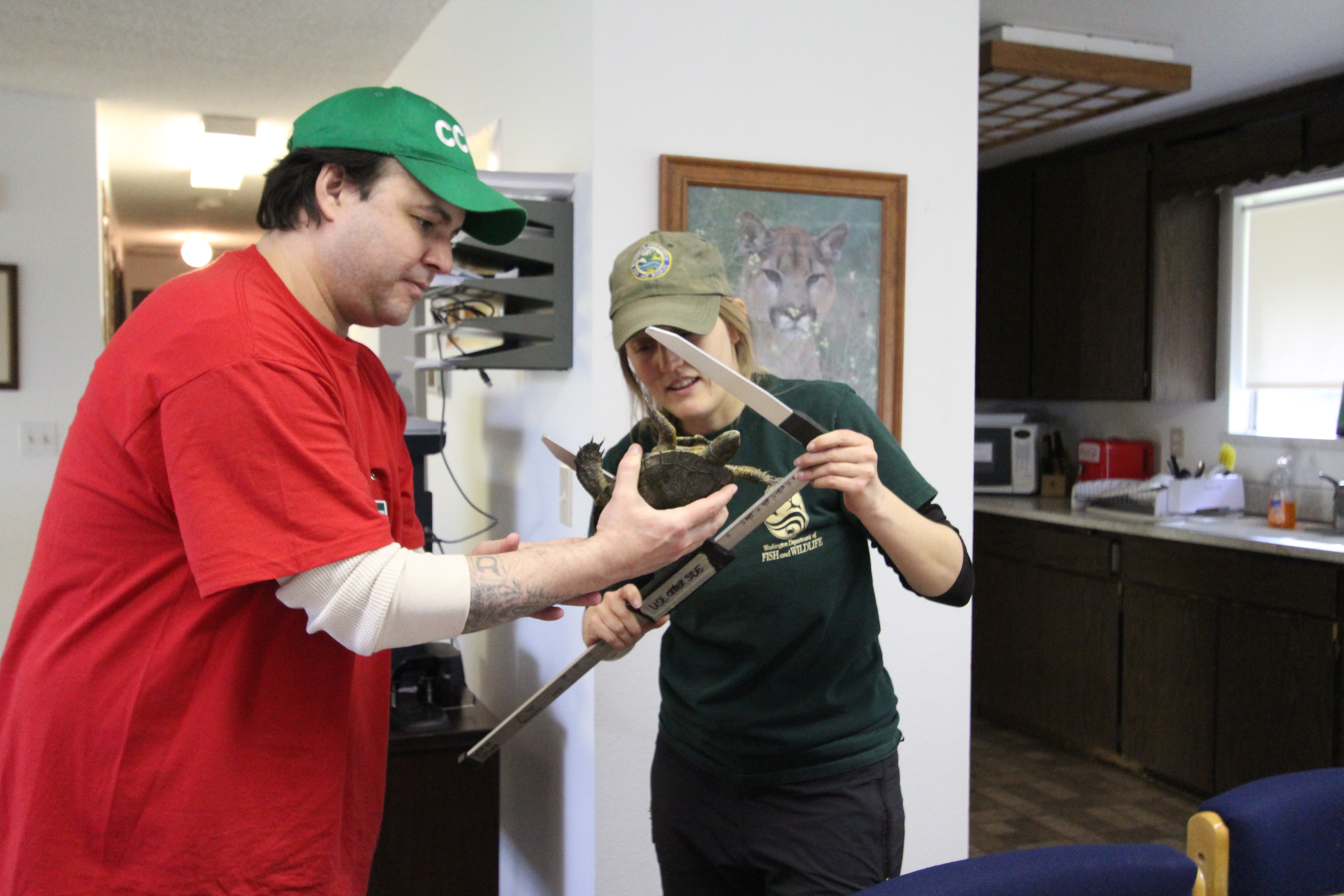
Turtle Technician Bill Anglymeyer and Washington Department of Fish and Wildlife Biologist Emily Butler evaluating turtles before releasing them back into their habitat.
However, these new worries are accompanied by a refreshing hands-on learning experience. Many of the technicians have never worked closely with reptiles. Many people have preconceived notions about reptiles having a deficiency of personality. Moreover, reptiles are stereotyped as being only focused on needs and lacking social interactions. After working closely with turtles, though, it is easy to recognize the personalities of each individual. Like many mammals, some are social and playful, some are fearful and isolate, and some are fixated completely on food.
NorthWestern pond turtle, a state listed endangered species and one of only two native turtles in Washington State.
Seeing this new perspective is one of the most valuable experiences I gained as a Turtle Technician. Any job that offers an opportunity to change perceptions is more than just a job; it’s a learning experience. My work with SPP was also greatly valuable to me because seasonal changes offer such a wide variety of experiences. Summer means book work and the fall means implementing that study into practical experience—along with the experience of caring for real animal lives. I miss my times at the CCCC Turtle Area. That may seem a little insane, considering I was incarcerated at the time. But the time I spent learning and caring for creatures, which I had had very little understanding of before, was a magical time during which I rarely realized that I was incarcerated.
Bill on Evergreen’s organic farm. Photo by Tierra Petersen.
By Carly Rose, SPP Curriculum Development Coordinator and Emerico, Gardening Curriculum Author
Gardeners tend to the soil in the gardens at Monroe Correctional Complex – Washington State Reformatory Unit. Incarcerated authors at MCC-WSRU are working with SPP to author chapters on Vermicomposting, Bokashi Composting, and Soil Science. Photo by Joslyn Rose Trivett.
For the past six months, gardeners at Stafford Creek Corrections Center and Monroe Correctional Complex – Washington State Reformatory Unit have been helping to build the new Gardening Curriculum. To develop course chapters, authors are combining expertise gained through personal experience with knowledge from scholarly research. Authors are working on a voluntary basis: they elect to share based on their desire to explore and describe a particular topic; some of the chapters currently in development include Vermicomposting & Bokashi Composting, Soil Science, the Soil Food Web, Planting and Harvesting Vegetables in Prison, Seed Saving, and Aquaponics.
Developing part of a curriculum while incarcerated requires some creativity. In order to submit materials, authors have provided handwritten work that is then typed and formatted by myself. One author types his work into JPay (social email) and mails it to a family member who mails it back, which gives him a pre-typed manuscript to submit. Most authors also provide their own illustrations and diagrams to be included in the chapter. Authors use a mixture of narrative from personal experience, tips on gardening that are specific to a prison environment, and college-level scholarly research to produce their work. They provide instruction that is created by and intended for incarcerated gardeners across the country. Authors and I send materials back and forth so they may provide feedback and edits on separate drafts of their work. One of the authors, Emerico, offered a personal narrative on his motivation to learn and write about his topic, Aquaponics.
Introduction to Aquaponics by Emerico
I first became interested in aquaponics after reading a few articles and watching some educational television programs. I was working on the gardening crew at Stafford Creek and when the gardening classes started, I was thrilled to be included. Over time, I have learned every person—incarcerated or not—has a purpose in life. My purpose was building an aquaponics system with no budget. I had to lose my freedoms before I could find my purpose in life. This is where aquaponics all began for me. I had an idea, so I put it to paper and talked to the garden supervisor about the idea.
One of my first jobs on the garden crew was working with the hydroponics system. I found out that this type of system, which requires chemicals to grow plants and vegetables, is expensive and I believe far less healthy. My goal was to get away from using chemicals and go to more of a natural resource system. I thought about a way to build a small-scale aquaponics system that uses fish to feed the vegetables. After many attempts to get it approved, and with the help of the garden crew, we built a recycled materials aquaponics system. The first part of the vision of my idea came to life.
This is part of the aquaponics system built by Emerico, who is authoring a chapter on Aquaponics. He explained that he wants the chapter to be accessible to both incarcerated gardeners and low-income families outside of prison. Photo by Jacob Meyers.
There is a sense of satisfaction when growing your own vegetables whether for self/family or others. I believe also that gardening can relieve stress. This country is blessed; there should not be anyone going hungry. We see too much senseless hunger in our country and throughout the world. There must be a solution to this problem. How can we do this? By making people aware and teaching them that aquaponics is not only a healthier way to grow produce, but is also cheaper. Aquaponics saves money in the long run for people and their families, and is a fun way to bring families together in the garden.
As for me, it is all about giving back and helping those in the community and throughout society that are less fortunate. The purpose is to get a finer perception of aquaponics through research. Anyone can pretty much build a small-scale aquaponics system with a limited budget and few resources. I hope this brief overview has helped you. Above all else, have fun.
From his lab notebook, Emerico shows a diagram of the aquaponics system. Photo by Joslyn Rose Trivett.
Next Steps
The course is projected to pilot in winter of this year. The two teams of authors plan to be part of that process as well; they will be among the first to try out the new program. Their feedback during and after the trial run will help us further refine the course, and then be ready to share it statewide and beyond.
All of the authors have personal experience gardening in prison, working on projects such as this garden at Stafford Creek Corrections Center. This garden is tended by individuals serving a life sentence, and is known as the “lifer’s garden.” Photo by Ricky Osborne.
Text and Photos by Bethany J. Shepler, Green Track Program Coordinator
Olympic Corrections Center once again earned an Outstanding Performance Award in 2018. Photo courtesy of Department of Ecology.
Olympic Corrections Center (OCC)’s wastewater treatment plant is among the best in the state. The Department of Ecology (DOE) has recognized OCC’s outstanding performance, and for being 100% compliant, for 8 consecutive years. In 2018, OCC once again earned an Outstanding Performance recognition. A blog posted by DOE highlighted OCC’s accomplishments with a quote from Mike Henry, the Wastewater Treatment Plant Operator:
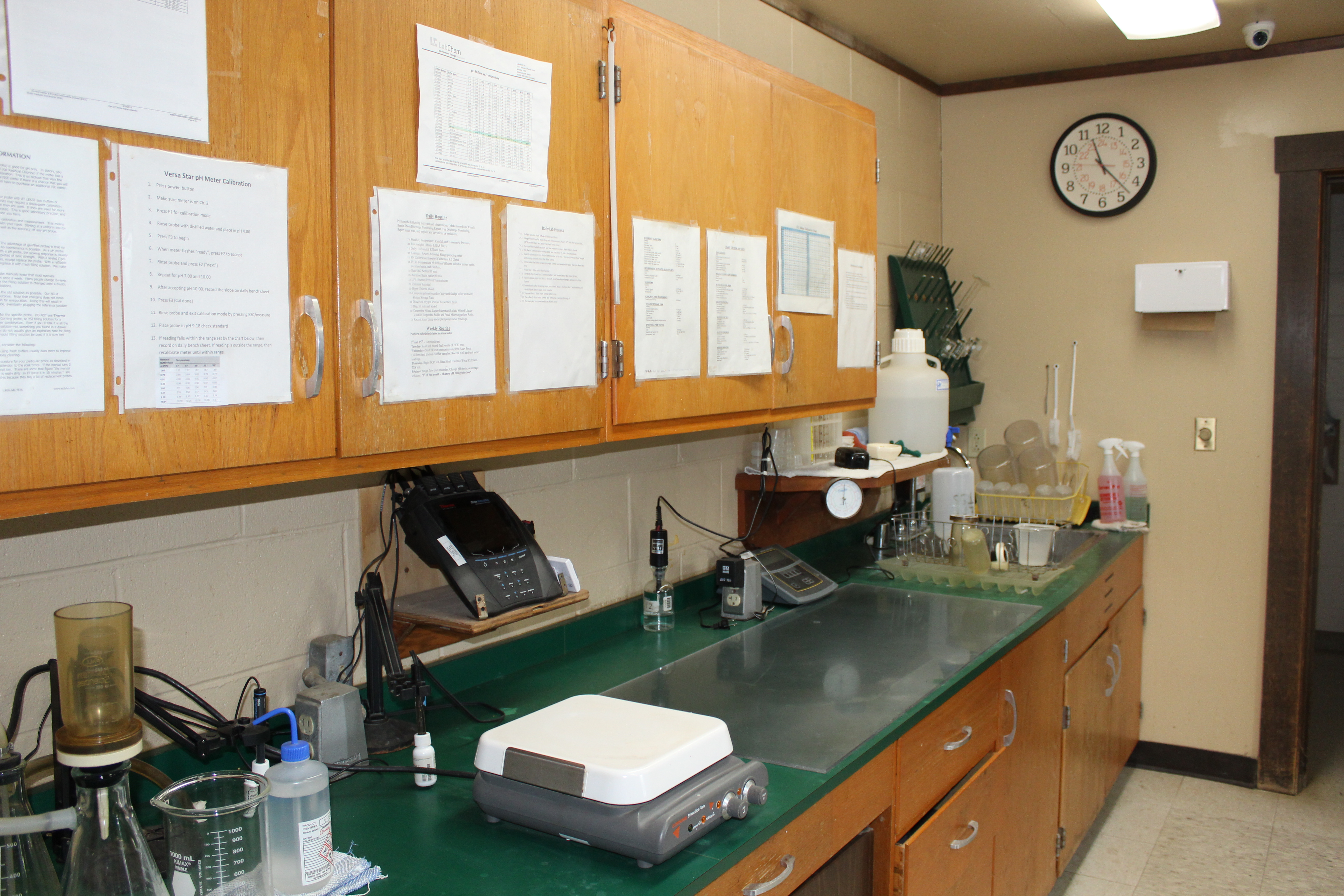
“We have won the award quite a few times and I think everyone is determined to win the award because they don’t want to be the first group of operators to not win it. The operators are proud of the awards. We have them hanging in the lab, except for the ones hanging in our administration building. That makes me think that our administration is as proud of our achievements as we are.”
And the administration certainly is—they proudly showed the awards to me as soon as I arrived.
Everyone at the facility is very proud of the program, and they should be. OCC’s team consistently averages 0.4 mg/L of suspended solids in their wastewater. DOE requires that the maximum limit of suspended solids in wastewater amounts to 30 mg/L. That means their wastewater contains 98.7% less than the maximum limit. Keep up the great work, OCC!
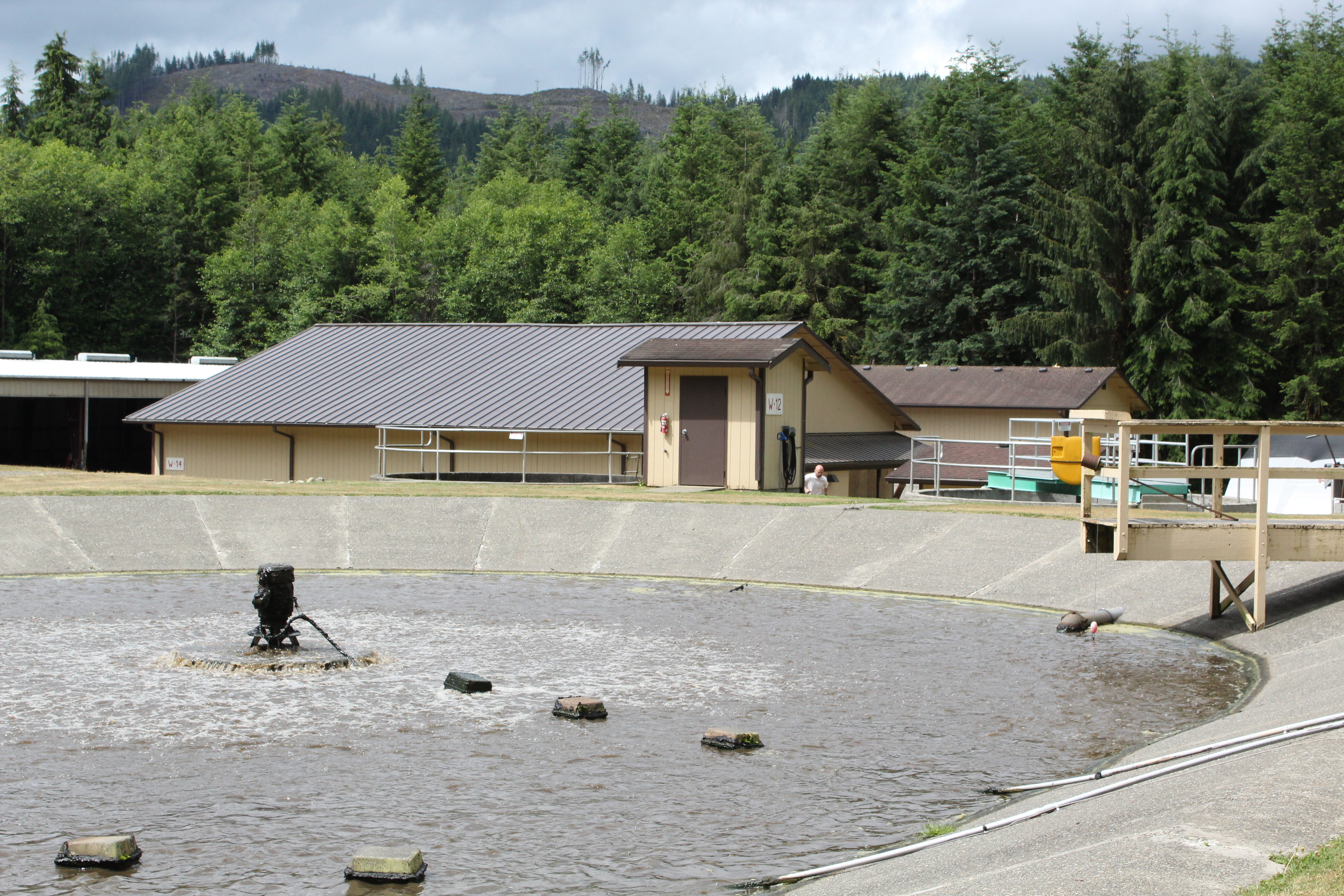
Below are pictures of the treatment plant showing the journey that OCC’s wastewater goes through before flowing into the nearby river. Take a look!
The first stop in the wastewater journey is this big pool where the water is aerated.This is a secondary clarifier that allows for solids to sedimentate out of the water.This is one of their secondary clarifiers that was empty for its regular cleaning.One of the last stops the water goes through is to be disinfected by this UV disinfectant.All of the wastewater is tested throughout the process to ensure that it is up to regulation and that everything is operating the way it should be. This is the lab that incarcerated participants use to test the water.The solids from the treatment are used in OCC’s large-scale composting operation. The compost is also fed by food and yard waste from around the facility.The compost is used around the facility to create and stimulate soil. Here, the compost has been used to foster the garden expansion around the greenhouses.
Unless otherwise noted, text and photos by Bill Anglemyer, Evergreen student and former Turtle Technician.
SPP Biological Technician, Jeramie Inge, and Evergreen student, Bill Angelmyer, with a western pond turtle. Photo by Marisa Pushee.
With the technicians responsible for their rehabilitation, on
April 10th, ten turtles made their way back to the ponds at the South Puget
Sound Wildlife Area. Three incarcerated Biological Technicians working for The
Sustainability in Prisons Project (SPP) had spent the last five months caring
for the turtles and monitoring their progress. The turtles had been healing
after being treated for the mysterious shell disease that has been afflicting
their population.
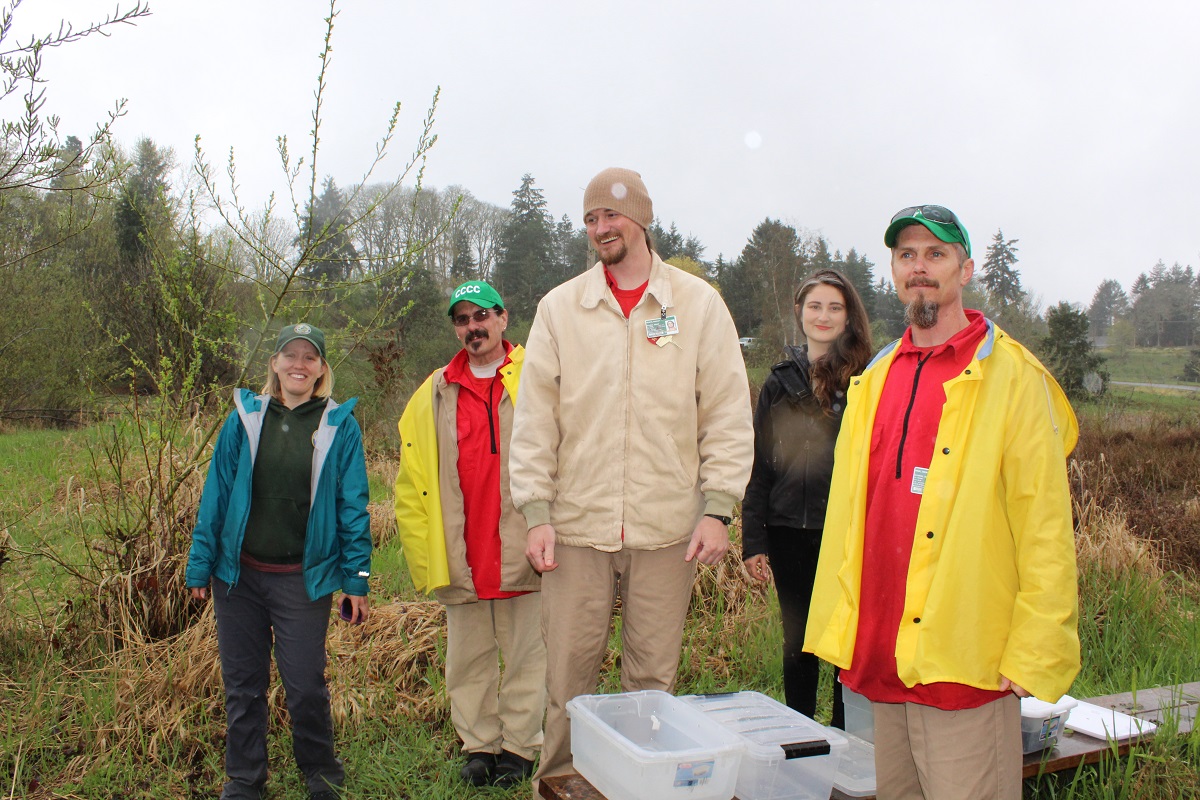
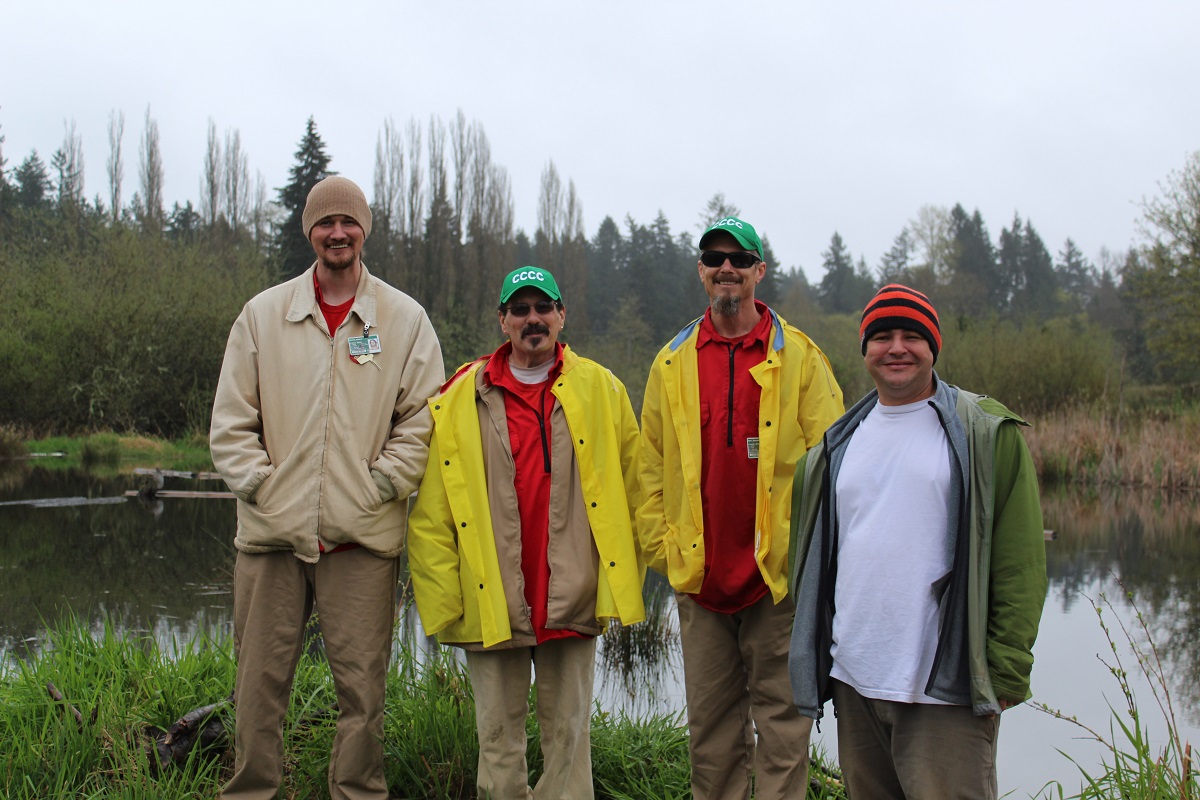
Left to right: SPP Liaison Tyler Kennedy, SPP Biological Technician Donald McLain, WDFW Biologist Emily Butler, SPP Biological Technician Jeramie Inge, and SPP Biological Technician William Rathgeber. Photo by Marisa Pushee.
The turtles are western pond turtles, a state-listed
endangered species. The historic population had been devastated by human
harvesting. Their numbers were lowered additionally by habitat destruction and
an influx of invasive species. Twenty-five years ago, the population of western
pond turtles in Washington State was estimated to be only around a hundred and
fifty. Efforts were taken to protect and enhance their numbers. These efforts have
been successful. The current population is estimated at eight hundred.
SPP Biological Technician Donald McLain releasing one of the western pond turtles he cared for at Cedar Creek. SPP Biological Technician Donald McLain releasing a western pond turtle. From left to right: WDFW Biologist Emily Butler, SPP Biological Technician William Rathgaber, SPP Biological technician Donald McLain, SPP Ecological Conservation Coordinator Marisa Pushee, and SPP Biological Technician Jeramie Inge.
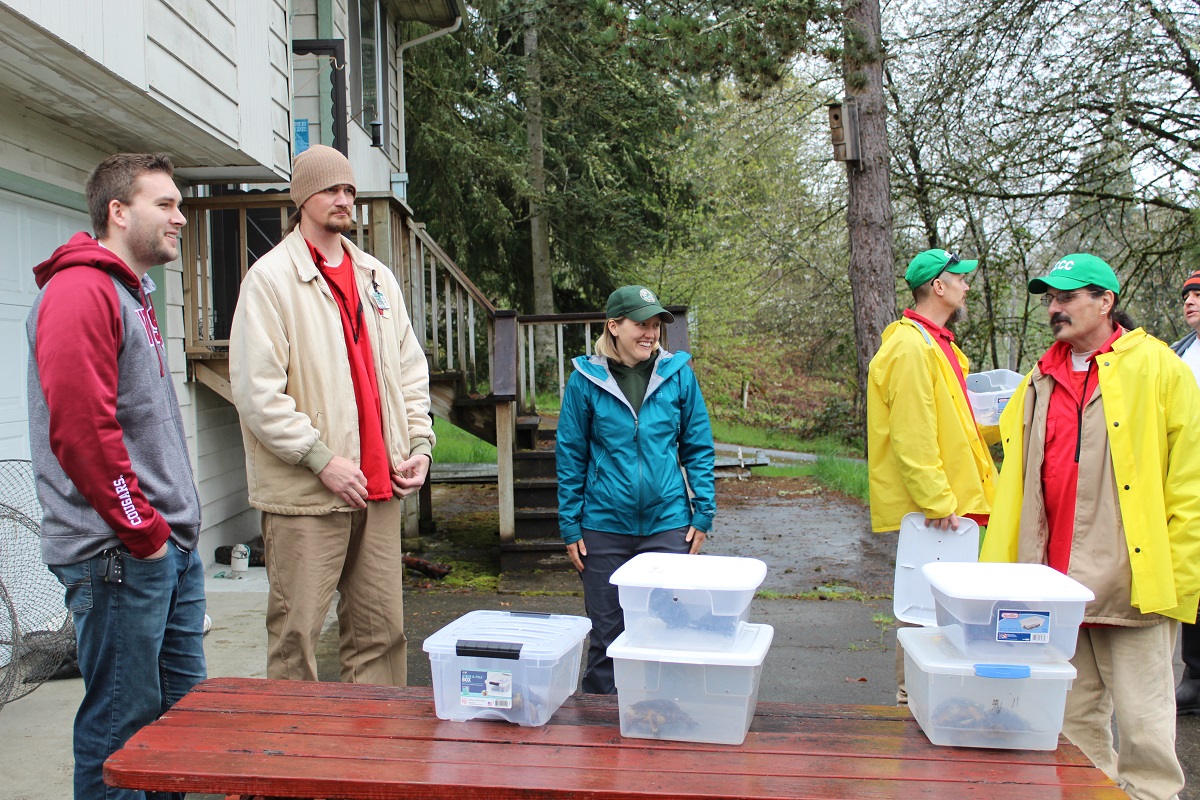
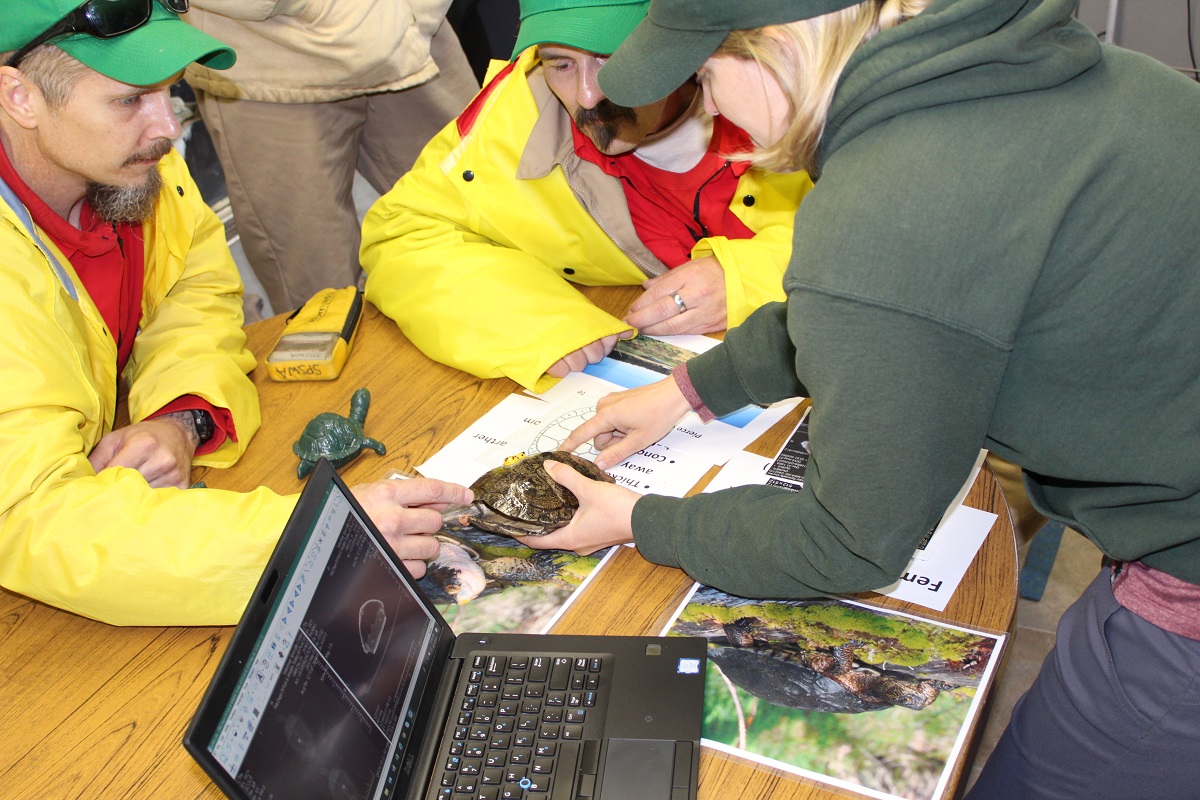
Tragically, the shell disease appeared in the last decade, and it is seriously impacting western pond turtles. While Washington State Fish and Wildlife biologists and veterinarians attempt to find the cause of shell disease, they are trying different tactics in treating the turtles that are most afflicted. After the treatments, which involve removing diseased sections of the turtles’ shells, the turtles need a place to heal. The technicians at Cedar Creek make sure that the turtles are well-fed and have clean habitats. Additionally, the technicians keep detailed records of the healing progress of the turtles’ shells. Lots of effort goes into keeping them as stress free as possible. The rehabilitation area is kept quiet because loud noises and other external stimuli cause stress in the wild turtles, which hampers their ability to heal.
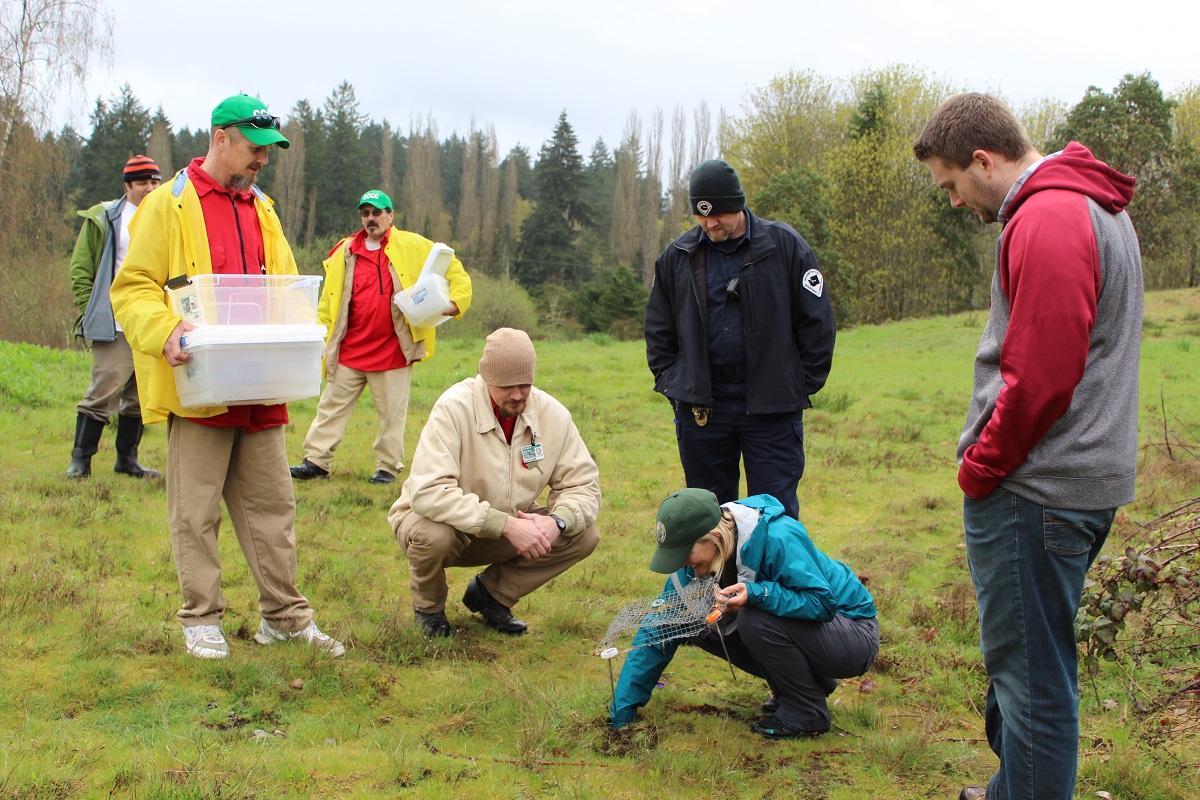
WDFW Biologist, Emily Butler, demonstrates how she protects the nests of this state-endangered species. From left to right: Bill Angelmyer, SPP Biological Technician Jeramie Inge, SPP Biological Technician William Rathgaber, SPP Biological Technician Donald McLain, Officer James Erwick, WDFW Biologist Emily Butler, and SPP Liaison Tyler Kennedy.
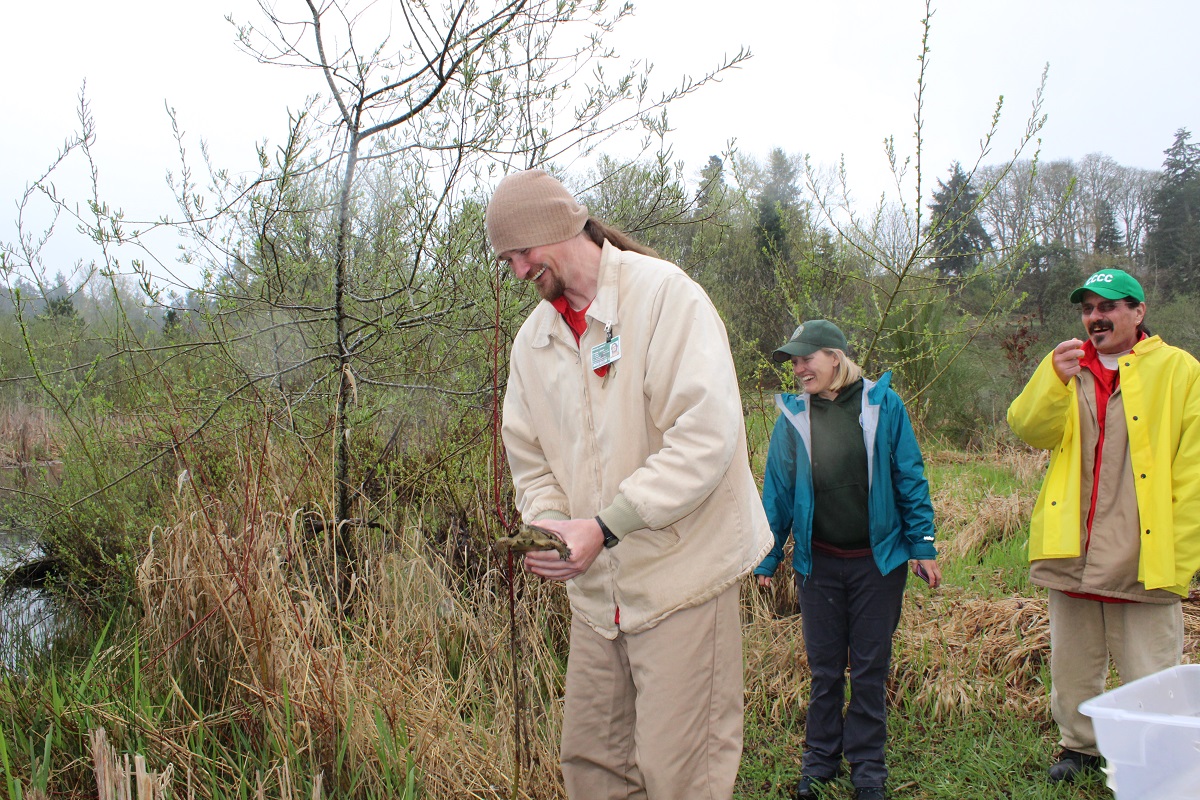
Releasing the turtles back into the wild was a fairly simple
and fanfare-free procedure. The technicians, SPP coordinator, SPP liaison, corrections
officer, Fish and Wildlife biologist, and myself walked the strategically
placed wooden planks that grant access to the edge of the pond. The plastic shoebox
containers that were used to transport the turtles were opened, and the turtles
taken out and gently placed in the water. Most of the turtles looked around for
a second, as if to gain their bearing, and then swam off disappearing into the pond.
Although the turtles need the treatment, they are wild critters, and they don’t
like to be in a captive environment; they
take to the murky pond like a prisoner to freedom.
WDFW Biologist Emily Butler shows Biological Technicians from Cedar Creek how she identifies each turtle. WDFW Biologist, Emily Butler, demonstrates how she protects the nests of this state-endangered species. From left to right: Bill Angelmyer, SPP Biological Technician Jeramie Inge, SPP Biological Technician William Rathgeber, SPP Biological Technician Donald McLain, Officer James Erwick, WDFW Biologist Emily Butler, and SPP Liaison Tyler Kennedy. Photo by Marisa Pushee.
It was a great experience seeing the turtles swim off into
the pond. It was great to talk to the technicians about their experiences
caring for the turtles. To hear the technicians talk about their plans for the
future was inspiring. This is because I was a turtle technician at Cedar Creek
for three years. I was caring for turtles inside the prison only a short year
ago. The current technicians seemed to be inspired by my presence too. We
talked about education—I’m currently in college. I was elated to hear that each
one of the technicians was seriously considering furthering their education
once released. I hope to be invited to future releases and to meet with new
technicians.
Left to right: Donald McLain, William Rathgaber, Jeramie Inge, and Bill Anglemyer. Photo by Marisa Pushee.



















Once a year, SPP reports on all things sustainable happening in Washington State Prisons.