Category Archives: Community Contributions

2025-2026 Treatment Turtles Have a New Routine

By Mikala Waldrup, SPP Environmental Programs Coordinator and Michael Zirpoli, SPP Ecological Programs and Workshop Manager

This season, the northwestern pond turtles (NWPT) in post treatment care at Cedar Creek Correction Center (CCCC) have a new routine: bath time. Turtles housed at CCCC are trapped by biologists from The Washington Department of Fish and Wildlife (WDFW) as part of a monitoring and rehabilitation effort focused on combatting a fungal-associated shell disease. This shell disease is thought to be caused by a keratin eating fungus known as Emydomyces testavorans that infect the NWPTs and create lesions and pitting on their shells. These lesions make parts of their normally hard shells soft and, if left untreated, can pose serious health risks. 

SPP is partnering with WDFW to pilot a less invasive treatment option for these turtles. Based on research from the University of Illinois Wildlife Epidemiology Lab, SPP is administering an anti-fungal treatment bath for the turtles. Three times a week turtles soak for 30 minutes in a terbinafine and water solution to coat them in the medicine, in hopes of clearing them of the fungal pathogen.

This season there are 10 sub-adult turtles and 12 adult turtles in care at Cedar Creek, all of which have tested positive for E. testavorens. The 10 sub-adult turtles came to CCCC in August of 2025 and have been taking baths 3 times a week since. These sub-adults are also being periodically tested for E. testavorens, to assess the effectiveness of the terbinafine bath treatment. In addition to taking terbinafine baths 3 times a week, the 12 adult turtles also received treatments similar to past years with surgical removal of portions of the shell most severely impacted by the shell disease. This treatment took place at the Progressive Animal Welfare Society (PAWS) in the fall and winter. In February, the first round of adult turtles were transferred to Cedar Creek Correction Center for long term care prior to their release back to their native ponds in the spring.

As in past seasons, the technicians caring for the turtles work diligently to ensure environmental conditions are stable in the program area along with ensuring daily feeding and tank cleanings are performed by protocol standards. With the addition of the terbinafine treatment, the technicians are now also administering the baths to the turtles, which gave the technicians the opportunity to learn and implement new care protocols. In addition to the hands-on turtle care, northwestern pond turtle rehabilitation technicians receive education on wetland ecology, turtle biology, and animal husbandry. A total of 10 credits are offered by The Evergreen State College for technicians who complete the educational portfolio.

Thank you to all the partners and technicians for making this work possible!


Are Octopuses Smarter Than a 5th Grader? A Workshop on Octopus Intelligence at WCCW

Are octopuses smarter than a 5th grader? Are you? How do we measure intelligence? In a June workshop at the Washington Corrections Center for Women (WCCW), Rus Higley and Aeriel Wauhob from MaST Center Aquarium posed these questions to a group of incarcerated students who are part of the Freedom Education Project Puget Sound (FEPPS). FEPPS is a non-profit organization that offers Associates of Arts and Bachelor of Arts degree to incarcerated people at WCCW.

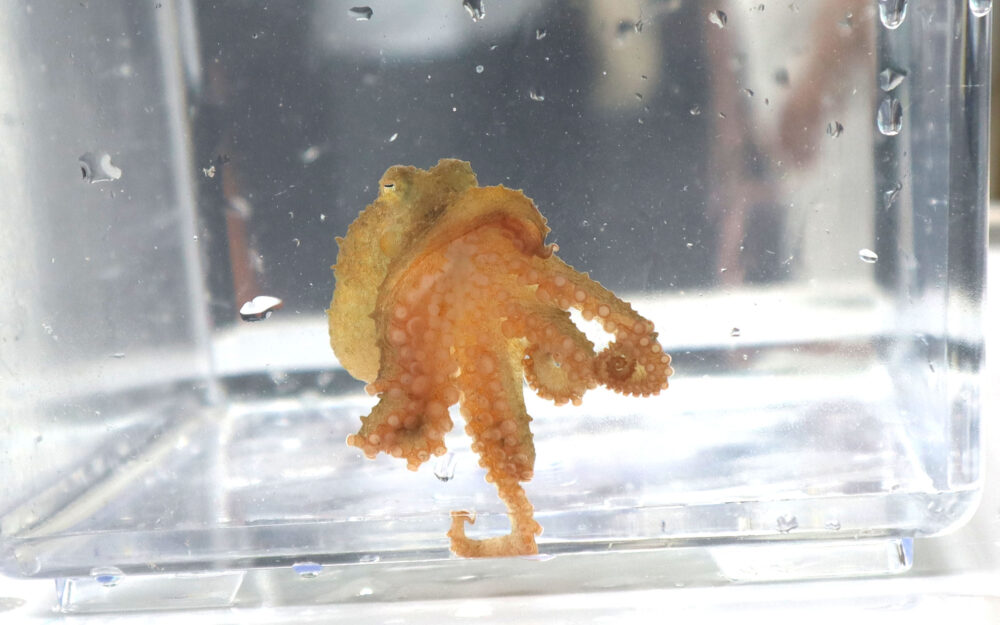
In a fantastic presentation given by Higley, students watched amazing videos of camouflaged octopuses, learned about species native to the PNW, and even got to meet a live juvenile Pacific red octopus! 

Russ Higley from the MaST Center Aquarium in Tacoma explains octopus anatomy. Photo by Emily Passarelli.
Red pacific octopus (Octopus rubescens). Photo by Emily Passarelli. 

Octopuses use tools, have spatial memories and personalities, and engage in play, all attributes that humans consider signs of intelligence. So, ARE octopuses smarter than 5th graders? It’s complicated. While an octopus may not pass a 5th grade multiple choice test, the workshop hosts and participants all agreed that knowing facts on a test was not the best way to measure intelligence, especially for a creature who has nerve cells (like the ones found in our brains) in all eight of its arms! 

Andrew Campbell from the Freedom Education Project Puget Sound (FEPPS) looks at the Pacific red octopus.
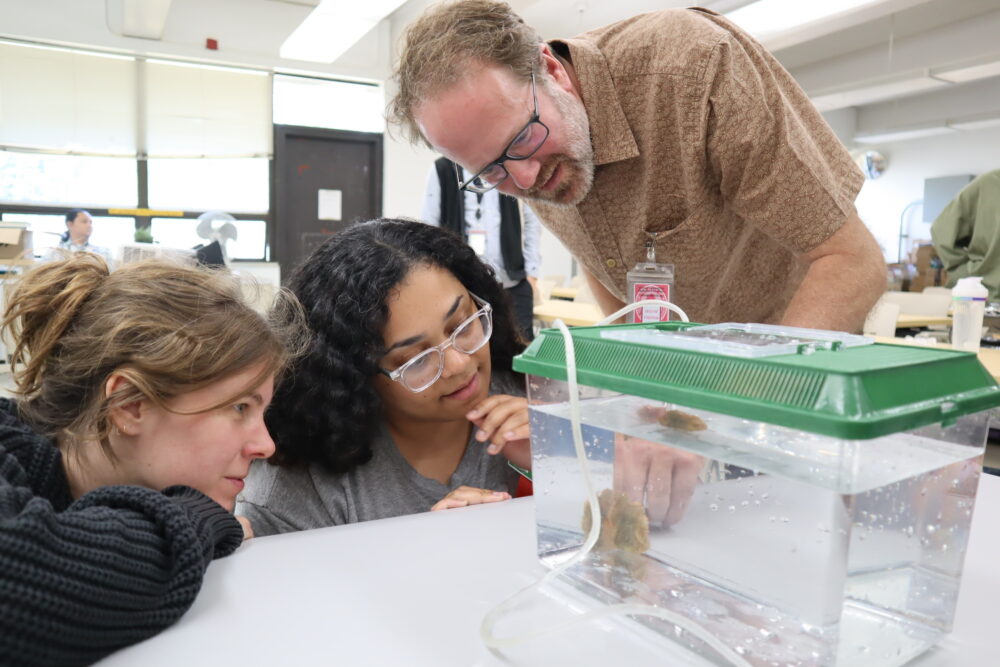
Russ Higley (right) points out octopus anatomy to SPP coordinator Anneke Wilder (left) and student Tatiana Baker (middle).
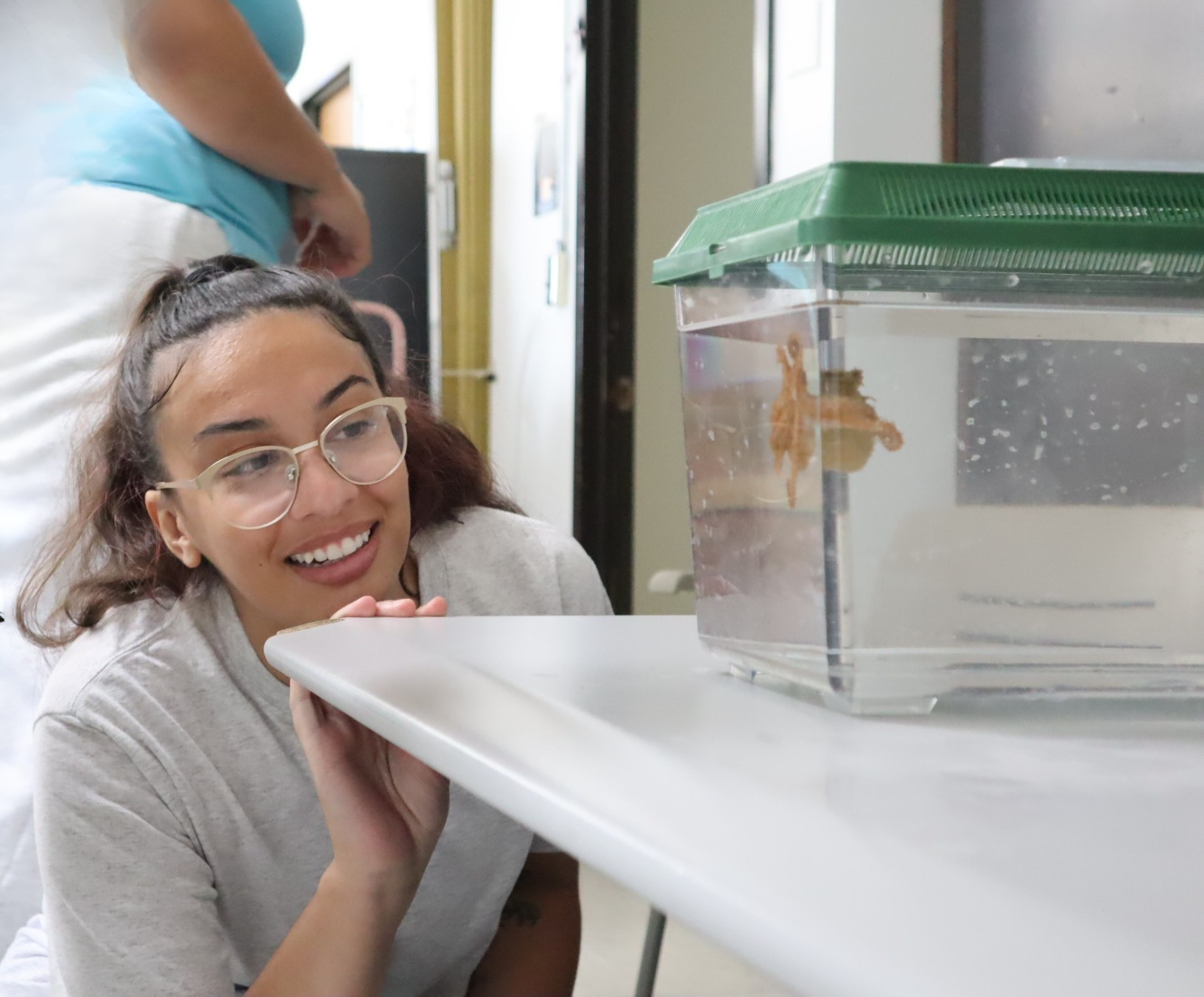
Olivia Bebic gets an up-close look at the Pacific red octopus.  

As SPP continues to ramp up our workshop offerings, now is a great time to get in touch if you or someone you know may be interested in offering a workshop in a prison facility. Contact Michael Zirpoli at michael.zirpoli@evergreen.edu for more information! Workshops provide fantastic opportunities for community learning exchanges, and they are an integral part of our educational offerings at SPP. 

How trees connect nature and people: Workshop at Stafford Creek with Nalini Nadkarni 

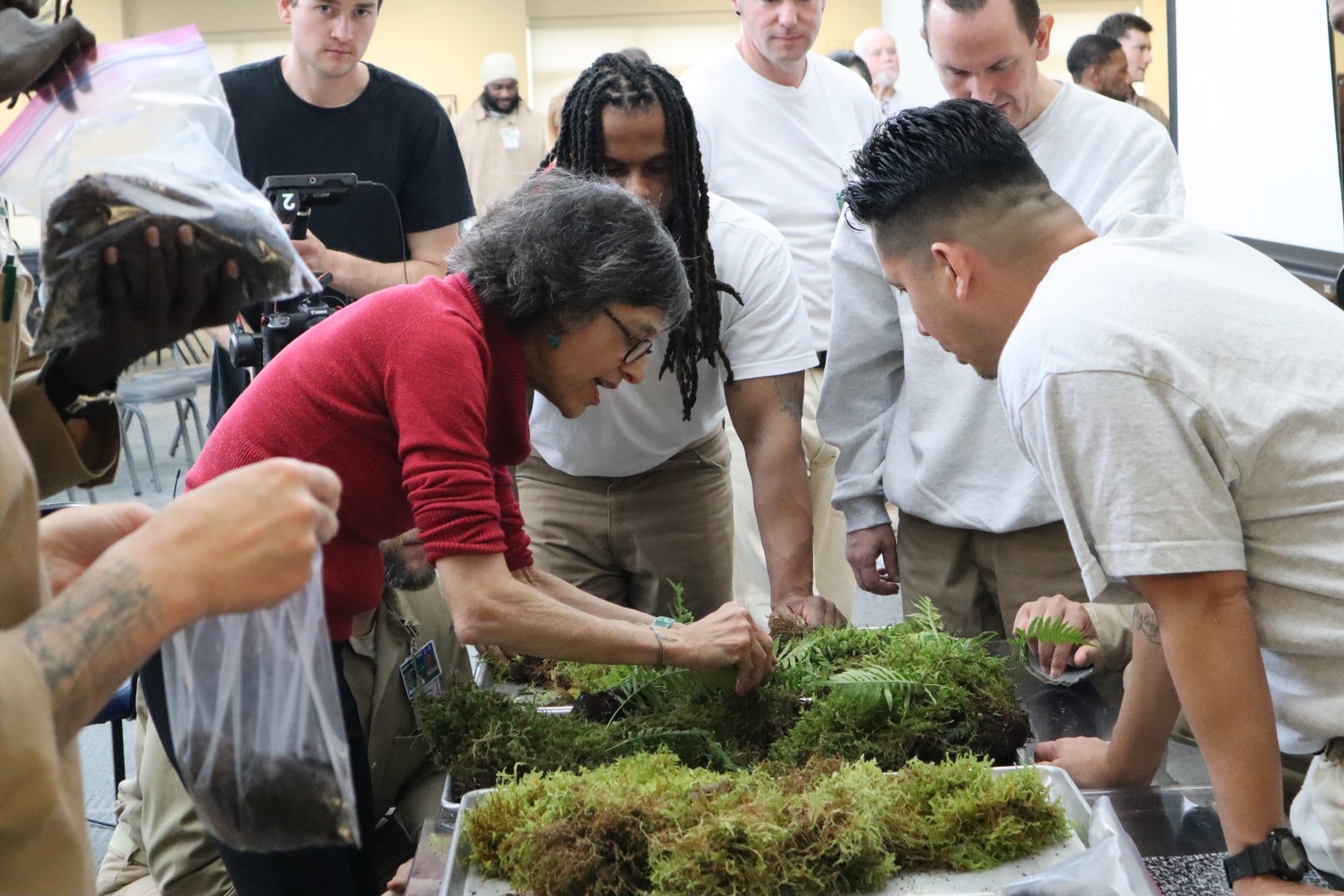
Nalini Nadkarni discusses the science of moss and ferns with students from Stafford Creek Correctional Center. Photo by Nat Kelly.  

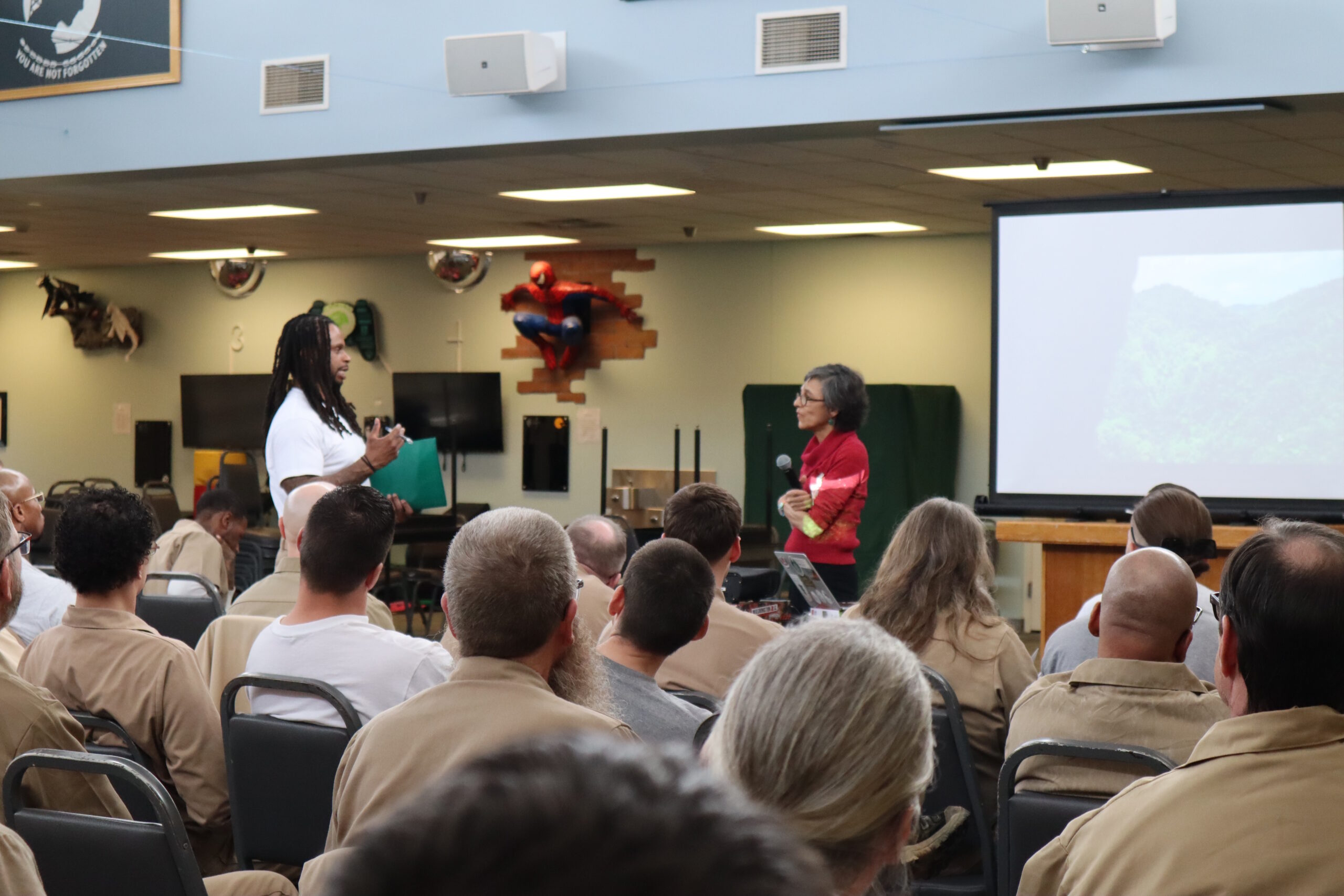
In late February, a special workshop was hosted at Stafford Creek Correctional Center. Renowned ecologist and SPP co-founder Nalini Nadkarni gave a talk about how trees connect nature and people. Nadkarni herself has a very special relationship with trees: she pioneered research in the cloud forest canopies of Costa Rica, using mountain climbing equipment to reach high into the branches. This research helped scientists learn more about the role that epiphytes, which are non-parasitic plants such as moss and ferns that live on the branches and trunks of other plants, play in forest ecology.  

Nadkarni speaking about the connections between people and trees to a crowd of incarcerated students. Photo by Nat Kelly.  

Nadkarni spoke to the crowd about the importance of communicating science to the broader community, drawing on her experience collaborating with churches and prisons throughout her career. Through her work, she hopes to make scientific research and its implications more accessible to non-scientists. 

Students ask thoughtful questions at the end of Nadkarni’s talk. Photo by Nat Kelly. 

The workshop was well attended by incarcerated students, SCCC staff, and SPP staff. We were even joined by a film crew that is creating a documentary about Nadkarni and her work for National Geographic!  Students had the opportunity to ask questions for over an hour after Nadkarni’s talk ended, which made for a great learning exchange and wrap up to the workshop. To learn more about Nadkarni and her work you can visit her website: https://www.nalininadkarni.com/ 

A film crew captures Nadkarni speaking with students about her research. Photo by Nat Kelly.

Resourceful Art

Text and photos by Bethany Shepler, SPP Green Track Program Coordinator

Creating fine art is rarely described as an easy activity—inspiration and skills have to be cultivated. Creating art in prison is even more difficult. Many inmates don’t have access to the materials needed to do artwork, whether that be painting, drawing, wood burning, or any other type of art. But some artists seem to take this as an interesting challenge and, working with Washington State Department of Corrections (WA Corrections) staff, they find a way to create the art they envision. During my recent trip to the Washington State Penitentiary (WSP), I got to see some of the beautiful artwork being created in the Sustainable Practices Lab, and that will be going on display at a local gallery in Walla Walla; they will be showcasing not only the talent, but resourceful nature of art that is created in prisons.

The inmates at WSP have to make their own canvas. They use old bed sheets and pull them tight over a frame – made from recycled wood – and then seal the sheets with 4 coats of wax. The final product is similar to a canvas you might buy at an art store.

A close-up of canvases inmates made from recycled and reclaimed materials.

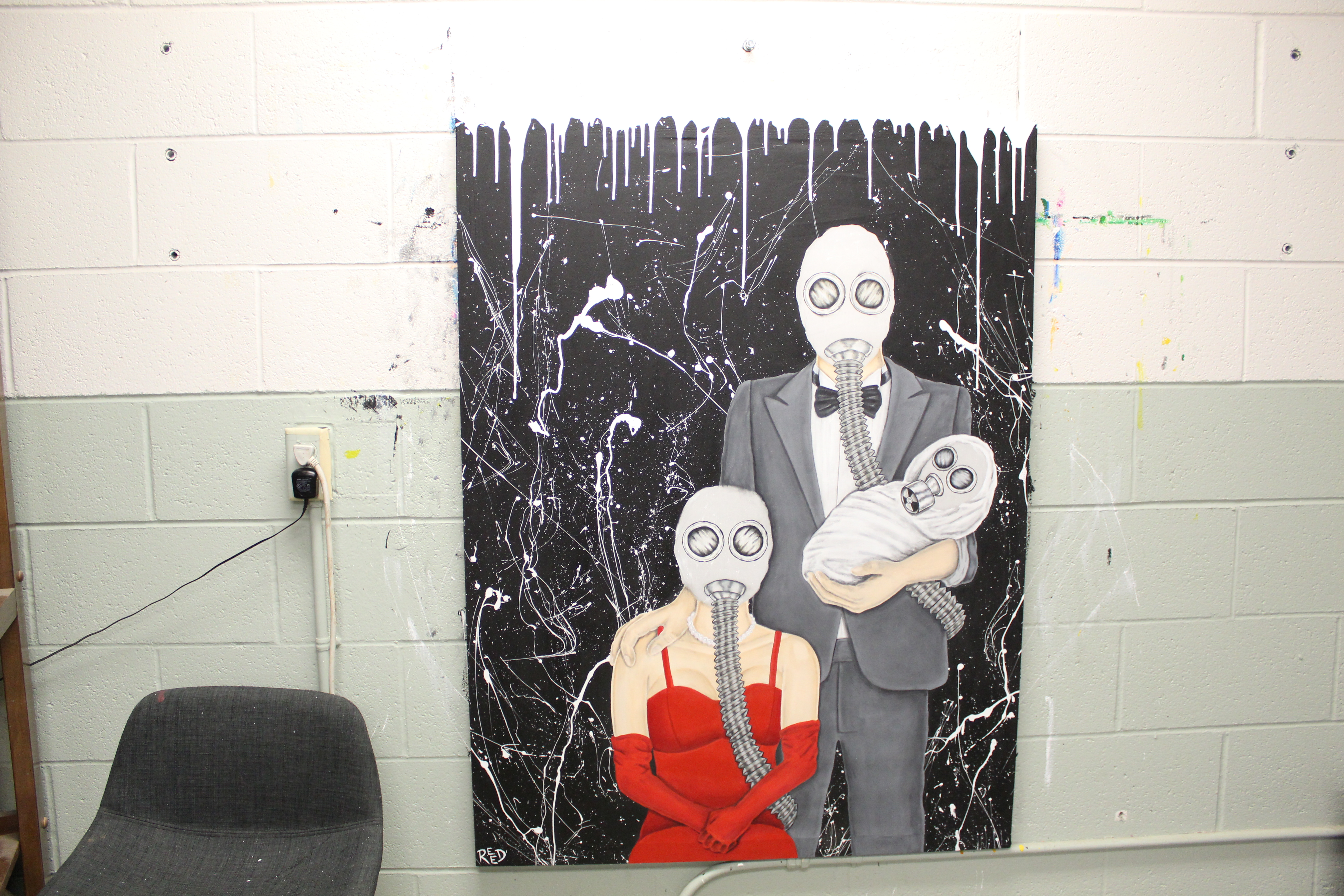
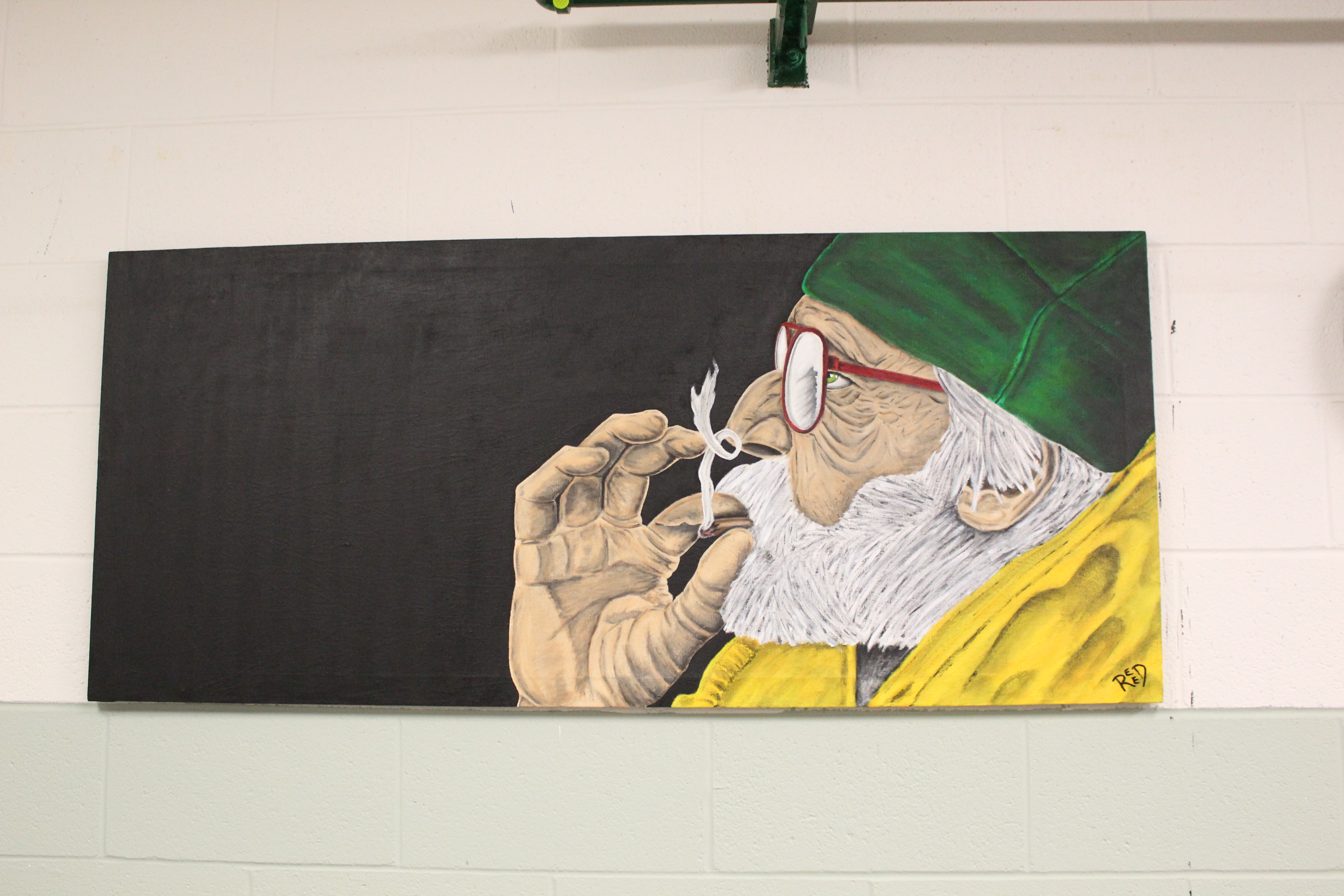
These pieces are created by two men who feel a sense of freedom when expressing themselves and their opinions through their art. They are clearly both skilled artists, but chose one creative lead for the project with the underlying theme – social critique.

Take a look!

The artist told me that this piece will have more color on the masks before it’s complete; even though it’s not done yet, it looks so cool!

A New Innovative Partnership

Text by Kelli Bush, SPP Co-Director, The Evergreen State College

Presentation team with WSDOT Secretary Roger Millar (from left to right, Tony Bush, Carolina Landa, Brian Bedilion, Roger Millar, and Kelli Bush)

Alvina Mao presenting at WSDOT Partnerships and Innovations conference

Over the past year, SPP Evergreen staff have been working with Washington Department of Transportation (WSDOT) and Washington Department of Corrections (WA Corrections) partners to develop new opportunities for education and employment pathways. The new partnership has tremendous support from WA Corrections Secretary, Stephen Sinclair, WSDOT Secretary, Roger Millar, and many staff at each agency. Building on successful prison program tours and executive leadership and committee meetings, WSDOT staff invited SPP-Evergreen staff and former SPP program participants to present at two recent conferences.

Each conference presentation included a panel with Carolina Landa and Brian Bedilion sharing their stories from pre-incarceration to post-release, Kelli Bush providing a brief overview of SPP, Alvina Mao and Eric Wolin discussing partnership alignment with WSDOT equity and inclusion goals, and Tony Bush describing education and employment pathway ideas in the environmental field.

The audience for the first conference was WSDOT environmental staff. Session participants enthusiastically expressed their appreciation to Carolina and Brian for sharing their experiences.

Carolina Landa presenting at WSDOT Environmental Conference

Following a successful session at the environmental conference, the panel received an invitation to present at the WSDOT Innovations and Partnership conference. The 4th Annual Innovations and Partnerships in Transportation conference included a welcome from Governor Inslee and an impressive variety of partner organizations. Our session titled “Forging a new partnership and building safe, strong communities through successful reentry” included productive discussion with attendees.


Brian Bedilion presenting at WSDOT Environmental Conference

The developing partnership among WSDOT, WA Corrections, SPP and others will provide exciting new education, training, and employment opportunities to incarcerated people in a variety of disciplines. Washington State Governor Inslee is a strong supporter of providing formerly incarcerated people employment as a way to build safer and stronger communities. The Governor signed executive order 16-05 directing state agencies to “implement further hiring policies intended to encourage full workforce participation of motivated and qualified persons with criminal histories.” We are grateful to WSDOT and WA Corrections for providing such excellent support and enthusiasm for this growing partnership.

Conference presentation team (from left to right): Kelli Bush, Tony Bush, Carolina Landa, Alvina Mao, Brian Bedilion, and Molly Sullivan

Caring about people, caring about place

by Joslyn Trivett, SPP Education and Outreach Manager

Airway Heights Corrections Center (AHCC) is a fair trip from the Evergreen team’s offices in Olympia—a six hour drive, or a flight to Spokane and renting a car. Even so, each of us who has been before looks for excuses to go again. AHCC positivity and enthusiasm are infectious, and it is great fun to join them whenever we can.

A likely source of the positivity is the staff culture; it is easy to feel the influence of AHCC leadership and staff wellness and productivity throughout the facility. They take on new projects expecting to succeed, and work hard. At the same time, they don’t take themselves too seriously. They laugh a lot! They talk openly about their own faults, and poke friendly fun at others.

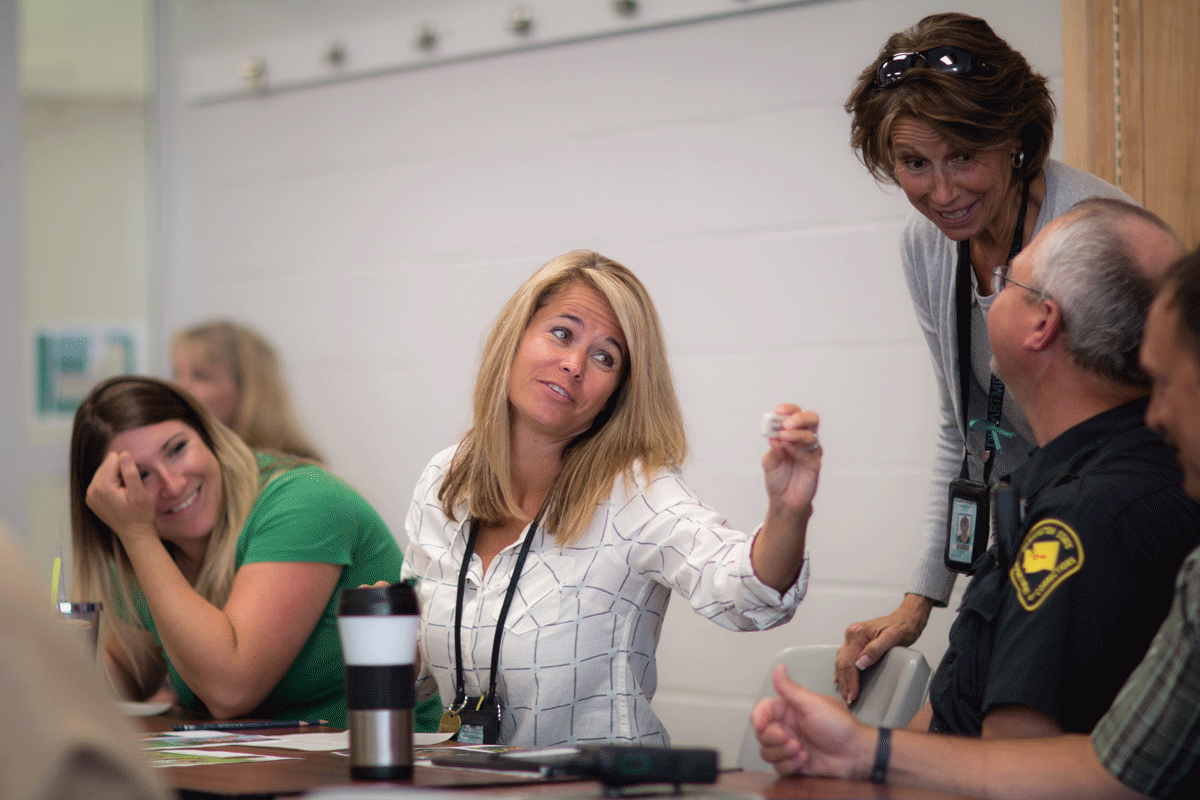
AHCC staff make fun during a sustainability meeting. Photo by Ricky Osborne.

AHCC’s waste sorting program is so effective that the incarcerated porter didn’t understand what the corrections staff meant when asking about “garbage.” That word starting to lose its meaning was so delightful that we all started to laugh.

Before a nature illustration class, Associate Heinrich talks with an incarcerated student. Photo by Ricky Osborne.

Just as important, they also listen intently to others’ ideas and questions. They believe in each other, and do a grand job of celebrating everyone’s successes. The work environment is pervaded by a can-do attitude. As Kraig Witt, Recreation Specialist 4, has said, “This is our giant coloring book. Let’s play…there’s no can’t. We can do anything.

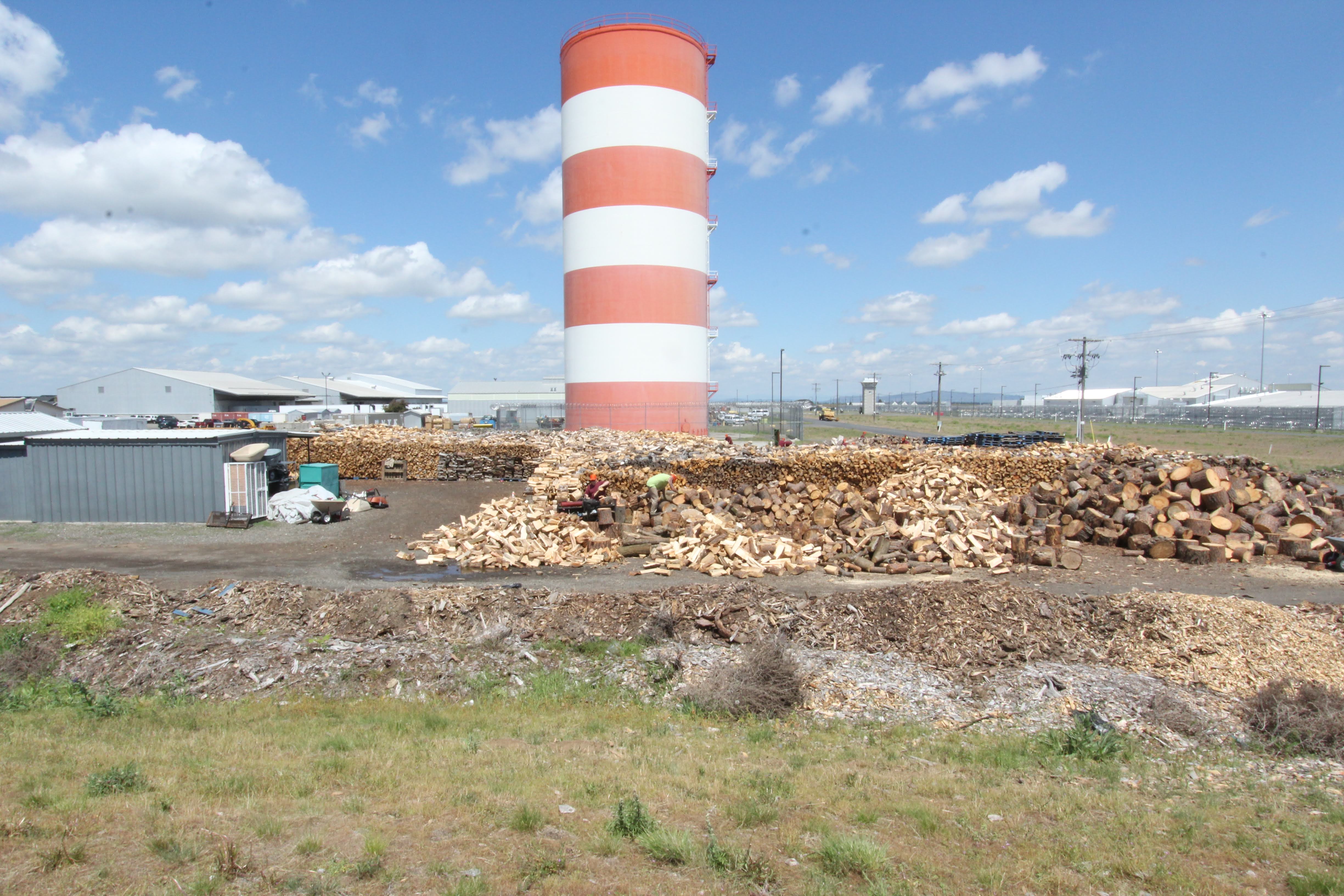
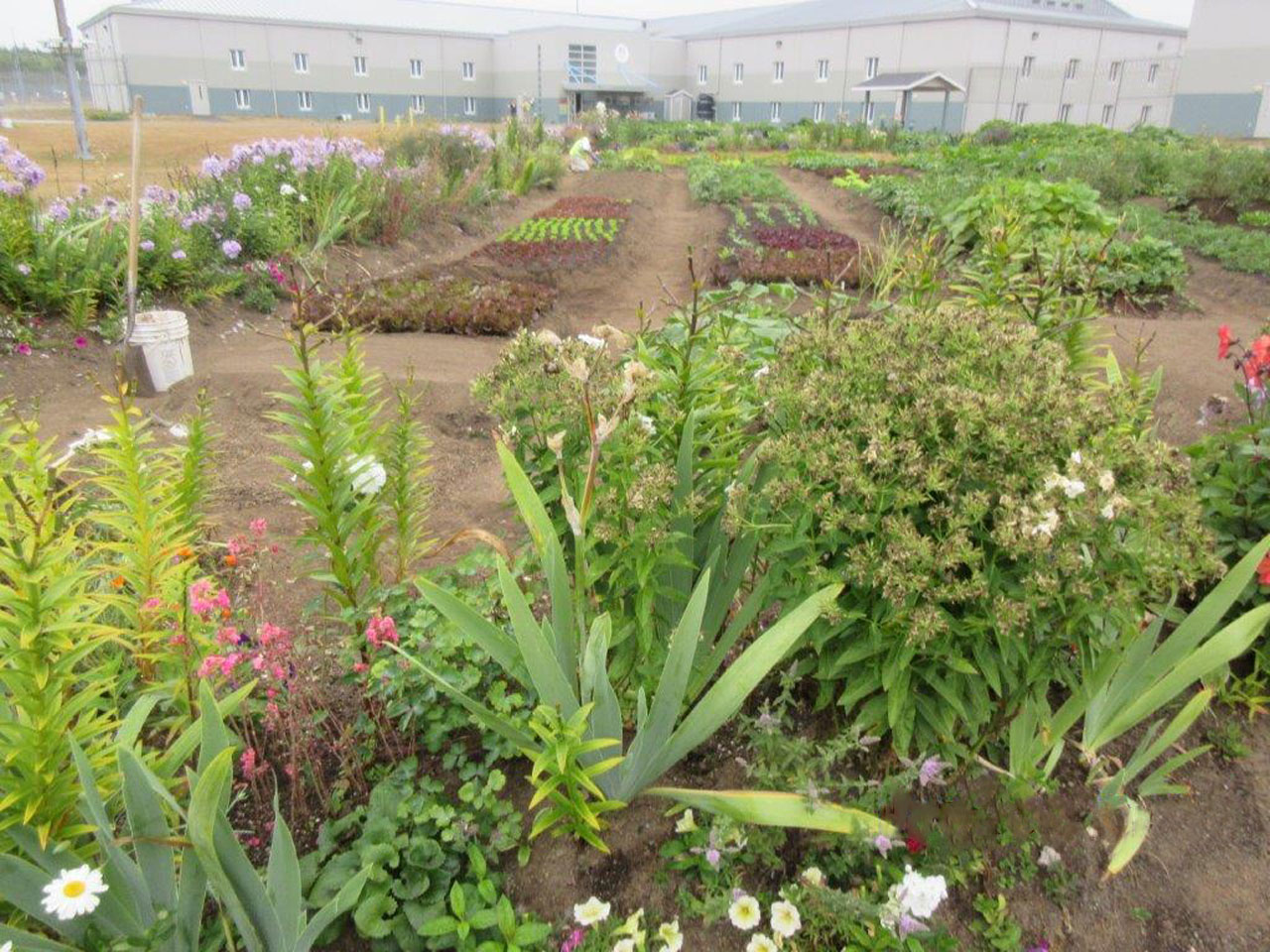
Their optimism finds many willing partners. AHCC hosts extraordinarily productive sustainability programs. To name a few: a thriving in-prison beekeeping club; Pawsitive dog training supported by two humane societies; more than 500 cords of firewood processed for donation to low income families each year; new quilting and vermicomposting programs. Most of the prison grounds are devoted to gardens, and when regional water contamination meant they needed to suspend growing vegetables, they planted flowers instead; they know how to make lemonade from lemons!

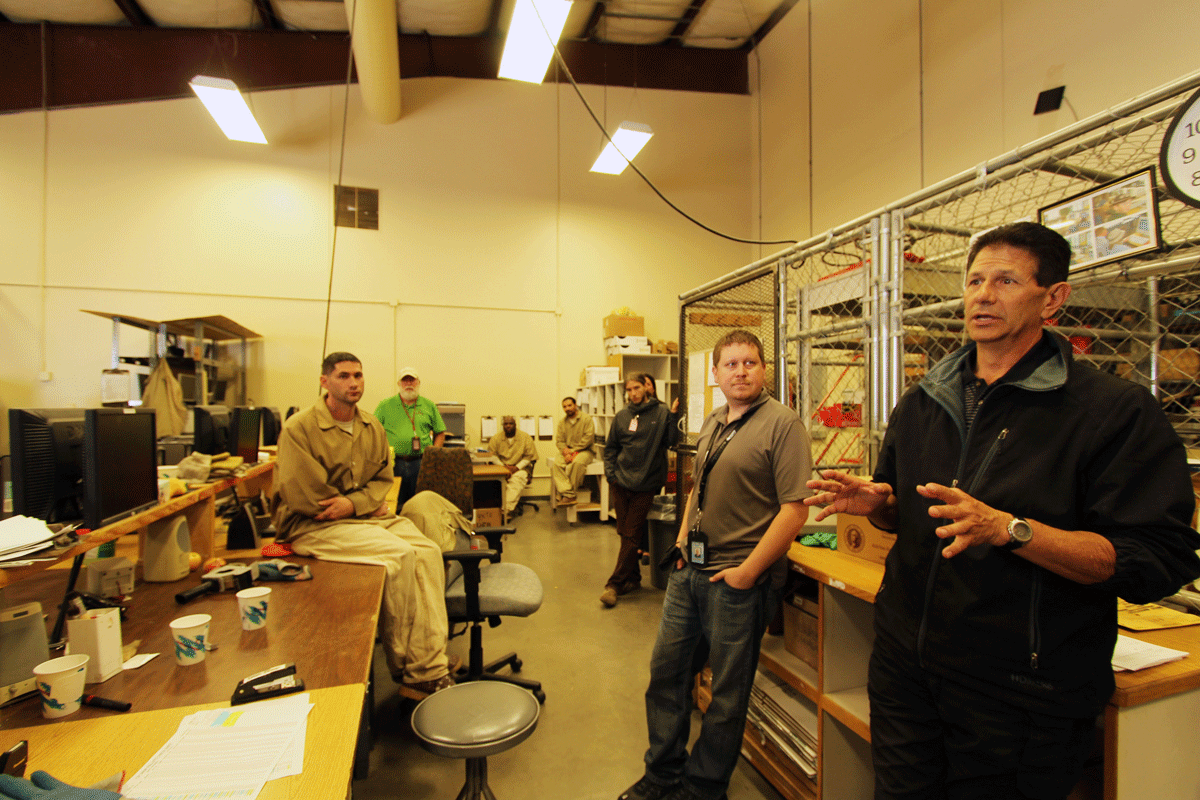
Correctional Program Manager Mike Klemke describes the Computers 4 Kids program. In the last year, incarcerated technicians refurbished 4,321 computers.

At the heart of these efforts is investing in AHCC staff. Associate Superintendent Kay Heinrich has said, “It really engages the staff to care about the environment of where they work. People care about where they’re working; it increases their morale.” A previously incarcerated SPP technician and current Evergreen student advised us that taking care of staff makes the prison experience better for everyone. We look to follow AHCC’s example on what that can look like.

AHCC dedicates a huge area to cutting and stacking cords of firewood for Spokane Neighborhood Action Partners (SNAP). Photo by Bethany Shepler.


Caring for the Community with Coastal Harvest

Text and photos by Amanda Mintz unless otherwise noted.

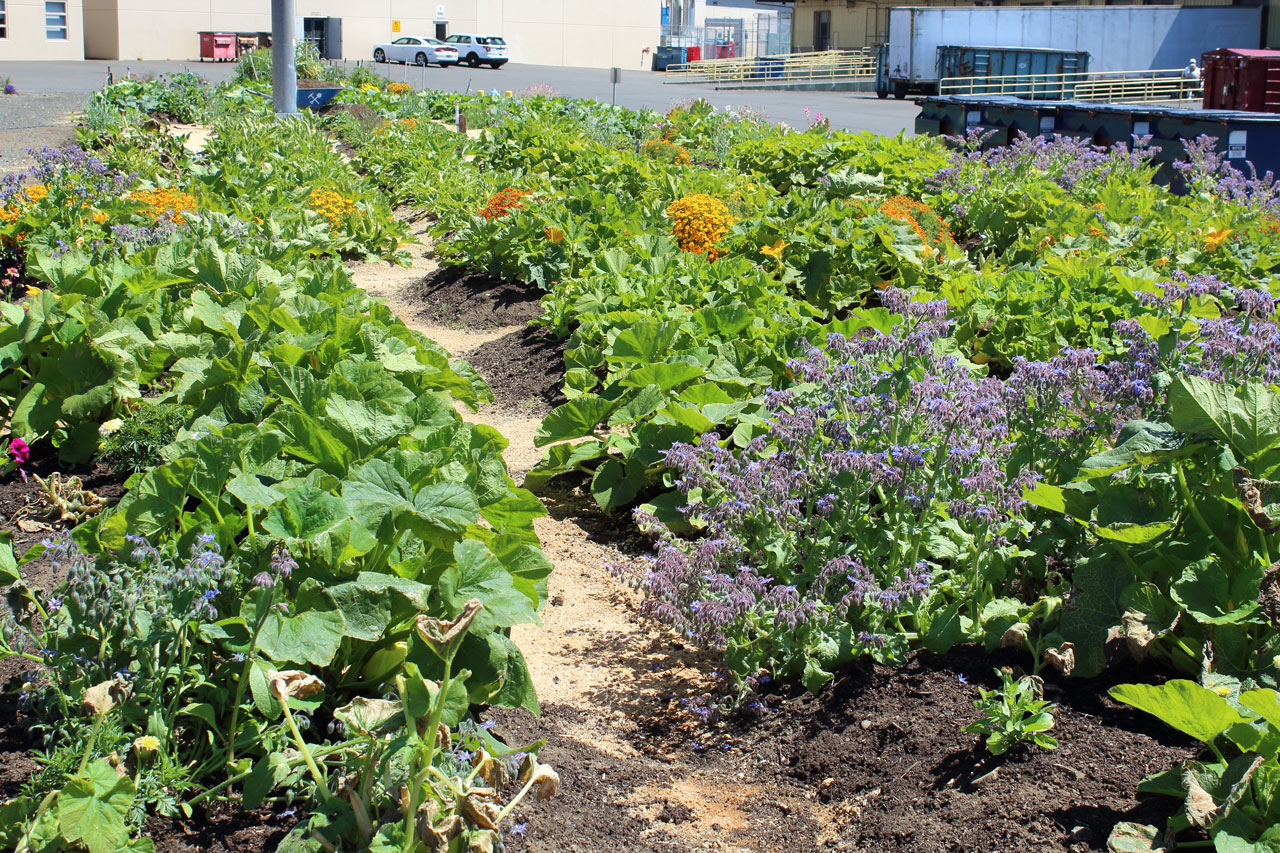
If you have never seen Stafford Creek Corrections Center, you might be surprised; among the fences and gray buildings are one and a half acres of flower and vegetable gardens. This includes several very large plots, many ornamental plantings, and a plot for every living unit. Inmates tend the gardens daily among the bees and butterflies; they experiment with novel gardening techniques, and carefully hand-water the plants.

A unit garden at Stafford Creek Corrections Center. Photograph by Kelly Peterson.

The incarcerated gardeners take a monthly class called Seed to Supper, co-lead by SPP Conservation Nursery Coordinator Jacob Meyers and SCCC’s Grounds and Nursery Supervisor Ed Baldwin (Ed is also the Prairie Conservation Nursery Liaison). Seed to Supper lasts nine sessions, during which participants learn how to grow and harvest produce in the Pacific Northwest. Mr. Baldwin decides what to grow, sometimes choosing unusual vegetables new to the gardeners. In class, the gardeners are encouraged to share their strategies and successes with one another to improve their skills collectively. Each class concludes with Mr. Baldwin announcing the weekly haul for each living unit—usually several hundred pounds per garden. Last year, SCCC produced 11,000 pounds of food. This year they have already broken that record, and will harvest over 19,000 pounds of produce by the end of this month!

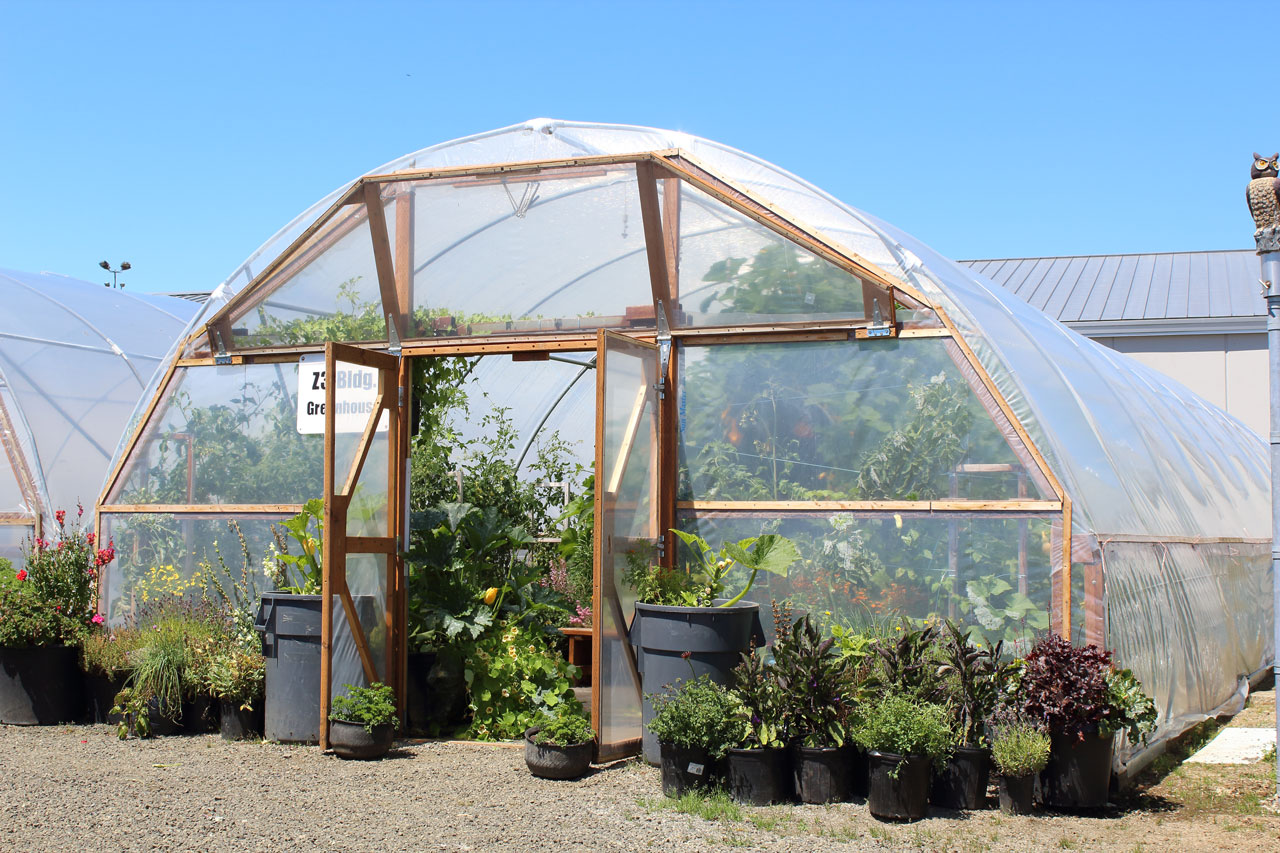
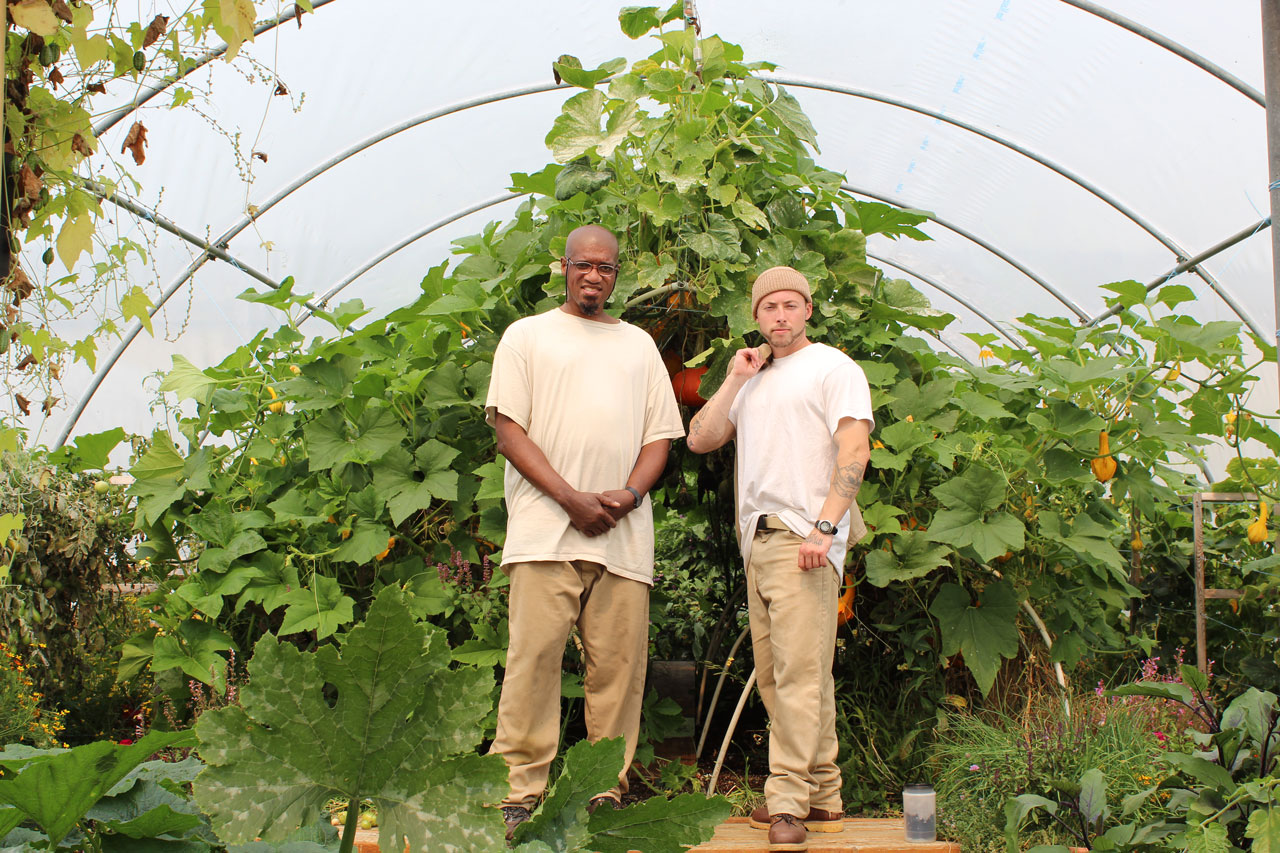
This hoop house was donated by SPP’s conservation nursery for growing food, and according to Ed Baldwin, it has increased production of heat and sun loving vegetables that are difficult to grow in the cooler coastal climate of SCCC.


Conservation Nursery Technicians Shabazz Malekk and Aaron Bander strike a pose in the hoop house.


SPP’s Conservation Nursery Technicians maintain the HUB gardens, where they use experimental techniques for natural pest suppression and increasing plant growth.

Most garden seed comes from Harvest Now, an organization that works with correctional facilities nationwide to grow-to-donate and provide fresh food for their own cafeterias. At SCCC, most of the produce is donated to Coastal Harvest, a non-profit organization serving food banks and pantries in a seven-county area of Southwestern Washington. Ed Baldwin was responsible for initiating the partnership; he visited Coastal Harvest and invited them to come tour the gardens at SCCC. According to Coastal Harvest staff, the response to the partnership from the community is very positive; SCCC is their only regular weekly contributor of fresh produce, and they are grateful for it.

I asked some of SPP’s Conservation Nursery Technicians, who also tend the HUB gardens and greenhouse, and Mr. Baldwin how they feel about donating most of the food they grow.

Technician Dale King said that, before he came to Stafford Creek, his life was all about himself; he never did anything for anyone else.  Now he feels good about the opportunity to do something for others in need.

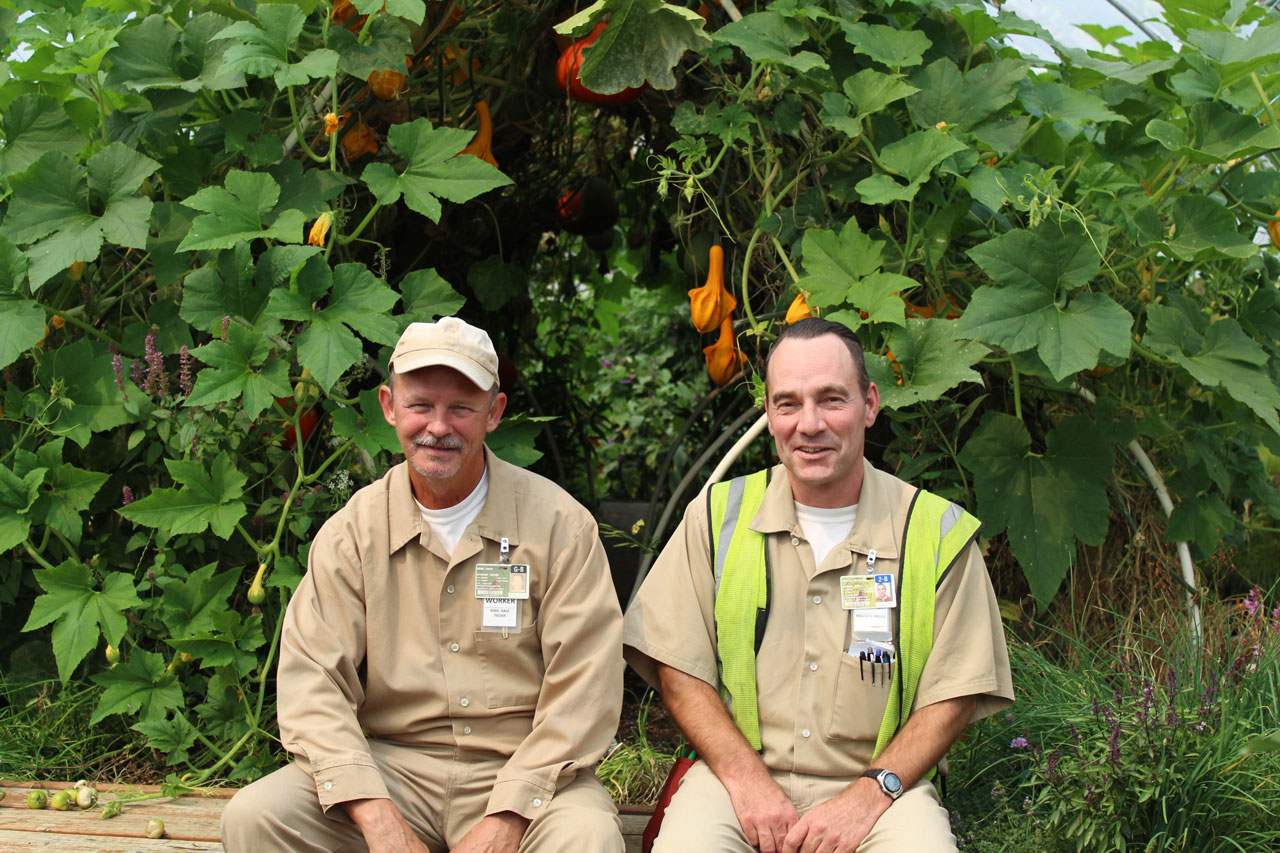
Conservation Nursery Technicians Dale King and Daniel Travatte are proud to provide food for Coastal Harvest.


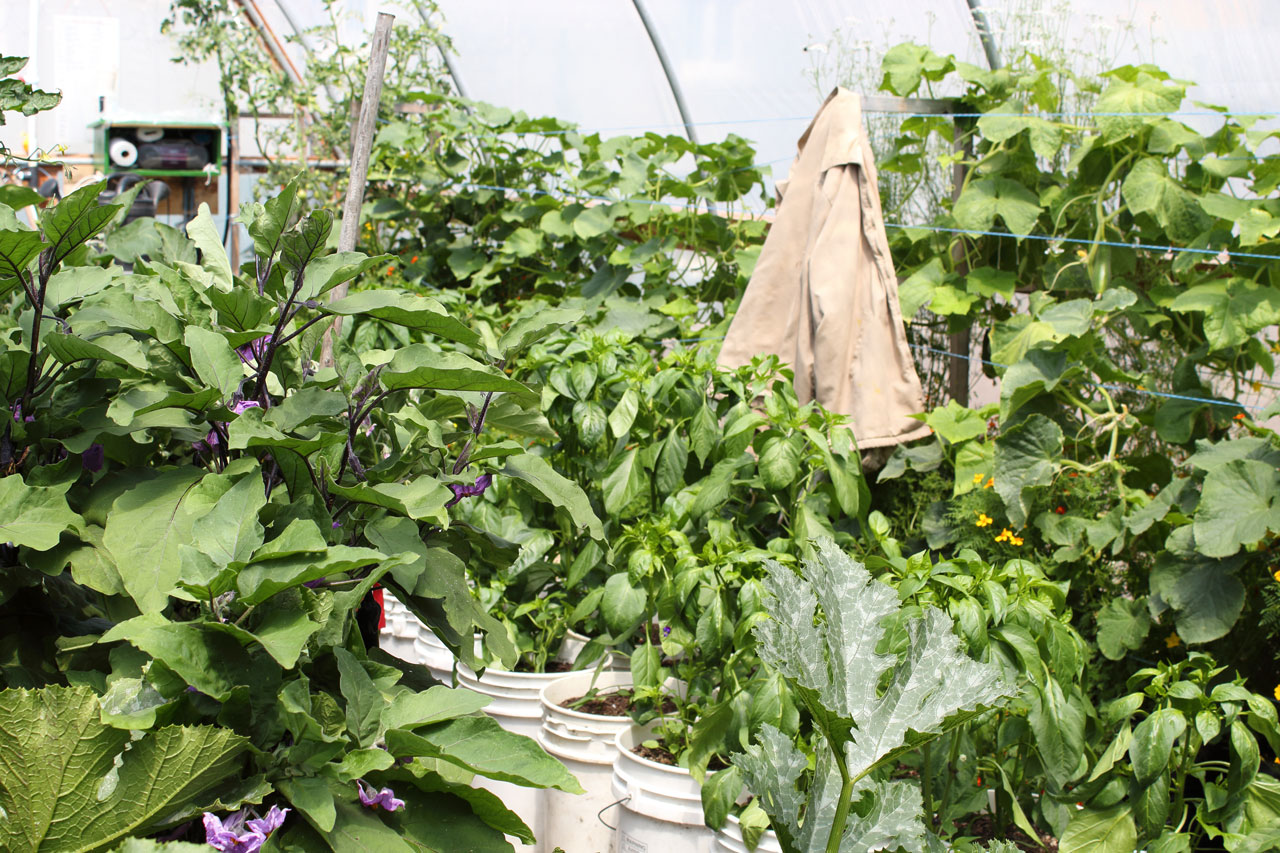
In addition to experimenting with growing techniques, the garden crew re-purposes as many items as possible, such as using plastic bags and buckets to grow tomatoes and eggplants.

The other technicians agreed; because they have their basic needs addressed, their work has become a labor of love; the gratitude from the community is more important to them than eating the food themselves. The community served by Coastal Harvest is their community too, and it cultivates a sense of pride to be able to give back. They brought up the idea that it takes one to one-and-a-half acres to feed one person for a year. There are almost 2000 people at SCCC, and not even two acres of gardens; Ed Baldwin and the technicians agreed that what they grow would be only a drop in the bucket at the prison.

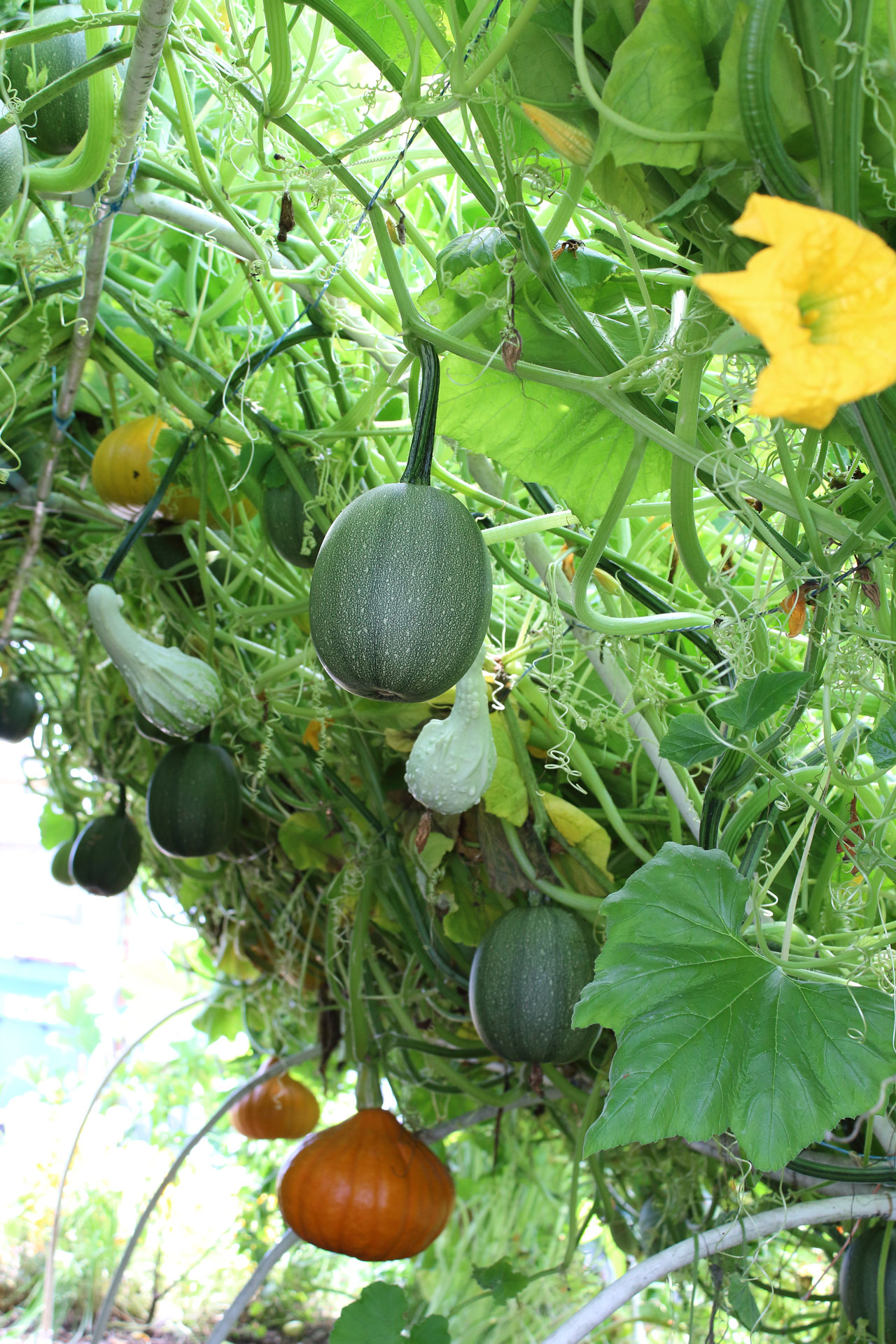
Starting in July, they figured out how to send some produce to the inmate kitchen; kitchen staff come out every Monday to look through the harvest and take what they can use to supplement inmate meals for the week, usually salad greens and herbs. Many of the prison-grown pumpkins will be contributed to SCCC’s monthly Family Fun Night in October, where inmates and their families will paint them for Halloween.

More than anything else, the Conservation Nursery Technicians at SCCC expressed that they appreciate the learning experience created by the partnership with Coastal Harvest. They have experimented with unusual fruit and vegetable varieties and adjusted their production based on feedback about the most popular items at the food banks and pantries. Mr. Baldwin thinks that at this point, each participating gardener could easily start his own business. Technician Daniel Travatte even went as far as saying he would pay to do this work!


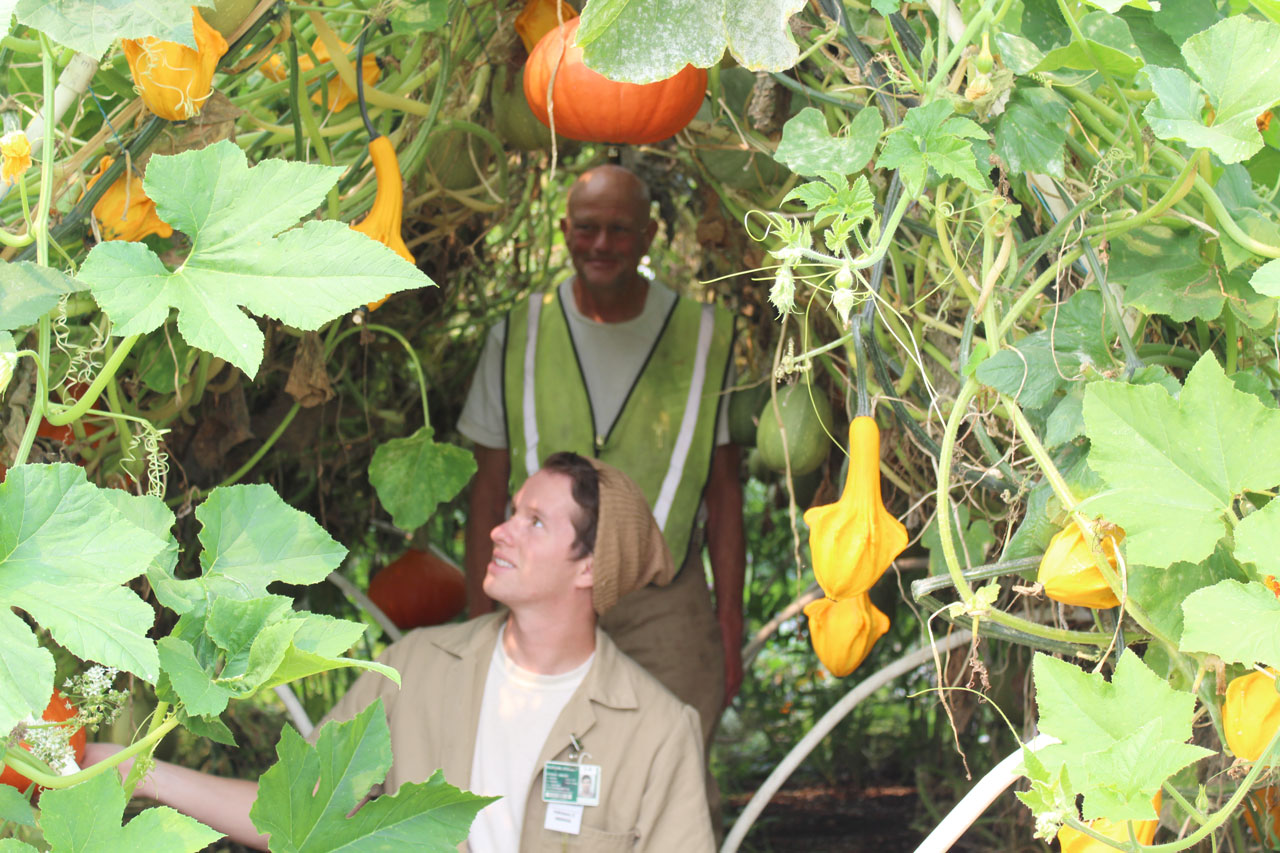
Conservation Nursery Technicians Kelly Lund and Stanley Feliciano cool off inside the squash trellis.


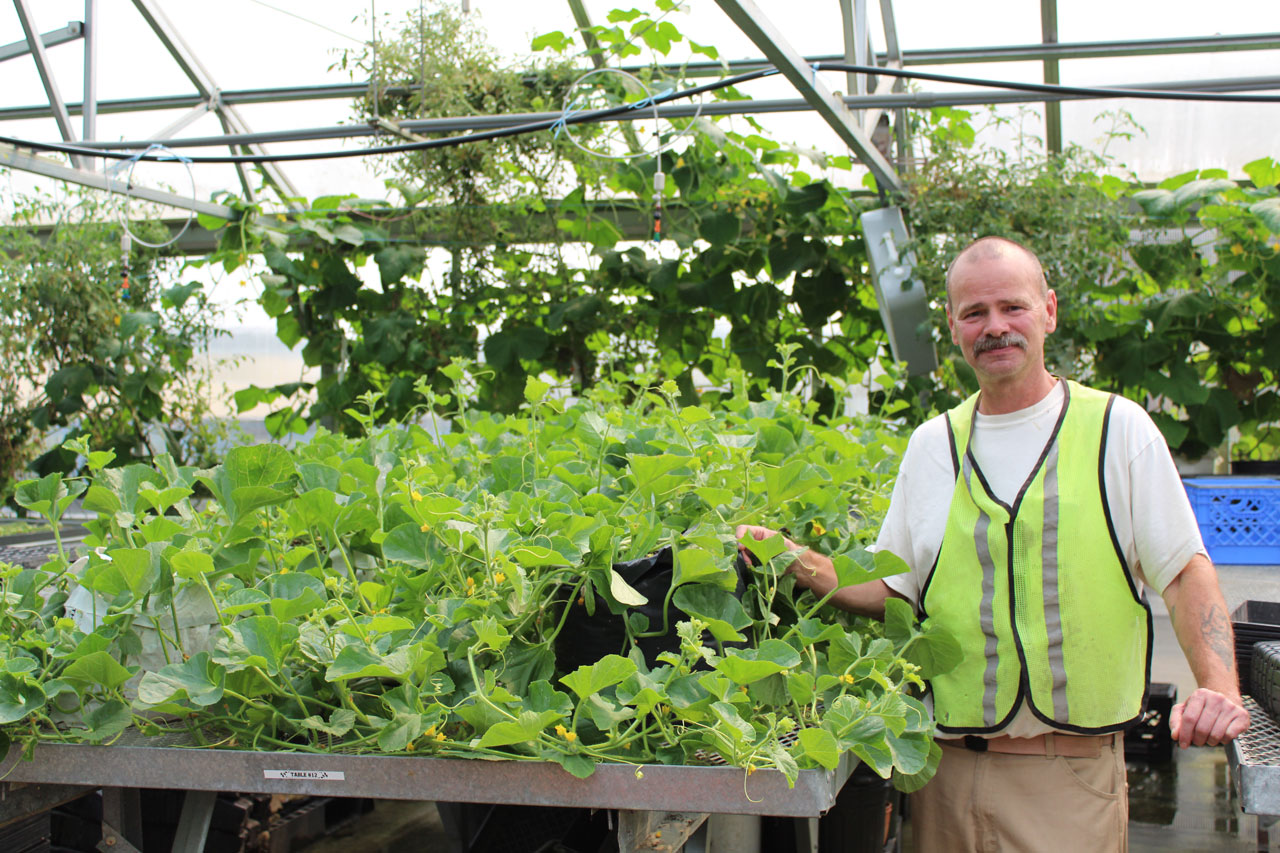
Many plants begin their lives in the greenhouse and move into the gardens as they mature.


Although less popular at the food banks, Coastal Harvest uses unusual or unknown vegetable varieties at their pantries, where they prepare and give away meals.


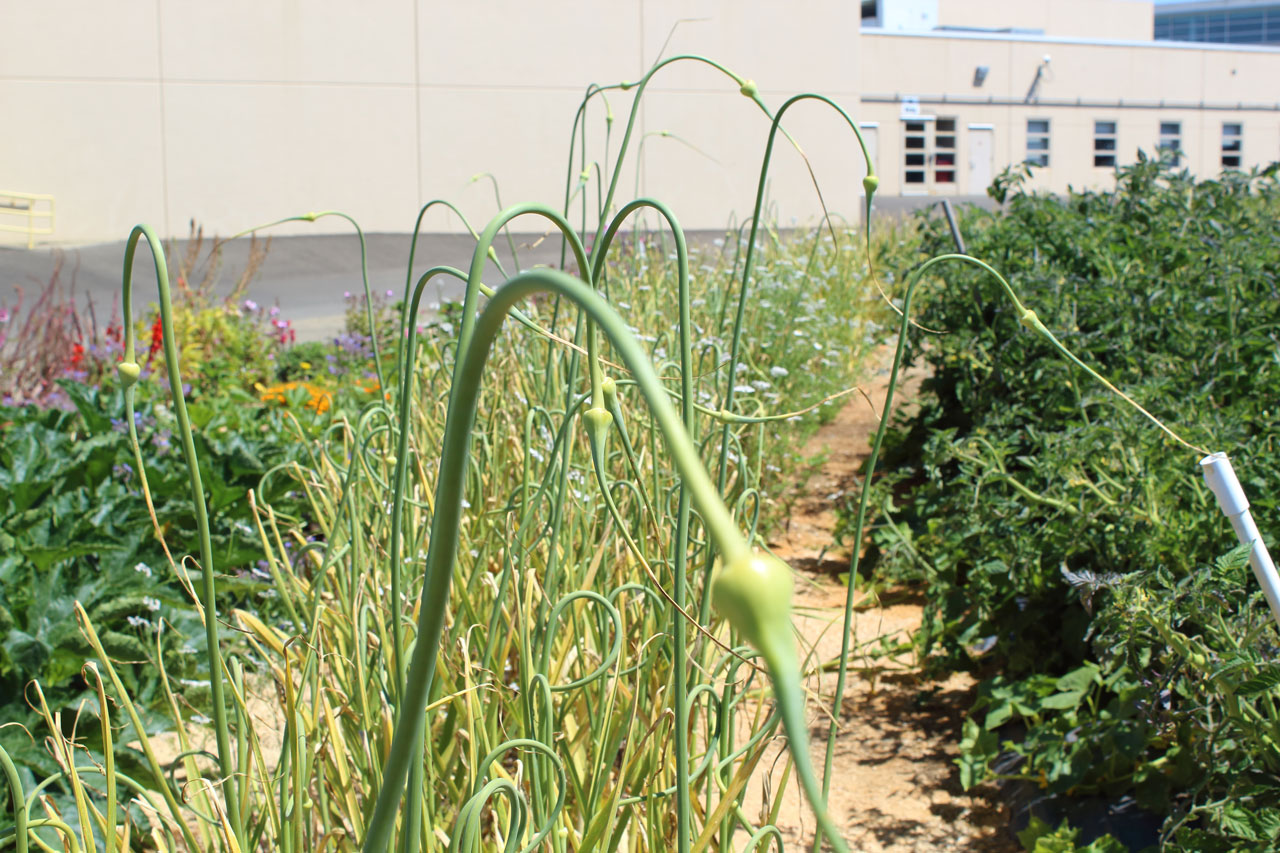
This gorgeous garlic is nearly ready for harvest.

Sustainability at Olympic Corrections Center

Text and photos by Bethany Shepler, SPP Green Track Program Coordinator

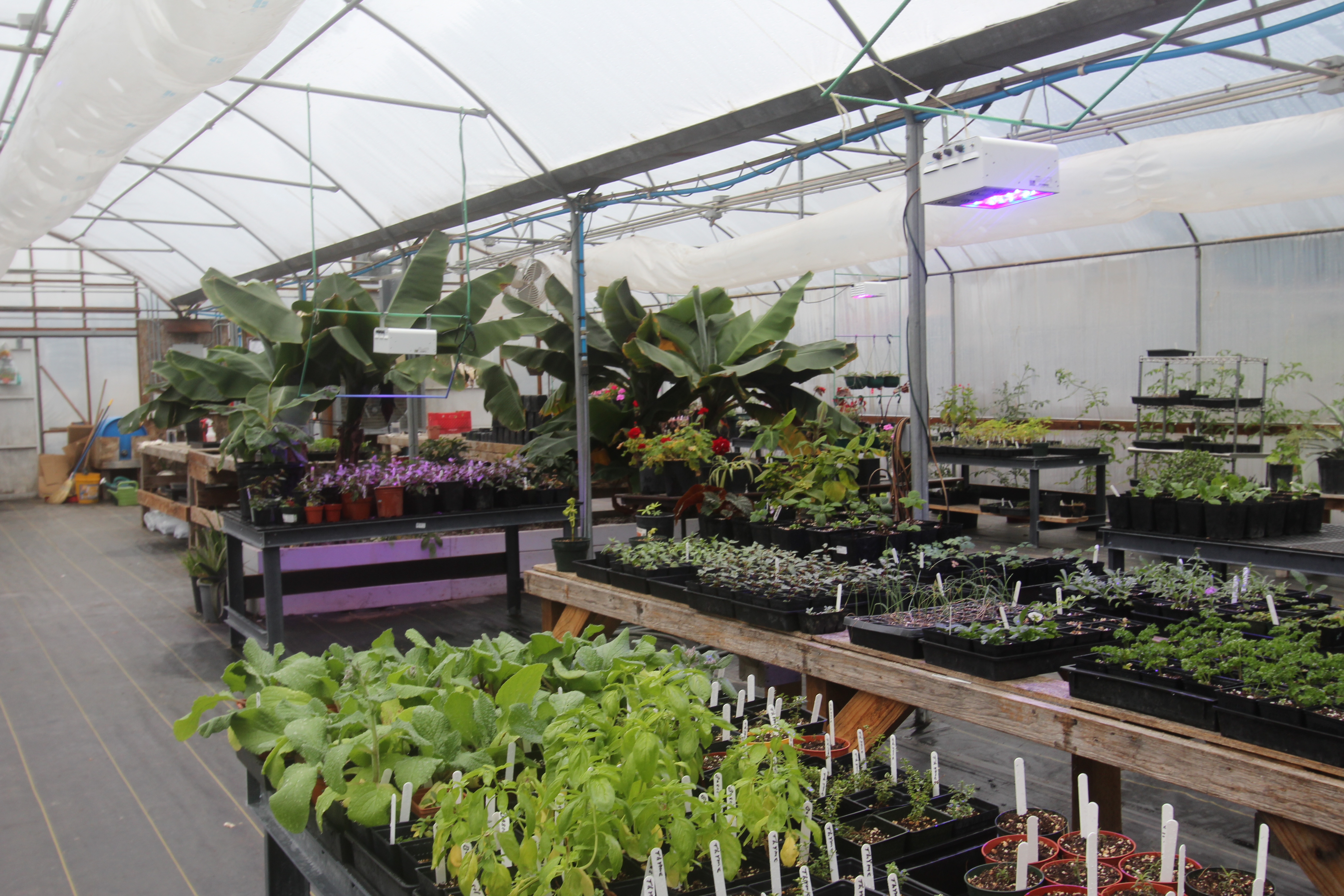
I recently visited Olympic Corrections Center (OCC) on the Olympic Peninsula near Forks, Washington. OCC is a “camp” for incarcerated individuals with 4 years or less remaining in their sentence. Inmates at OCC learn trades and gain valuable experiences for when they release. Among many options available to them is working for the Department of Natural Resources (DNR) as response teams for flooding, forest fires, and other work within national parks. OCC has an impressive garden setup where they grow plants and seedlings; they use these areas as labs for learning horticultural science and plant biology (a Peninsula College program). They also have excellent composting and wood shop programs.

It was a privilege to see their programming. Here are a few snapshots of their great work.

The greenhouse at OCC has seedlings, produce, flowers, and tropical plants. They grew dozens of flower baskets for Mother’s Day, for both inmates and staff to give to their mothers and wives.

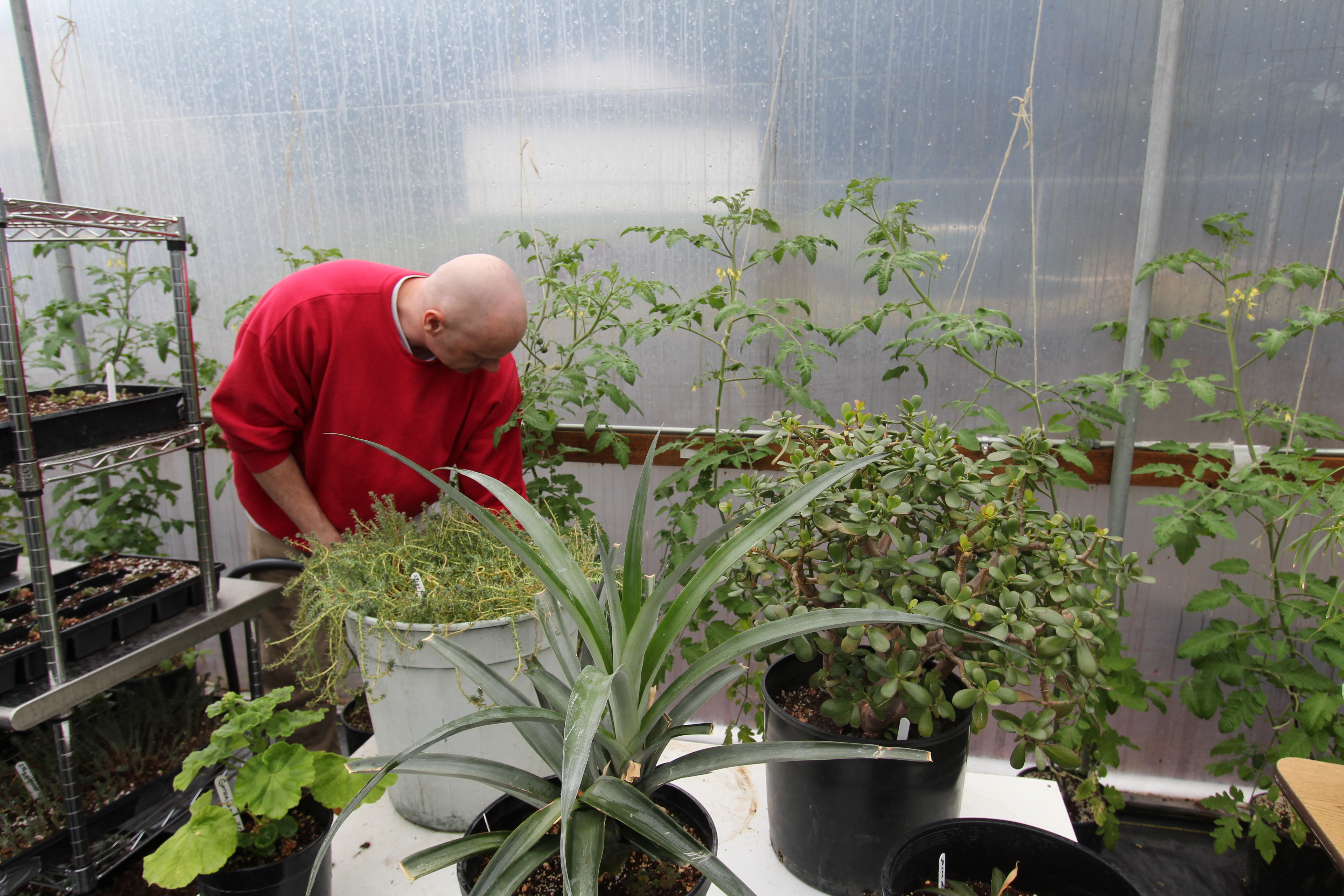
Greenhouse technicians, like Wade pictured here, care for the plants while learning how to sow and grow a prosperous garden. 

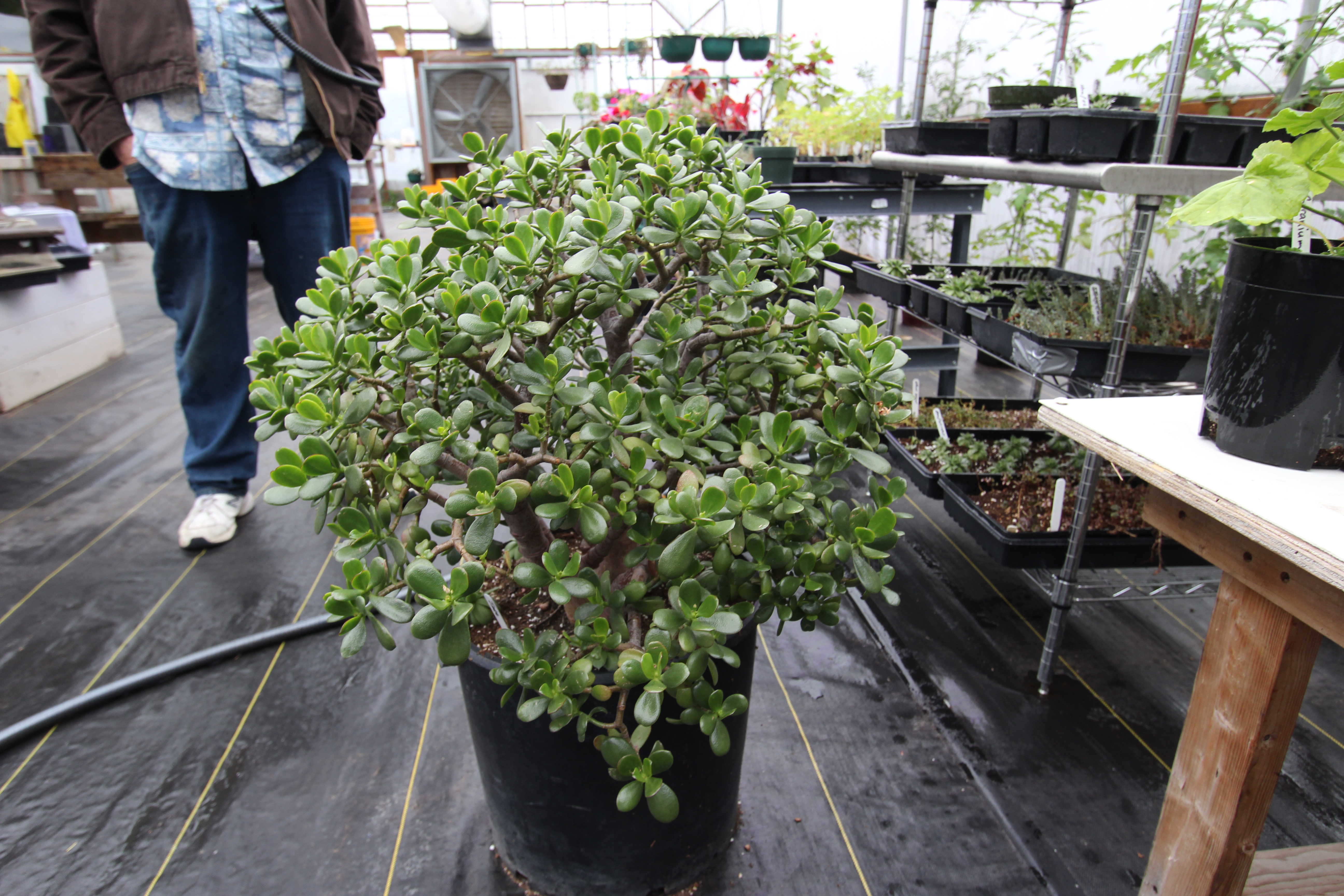
Look how big this succulent is! Greenhouse technicians have been caring for this guy for about 10 years.

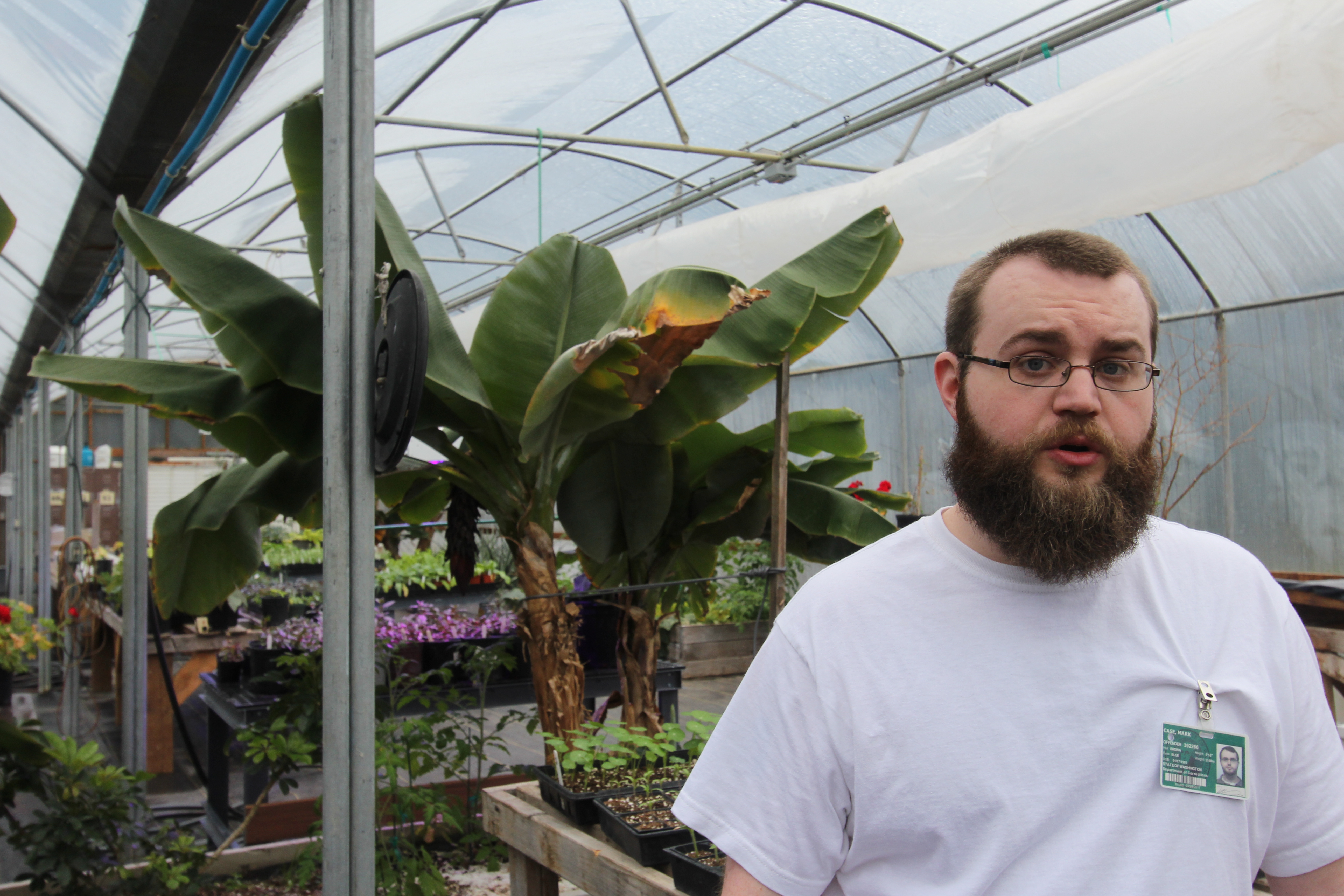
Mark Case is another greenhouse technician. He hopes to have his own garden when he releases where he can put to use all of the knowledge he’s gained from working and learning in the gardens at OCC.

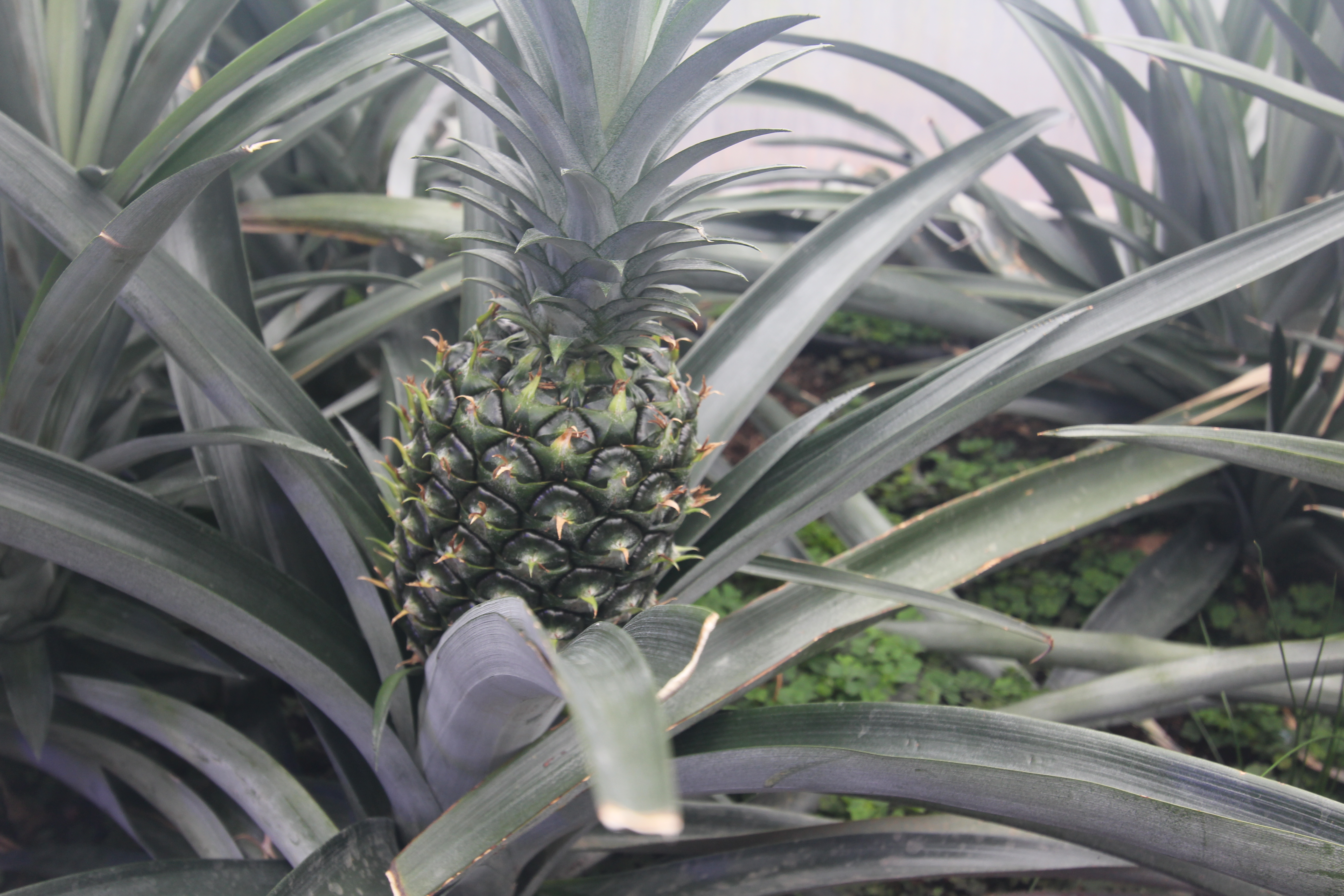
This pineapple isn’t ripe yet, but it sure is cute! When the pineapples are ready to eat, the technicians harvest and eat them.

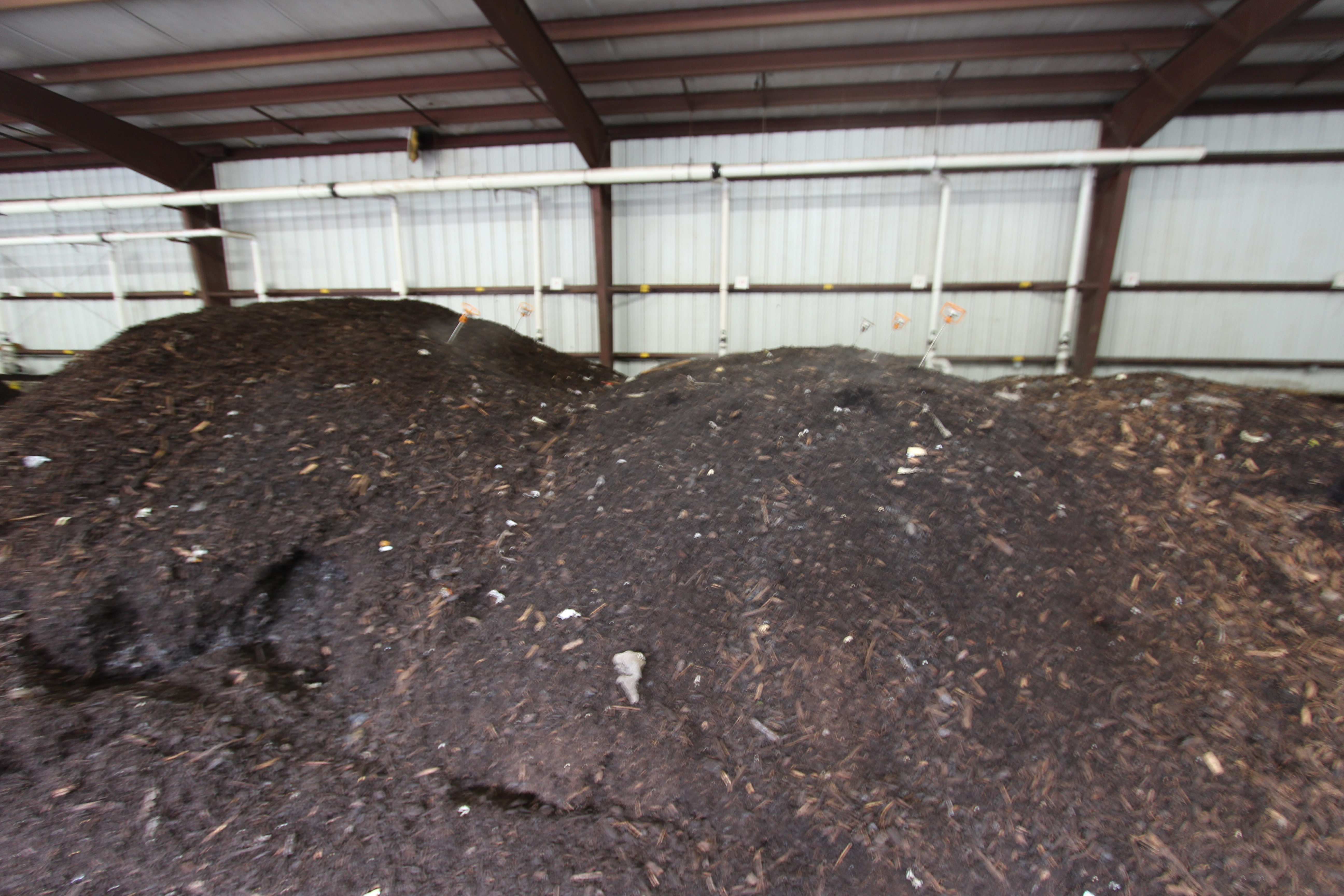
Food, garden, and organic waste is composted on site at OCC. They have a large warehouse specifically designed for composting organic waste. The facility trains technicians who can then use this knowledge and skill base when they get out of prison.

OCC produced about 23 tons of compost last year alone! The product is used to amend the soil throughout the prison grounds. 

The wood shop at OCC uses donated or reclaimed wood to make wood toy trucks, tractors, and cars. Each intricately detailed toy goes to charity for children.

Here are some more completed projects awaiting to be painted with sealant. Such nice work!

A New Wildlife Conservation Program! Sheep Husbandry at WA State Penitentiary

by SPP Co-Director Kelli Bush

Historically, bighorn sheep were widespread in western North America. By the turn of the 20th century, populations had dwindled to near extinction, and recovery efforts were needed to bring them back from the brink. Today, the biggest threat to bighorn sheep is pneumonia triggered by a bacteria called Mycoplasma ovipneumoniae, or M. ovi for short. The bacteria is commonly carried by domestic sheep and goats. While the pathogen usually leads to only mild sickness or lower rate of weight gain in domestic animals, it can be lethal to wild bighorn sheep. Raising M. ovi-free domestic sheep can protect wild bighorn sheep from the devastating pathogen.

Wild bighorn sheep photo credit: Washington Department of Fish and Wildlife staff

In 2015, Dr. Richard Harris with the Washington State Department of Fish and Wildlife (WDFW) introduced the idea of a pilot program to breed M. ovi-free domestic sheep to Sustainability in Prisons Project (SPP) leadership. SPP coordinates other conservation programs rearing endangered Taylor’s checkerspot butterflies, caring for western pond turtles, and propagating native plants. Dr. Harris suggested adding the pilot program to benefit wild bighorn sheep recovery, while also offering incarcerated program participants education and training.

Areas where private domestic and wild bighorn sheep herds are at risk of contact have been identified. Owners of these domestic herds are the most important market for M. ovi-free sheep. Currently, there are no private domestic sheep breeders that specialize in raising M. ovi-free animals. The prison program aims to develop protocols to share with sheep breeders who want to join the effort.

Sheep arrive at Washington State Penitentiary photo credit: WSP staff

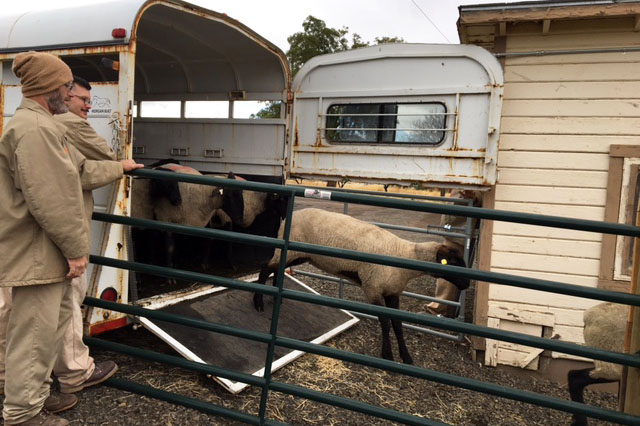
In the fall of 2017, 16 Suffolk sheep—15 ewes and one ram—arrived at their tidy, new home in Washington State Penitentiary (WSP). Sheep husbandry tasks include the day-to-day care of the sheep.  Under the care of incarcerated people, and with the support of animal husbandry experts, corrections staff and veterinarians, the small flock has thrived. Program partners include WDFW, SPP partners at Washington State Department of Corrections and the Evergreen State College, and local sheep husbandry experts. Washington State University provides critical contributions in the form of pathogen testing and program guidance.

The recent arrival of spring brought the program’s first lambs. So far, the program has welcomed 20 new babies. With the guidance of sheep husbandry experts, Jerry Kjack and Gerry Glenn, incarcerated program participants conduct a health check just after lambs are born. The health checks are done to ensure lambs are properly nursing and to clean the umbilical cord area. In rare cases, a lamb requires extra care, including tube or bottle feeding. One ewe and her lambs needed extra care and were transported inside the secure perimeter of the prison to receive extra support from program technicians. Each mother produces twins and a few more are expected before the spring is over.

Lamb twins, just born photo credit: WSP staff

New baby photo credit: WSP staff

Ewe being transported to inside the secure perimeter of the prison to receive extra care after lambing photo credit: WSP staff

Incarcerated program participants caring for the sheep receive education and training on sheep husbandry, bighorn sheep ecology, wildlife management, and related vocational and educational opportunities. Investing in education and vocational training for incarcerated people can improve community safety and reduce recidivism. Additionally, meaningful work and activities maintain facility safety by reducing idleness. The program provides everyone involved with satisfying opportunities to contribute to wildlife conservation.

Program participants leaving the sheep program site photo credit: Kelli Bush SPP


Farm to Table Celebration at WCC

Text and photos by SPP Prairie Conservation Nursery Coordinator Alexandra James

Harvest Pizzas line up.

The Farm-to-Table concept is making headway in Washington state prisons. In general, the concept promotes the use of local food in restaurants, schools, and community centers adjacent to regional farms. This growing season at Washington Corrections Center, SPP’s Conservation Nursery crew tended the vegetable plots adjacent to their violet beds; the crew sowed, grew, and harvested hundreds of pounds of food to support the local food banks, making farm-to-table possible for people with the greatest need.

SPP hosted a pizza party for the crew in celebration of their efforts. Pizza toppings and salad fixings were harvested from vegetables growing in the horticulture garden. The crew worked together to create colorful pizzas to share amongst the SPP nursery crew and DOC staff.

Colorful Pizza topped with edible flowers.

The vegetable garden served as an educational forum, where crew members learned about organic agriculture and the implications of food systems in the United States. Hard work and long hours were a common attribute needed to sustain the gardens. Along with the produce from the horticulture program, WCC produced over 24,414 lbs. under the leadership of Benri Deanon, Grounds Supervisor. The WCC staff and crew members did an incredible job working together to support their local community outside of the prison walls.

The celebration not only marked an important milestone for the gardening season; it was also a joyful transition for SPP staff in the Conservation Nursery. Joey Burgess, SPP coordinator for two years, is moving on to be a horticulture and literacy instructor at WCC. He will be working for Centralia College and will bring his dedication and expertise full time to incarcerated students.

Alexandra James will step in as the new SPP coordinator at WCC. Alex joins the SPP team with experience in environmental education and is looking forward to sharing her knowledge and passion for nature with the WCC crew. She hopes to enhance her understanding of environmental education by engaging, empowering, and learning from our incarceration community.

Salad with kale, collard greens, lettuce, edible flowers, chives, and tomatoes.