Text and Photos by Anna Duron, EVM Program Coordinator
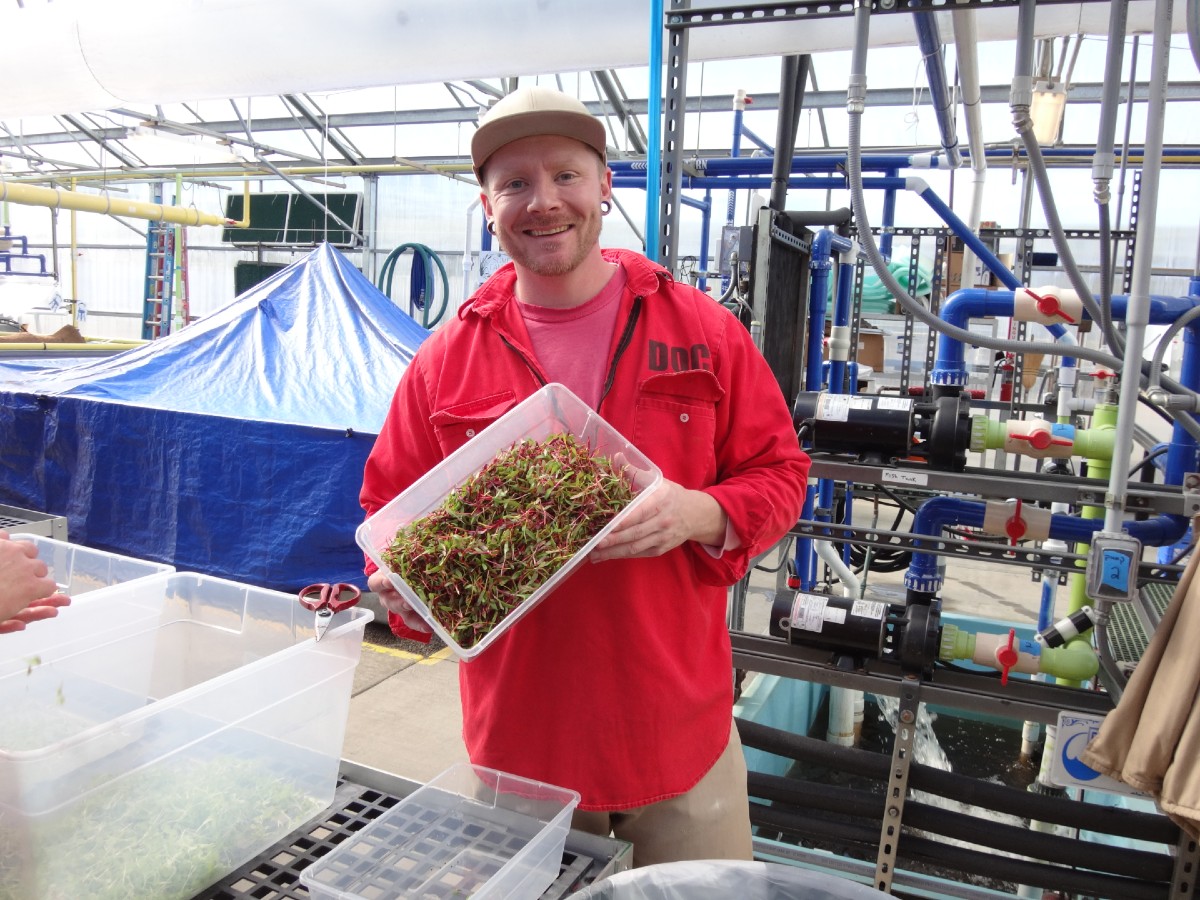
EVM Technician Josh Hieronymus showing off microgreens ready to be sent back to the Stafford Creek Kitchen
Generally in the Emergent pre-Vegetated Mat (EVM) nursery, we grow native emergents, grass-like plants that are important for Oregon Spotted Frog habitat. These emergents, though, are dormant in the winter, which leaves the EVM empty of plants and things for us to do during the darker months. This year we decided to work on a new project: growing microgreens.
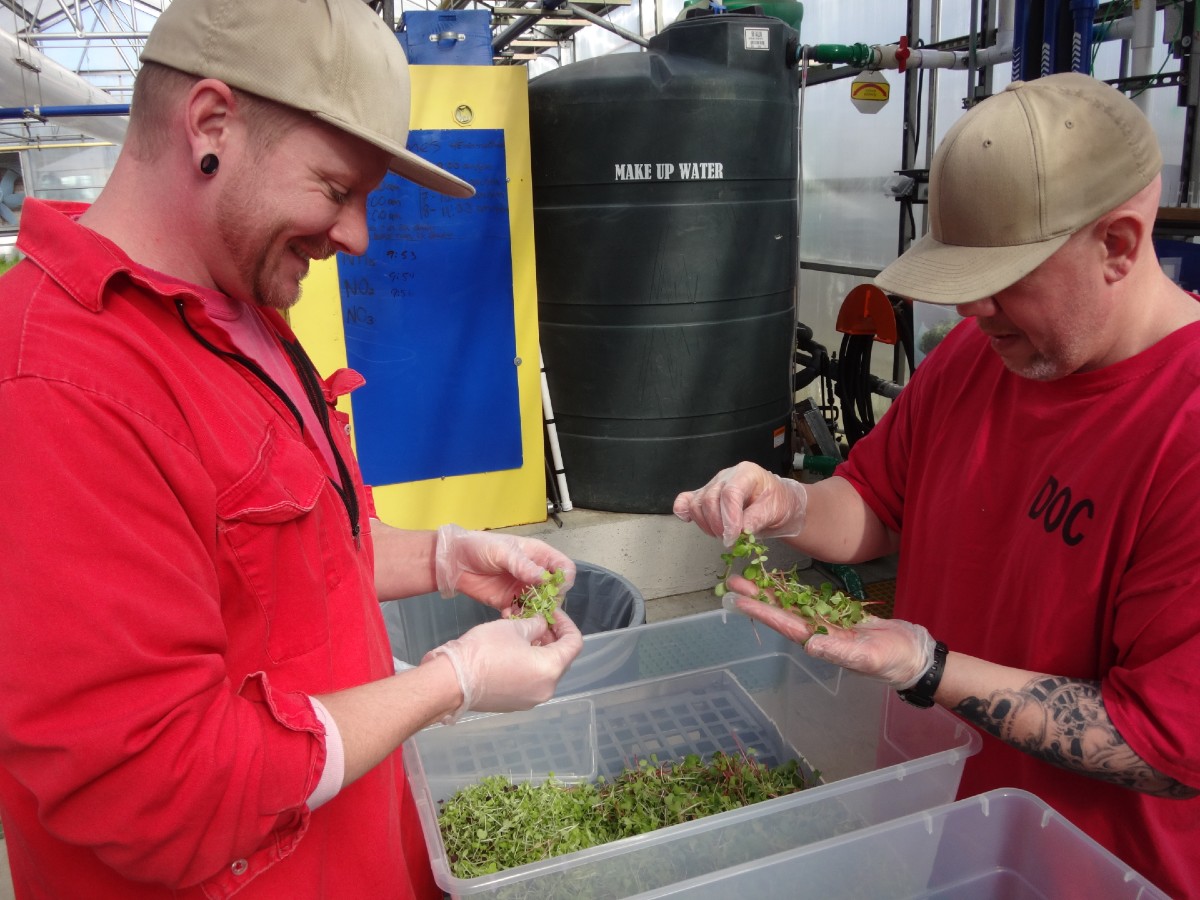
EVM Technician Josh Hieronymus training other incarcerated men how to harvest microgreens
Microgreens are nutritionally dense and have a mild, fresh taste similar to salad greens. They have a quick germination and growth rate, which makes them a perfect project for the few winter months we are free from growing emergent mats.
Just one of the many bins filled with microgreens after a day of harvest
This was a brand-new learning process for everyone. It gave the EVM program team the chance to learn how to grow edible plants, plus how to safely process and handle the greens. The microgreens grown out in the EVM are being put back into the kitchen at Stafford Creek Corrections Center for the incarcerated men to enjoy.
EVM Technician Joseph Oddo spin-dries microgreens so they can be packaged and sent to the kitchen.
We discovered that growing and harvesting of microgreens is a tedious process. Many steps and careful observations are needed for these tiny plants to succeed.
Carl Elliott, SPP Ecological Conservation Nursery Manager, and Josh Hieronymus, EVM Technician, discuss the health of microgreen plants.
We harvest about every two weeks. With each harvest, we get approximately 15 pounds of greens — that’s about 16 gallons! These microgreens have been a great addition to the salad mixes in the SCCC kitchen.
At the beginning of the project, EVM Technicians Joseph Oddo and Josh Hieronymus sowing microgreen seeds.After sowing, we cover the mats with plastic to keep moisture in and ensure germination.Josh Hieronymus and Scott sifting through harvested microgreens before they are sent to the kitchen
By Anna Duron and Carl Elliott, Coordinator and Manager for the Emergent Vegetated Mat (EVM) program
EVM technicians at Stafford Creek Corrections Center loaded up jelly-rolled mats for delivery to the Samish Indian Nation. Photo by Anna Duron.
This year, the Emergent Vegetated Mat (EVM) program grew fifty mats for the Samish Indian Nation. Each mats was 15-feet-long and embedded with native wetland species Carex exsiccata, Glyceria elata, and Juncus supiniformis. Program technicians were instrumental in improving germination protocols, resulting in early spring plant growth. These young plants were ready for transplanting into the coconut mats by early summer. Again thanks to improved cultivation techniques, the plants grew vigorously; by September, the lush growth covered 80% of the mats’ surface.
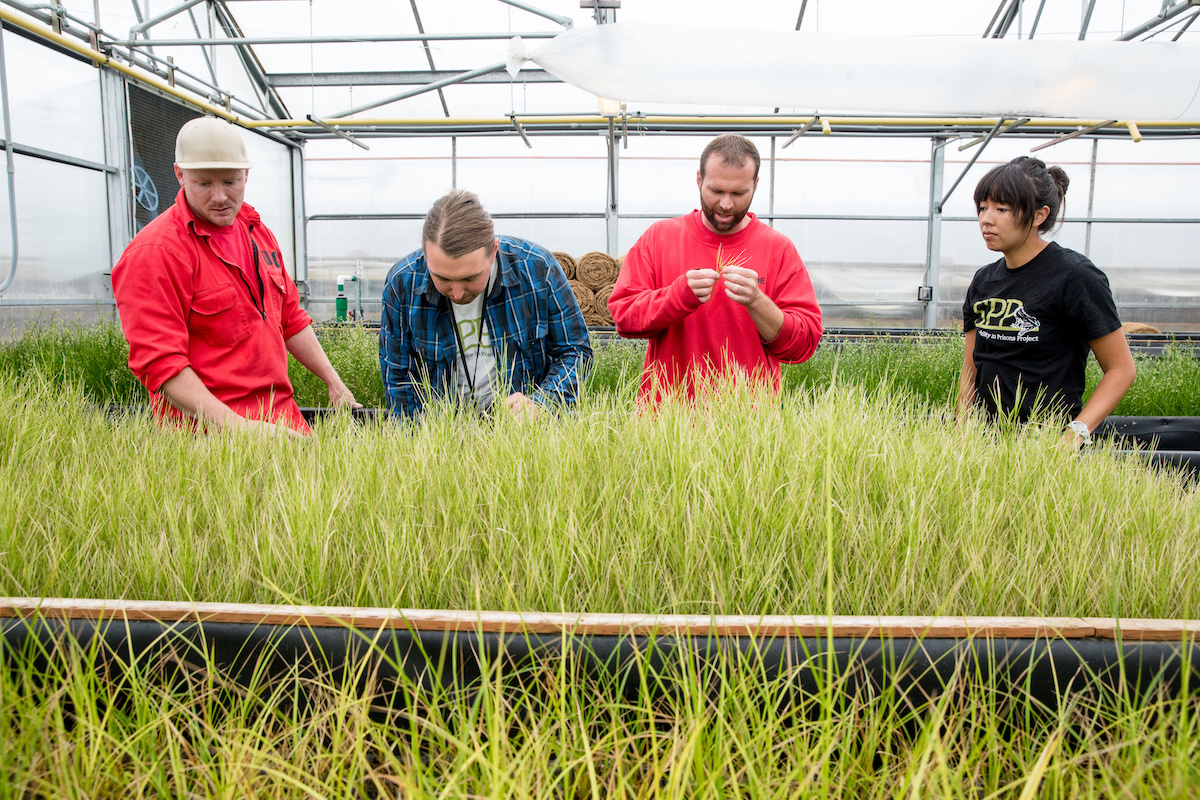
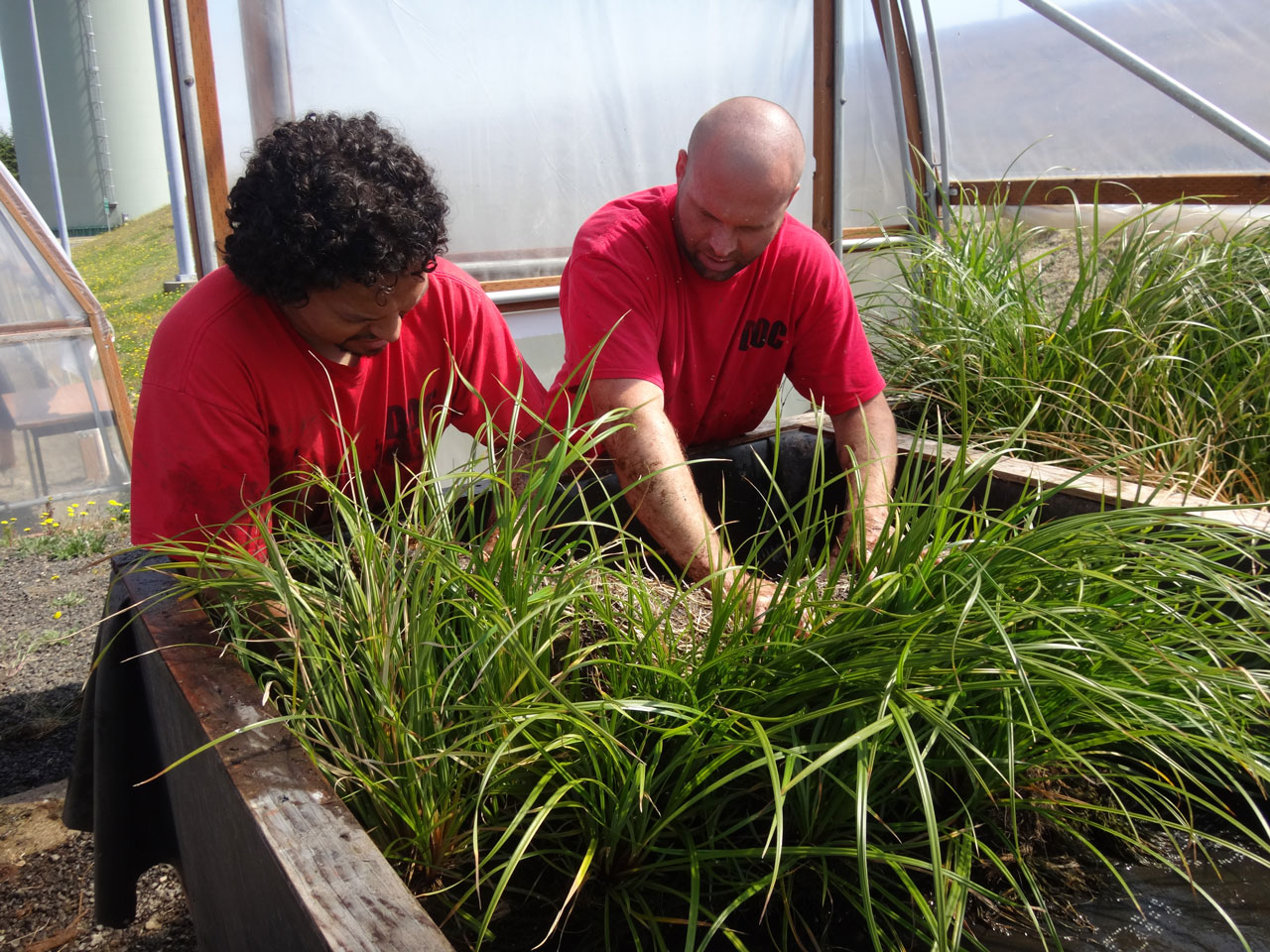
In mid-July, Josh Hieronymus, Graham Klag, Joseph Oddo, and Anna Duron check on wetland plants growing in the EVM nursery. Photo by Shauna Bittle.
We rolled up the mats in October, put them in a 24-foot truck without good shocks, and drove them to the Samish Indian Nation–a bit of a loud and bouncy ride. Access to the planting site was by water, so we unloaded the mats into a warehouse and drove back south.
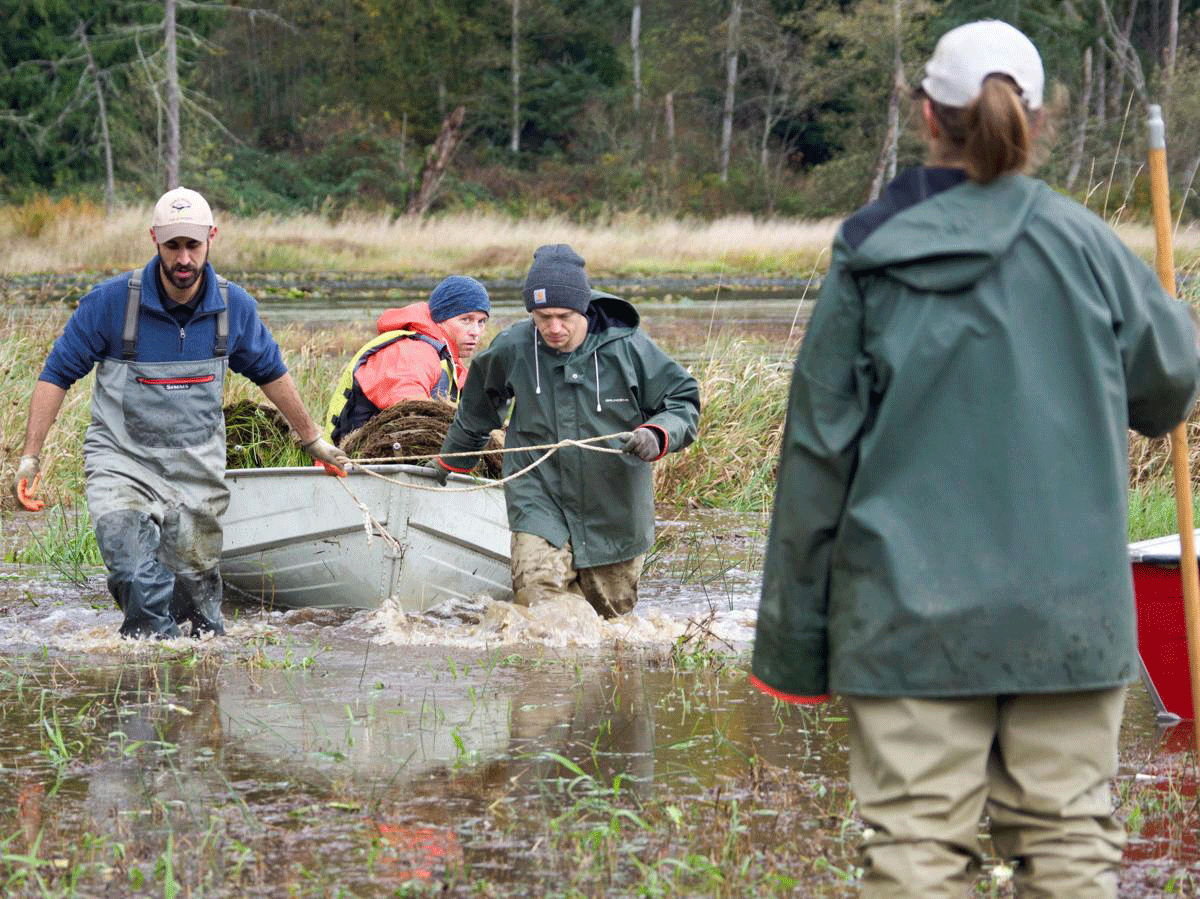
The mats were loaded onto boats to reach their destination across the Samish River. Photo provided by the Samish Indian Nation.The Samish Indian Nation team shuttled the mats by boat. Photo by Charles Biles.
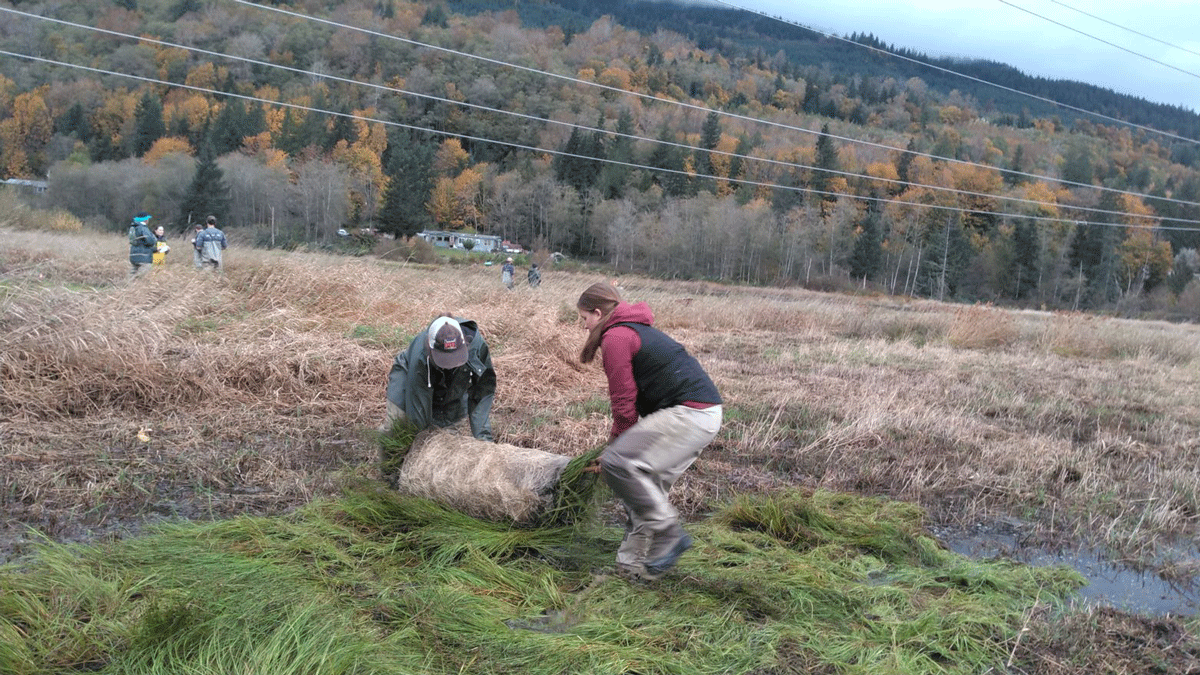
The restoration site is along the Samish River in an area recently confirmed as inhabited by the state-endangered Oregon spotted frog. Employees and volunteers from the Samish Indian Nation boated the mats to the site. They unrolled each mat and staked it in place. With the help of our prison-grown mats, they hope to improve the site’s native plant communities and create a better home for Oregon spotted frogs.
They placed the mats in a habitat recovery area. Photo provided by the Samish Indian Nation.The mats were successfully put into place by these hard workers. Photo provided by the Samish Indian NationOregon spotted frog seen checking out the newly placed mats. Photo provided by the Samish Indian Nation.
See Go Skagit’s news coverage of the project here.
Text by Amanda Mintz and Danyl Herringshaw. Photos by Amanda Mintz unless otherwise noted.
The goal of an aquaponics system is to mimic nature by recycling nutrients from animal waste into plant tissue through microbial decomposition. The needs of fish, plants, and microbes must be balanced to keep the system functioning properly. The technicians at Stafford Creek Corrections Center are tasked with being sensitive to the needs of the system and work hard to maintain the balance among these symbiotic organisms. The technicians learn about plant and microbial ecology, water quality, and fish biology while also learning how to troubleshoot plumbing, heating systems, and pumps. When the system is working as it should, the technicians may be left with little maintenance to do. But when something goes wrong, such as a spike in ammonia or a failed pump, it is their job to figure out how to find the problem and fix it.
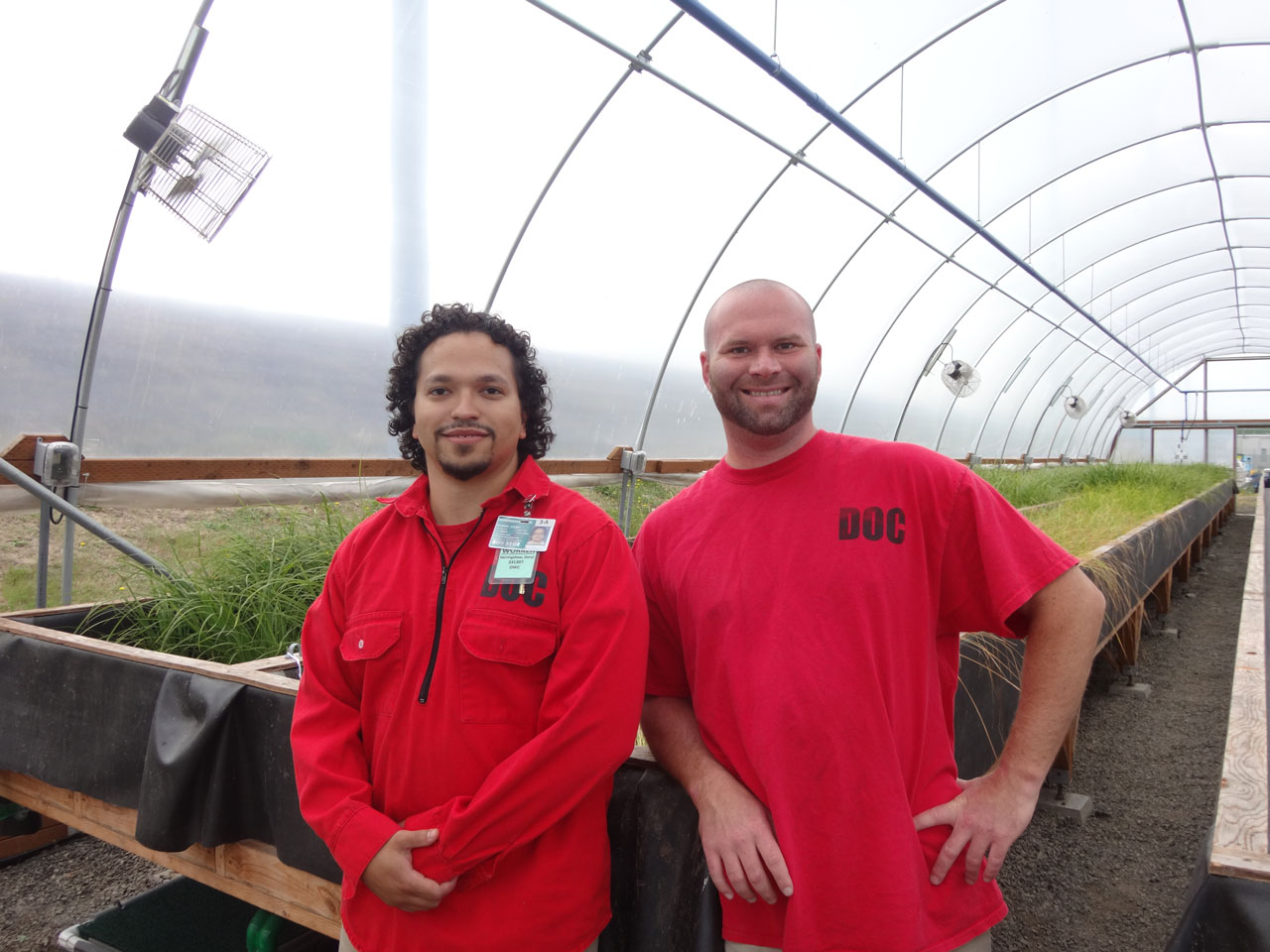
Danyl Herringshaw (left) and Joseph Oddo, current EVM technicians, are learning to maintain a system that often behaves in unexpected ways. This photo was taken just prior to loading mats for delivery…
This spring Danyl Herringshaw, an EVM technician since January, reflected on his experiences in the aquaponics facility:
“I think the most important thing I’ve learned since working at the EVM greenhouse at SCCC is the value of a mistake. The EVM greenhouse is a very delicate and fickle system. A small adjustment to the water flow can affect the entire system’s timing, for example. There have been countless examples of how I’ve learned and grown in my knowledge of this system from mine and others’ mistakes.
“This also puts into perspective how delicate a natural system is. Minor adjustments and maintenance seem to make this job slow, even boring sometimes. However, if an adjustment is too large or too small or a certain piece is overlooked during maintenance, it can have large ramifications. These adjustments and maintenance seem to happen effortlessly in nature.
“This is why natural habitats and ecosystems ought to be preserved when considering urban development. These systems are in place to keep us, and the wildlife that reside there, safe.”
In the EVM, we are doing our part to enhance natural ecosystems by growing native wetland plants in support of wetland habitat restoration for the threatened Oregon spotted frog. The plants are sown in soil and installed in mats once their roots and shoots are large enough. Then they continue growing in the mats until they achieve at least 50% cover. Mr. Herringshaw and Joseph Oddo, who has been working on the EVM project since March, have done an exceptional job sowing, tracking growth, and maintaining the health of the plants. We delivered another set of mats to Joint Base Lewis McChord in June.
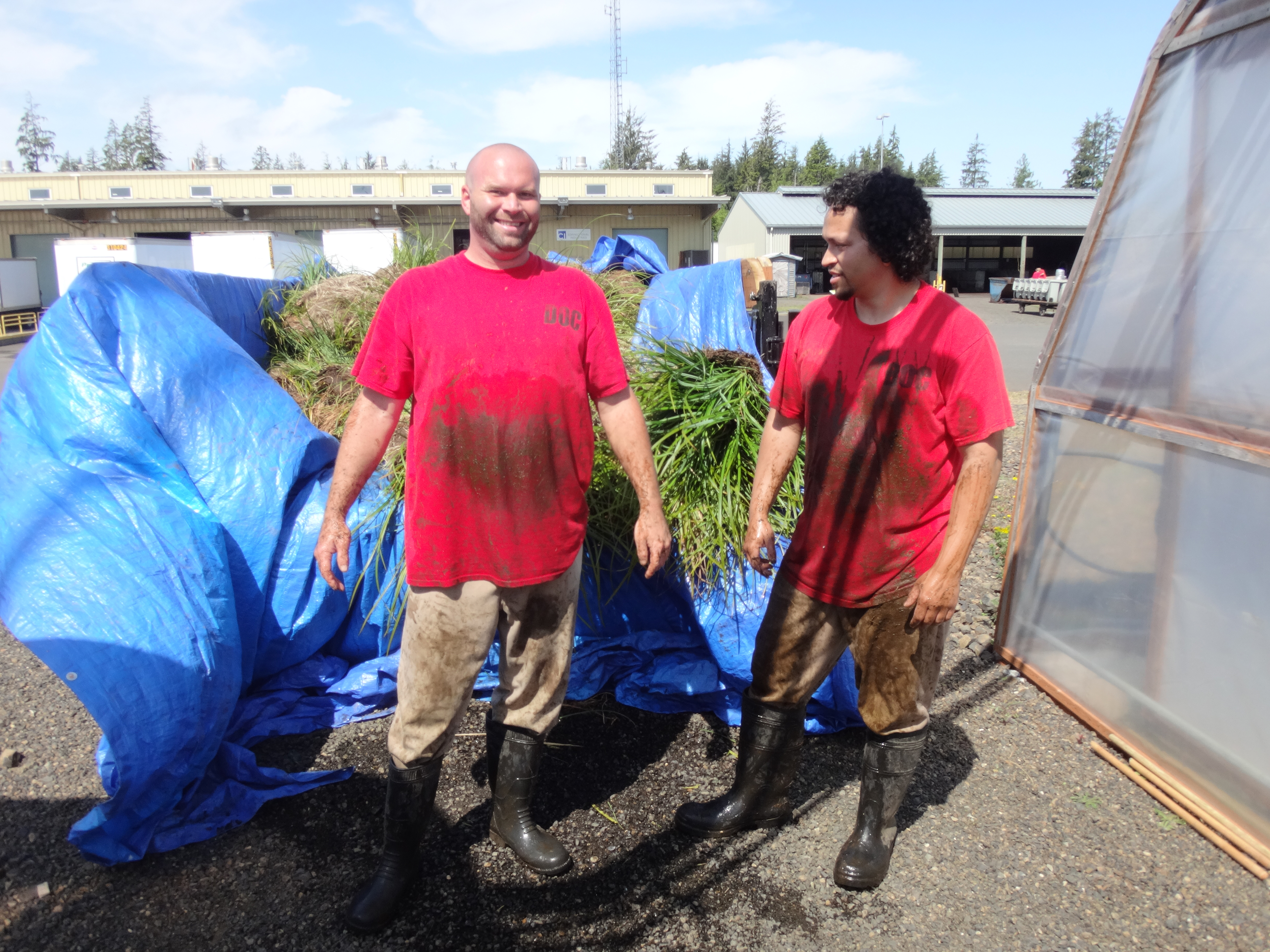
…and this photo was taken after loading the mats! Each mat can weigh up to 100 pounds, even after they are allowed to drain and dry out for 24 hours.
Mr. Herringshaw and Mr. Oddo roll up the mats before loading them onto the truck. In the field, they will be rolled out and secured in place; the plants perk right back up.
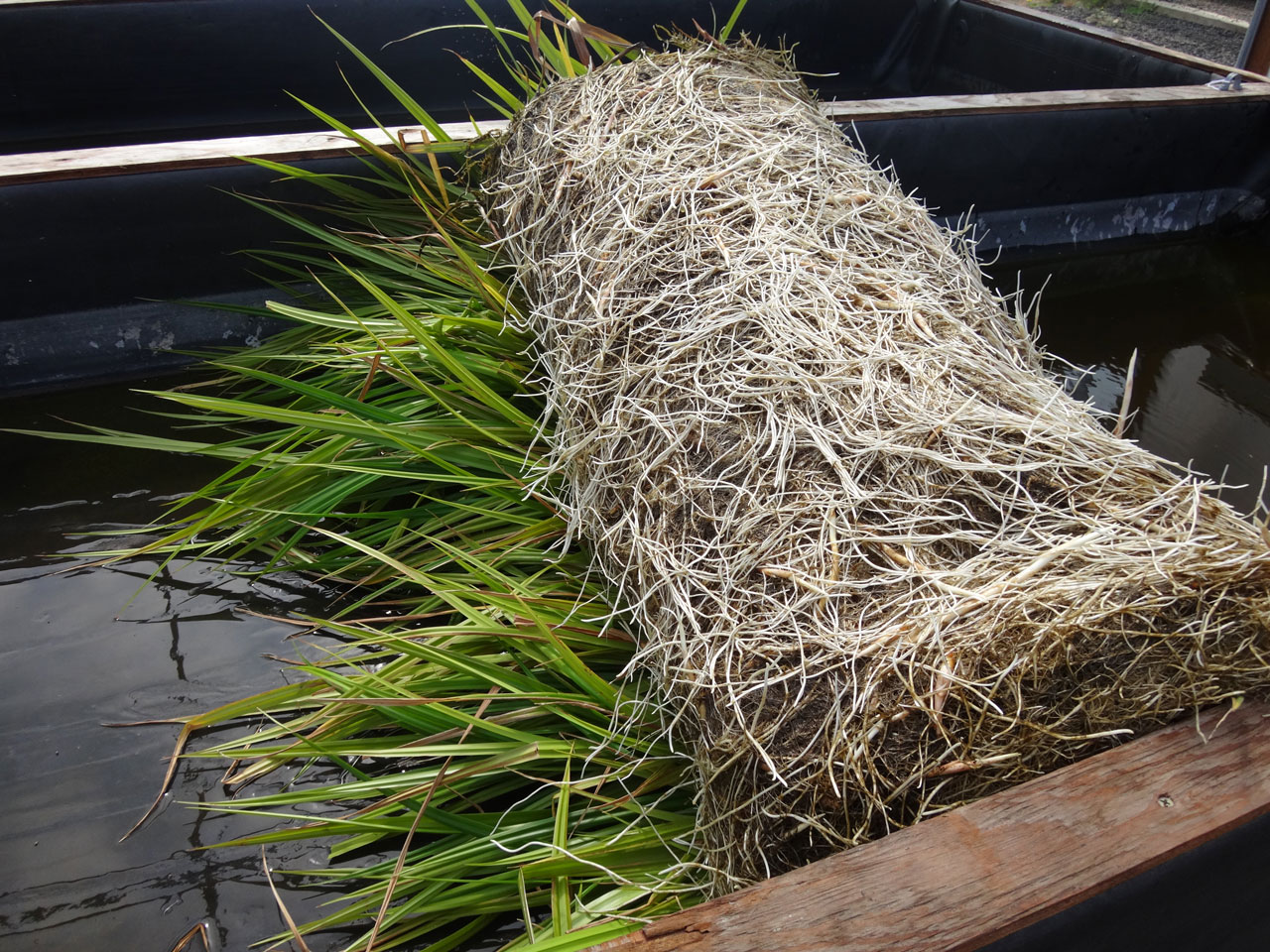
This mat can’t wait for contact with soil! Imagine reed canarygrass trying to grow through these lush roots.
The EVM project is a learning laboratory for technicians and staff alike. Amanda Mintz, EVM Coordinator and Master of Environmental Studies graduate student at Evergreen, has been researching the effects of adding compost tea to the aquaponics water on plant nutrient content . Theoretically, the microbial community in the compost tea—a brew made by soaking bags of compost in aerated water—aids in plant nutrient uptake in several ways, such as helping decompose organic matter in the water, or stimulating plant hormones that promote growth and increase nutrient uptake. Mr. Herringshaw and former technician Matthew Fuller collected plant tissue samples for Amanda to take back to Evergreen’s laboratories for analysis, tracked plant growth and health data, and ensured that system parameters remained constant during the experiment.
Former EVM technicians Brian Bedilion and Matt Fuller calculate percent cover using the point method. Photo by Jim Snider, DOC










Once a year, SPP reports on all things sustainable happening in Washington State Prisons.