

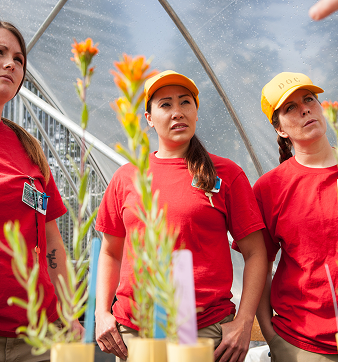
Prairie conservation nursery technicians learn about federally endangered harsh paintbrush (Castilleja hispida) at WCCW. Photo by Drummond.
Ecological Conservation Programs
SPP’s Ecological Conservation programs encompass a huge range of activities and topics but share three things in common.
- The focus of the work is Ecological Conservation: preserving and protecting something valuable, such as a species, landscape, and/or other natural resources.
- The work depends on strong partnerships with expert partners; Adding to the WA Corrections and Evergreen partnership, individuals from many organizations share their knowledge, resources, and enthusiasm.
- Incarcerated program partners are both students and technicians; They receive formal education and training plus hands-on experience. Essentially, these are college-level internships, and successful technicians are awarded SPP certificates.
A federally endangered Taylor’s Checkerspot Butterfly sits a top X. Photo by SPP Staff.

Environmental Education Access to College Credit
SPP began awarding college credit for some SPP programs to incarcerated students during incarceration. Using Evergreen’s Prior Learning from Experience model, SPP has awarded 1,326 college credits to 237 students since 2024. College credit is currently available for students for 6 SPP programs. SPP covers the student fee associated with the credit and does not pass any fees on to the student.
The education offerings described below focus primarily on Ecological Conservation programs. For courses focused on environmental education, please see here.
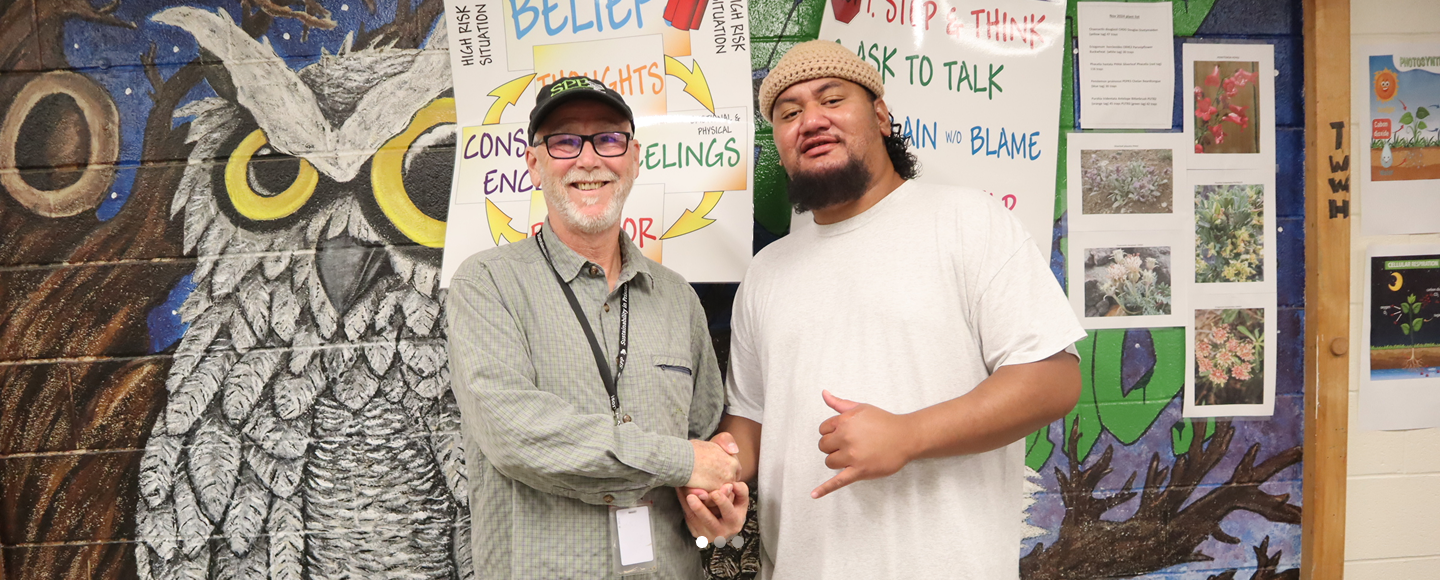
A program participant poses with Ecological Conservation Nursery Manager, Carl Elliot, at a graduation at WSP. Photo by SPP Staff.
Programs Offered by SPP


Taylor’s checkerspot butterfly technicians and program coordinator, Courtney Murphey pose in front of the program area at MCCC. Photo by SPP Staff.
Taylor’s Checkerspot Butterfly Program
The Oregon Zoo started the Taylors checkerspot captive rearing program in 2003. A second facility opened at MCCCW in 2011, expanding capacity. Partners release butterflies at restoration sites across the Salish Sea region. The program is expected to move to WCCW in 2025.
Prairie Ecological Conservation Nurseries
SPP supports South Salish lowland prairie restoration through its Ecological Conservation Nursery Program. Funded by CNLM and JBLM, SPP grows native prairie plants used by Ecological Conservation agencies. These plants provide habitat and food for rare pollinators, including Taylor’s checkerspot butterfly, linking plant and butterfly Ecological Conservation efforts.
SPP’s prairie Ecological Conservation nursery crew prepares containers for sewing at Washington Corrections Center for Women. Photo by Ricky Osborne.
A northwestern pond turtle in their tank at Cedar Creek Correction Center. Photo by SPP Staff.
Northwestern Pond Turtle Rehabilitation
The northwestern pond turtle is a state-listed endangered species and one of Washington’s only native turtles. Some wild adults suffer from a treatable shell disease with an unknown cause. Ecological Conservation partners, including WDFW, PAWS, Woodland Park Zoo, and Oregon Zoo, work together to care for and protect these turtles.
Beekeeping
SPP partners with WASBA to offer 4 levels of beekeeping certification. As of July 2026, over 700 incarcerated individuals have become WASBA-certified beginner beekeepers. These courses are offered by either high level incarcerated beekeepers or volunteer beekeepers.
A beekeeper poses with Washington State Beekeepers Association president, Alan Woods, at a ceremony recognizing the facility of the year. Photo by SPP staff
Sagebrush nursery technicians show off their plugs of sagebrush at WSP. Photo by SPP Staff.
Sagebrush Steppe Ecological Conservation Nursery
Since 2021, around 200,000 plant plugs were produced, including sagebrush, forbs, and shrubs. Supposed by WDFW and USFW, these plants restore wildfire-impacted public lands in eastern Washington.



Once a year, SPP reports on all things sustainable happening in Washington State Prisons.